We need your help now

Support from readers like you keeps The Journal open.

You are visiting us because we have something you value. Independent, unbiased news that tells the truth. Advertising revenue goes some way to support our mission, but this year it has not been enough.

If you've seen value in our reporting, please contribute what you can, so we can continue to produce accurate and meaningful journalism. For everyone who needs it.


Alamy Stock Photo

Blessing the food Should we learn to slow down and enjoy our meals?

In a world built for speed, gratitude at mealtimes feels like a forgotten religion, writes Margaret Lynch.

THERE WAS ONE day in second class when my teacher held me back from going out to the yard, sending everyone else out ahead of me.

Now, if you didn’t go to an Irish primary school I am going to find it very difficult to accurately explain the feeling of self-importance that ignites every single cell in the body of a 7-year-old child when their teacher wants to speak to them, and only them, but I imagine it’s something close to what Mary felt when she was visited by the angel.

Anyway, once everyone had left the room, the teacher explained that she had noticed I wasn’t eating my lunches at break time, and wanted to know if I was okay. I couldn’t bring myself to say that the little prayer we said every day before lunch turned my stomach. You know the one, of course you do, it has that one line about ‘blessing the hands that made the food’, and that made me think about hands touching my food.

Then I would think about all of the hands that did touch my food during both the preparation and distribution of the sandwich process, and I would wonder what else those hands touched before touching my food. Every day, I would reach a point where I would rather have eaten glass than taken a single bite of that sandwich. Even now, decades later, a sticker saying ‘handmade’ on food will spark my gag reflex. I just can’t trust a sandwich that has been on a journey.

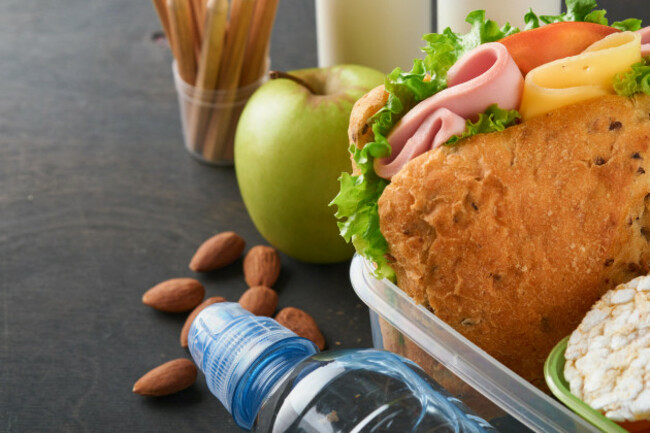
healthy-food-for-school-lunch-concept-healthy-bread-meat-sandwich-with-cheese-apple-fresh-cucumber-carrots-nuts-in-container-water-and-yogurt-on-dark-background-back-to-school-concept Alamy Stock Photo Alamy Stock Photo

I don’t know what that teacher thought of my silence, but she reached into her bag and produced a Snickers. A full-sized one, which was a rare sight in a 90s lunchbox. She said that if I ate half of my sandwich, I could have the bar. 

My mind immediately raced to an image of me swaggering out to the yard holding the full size snickers, and explaining to the rest of my class that the teacher herself had bestowed it upon me. Again, it’s hard to describe the kind of power that would have yielded socially, but unfortunately for her, I had just discovered another form of power entirely.

I had just discovered that I could create worry in adults and therefore generate attention, simply by just not eating. And so, I didn’t.

Embarrassingly, I continued not eating lunch (loudly) right up until my very late teens, at which point I assume some underdeveloped part of my brain quietly fixed itself, and I realised that no one cared. And so, I stopped.

I am confronted by these memories often, especially when I look at what I eat, how I eat it, and why. As humans, our relationship with food can be complex and highly subjective, but there’s no question that our eating habits have changed over the years. These days, we may be rich in ingredients and choice, but we are time poor. So how do we learn to slow down and enjoy, relish our food?

The eternal feeding battles

As a child, I think I had visualised a version of my future family. We would live as something akin to the Waltons, sitting together at mealtimes, saying some blessing or expression of gratitude over said food, and then tucking into the hearty homemade dish that I’d lovingly made. 

I was way off. As an adult with a full-time job and two kids, lunchtime these days mostly consists of hoovering up enough carbs to keep me going until dinner as quickly as possible, usually while sitting at my desk or driving.

I don’t want to brag, but I can eat a pasta salad while packing up my bag to leave the house, and I can finish my overnight oats while catching up on emails. I never sit down and stop for meals. I haven’t sat in a canteen in around 20 years, and I don’t think I have fully digested anything since 2001.

busy-mother-coping-with-stressful-day-at-home Modern parenting and slow eating don't go hand in hand. Alamy Stock Photo Alamy Stock Photo

I know that meal times are important. I know they should be slow, mindful and calm, but modern life doesn’t really facilitate that. Everything happens at 100 km an hour. I don’t have 20 mins to stop and give breakfast or lunch my full attention, I can’t afford to lose productivity or focus in those moments. Everything is about convenience and speed.

It is a truly terrible experience for my taste buds, nervous system and car interior, but knowing that does nothing to help. That information changes nothing. I can’t change the school runs, the work handovers, or the meetings.

‘Bless this food’

I do think it’s a pity that religion was taught to us in school in the way that it was, because there are some aspects of it that could be really helpful in modern life. Like most people my age, I left religion behind in school and never looked back.

I think I was annoyed at how heavily it was pushed on us, with this over-inflated sense of importance. At the same time that we were being told off for lying, we were offered endless stories that sounded far-fetched and were reminded that doubting them was a sin. Religion and religious figures were something to be feared.

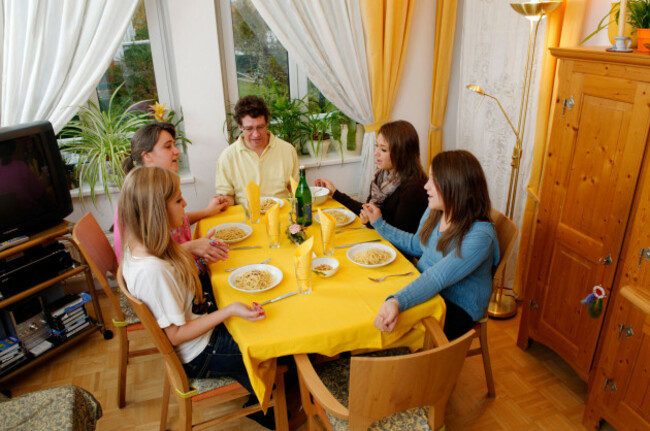
saying-grace-before-sunday-lunch Eating quietly and slowly, expressing gratitude for meals, is a lost art. Alamy Stock Photo Alamy Stock Photo

That same year, when we were preparing for our First Holy Communion, one of the boys in my class jokingly called the priest ‘Father Curry’ instead of ‘Corry’ and earned himself a two-week ban from playing in the yard. It was all very harsh.

We were so tiny and easily influenced at that age, spending our yard times discussing what ‘sins’ we could confess in order to make our first confession. Before deciding that feeling envious of our friend’s pencil case was on par with adultery or murder. Religion was always delivered as fear and consequence, instead of reflection and comfort, which is a pity.

Perhaps, in losing our religion, we also threw out the good stuff, the mindful eating, the blessing of the food and all those nice rituals? Maybe we should at least take the time to observe some mindful eating? While it might not be achievable for many of us to slow right down for meal times, taking 30 seconds to pause and breathe (while flying out the door with a blueberry muffin in hand) to ground yourself would at least be a start.

We could try to notice the food we’re eating and feel gratitude for both it and the person who made it. That feels achievable, I think I’ll give it a go, and maybe, finally, I can make peace with the hands that made the sandwich.

Margaret Lynch is a mother of two and a parenting columnist with The Journal.

Readers like you are keeping these stories free for everyone...
A mix of advertising and supporting contributions helps keep paywalls away from valuable information like this article. Over 5,000 readers like you have already stepped up and support us with a monthly payment or a once-off donation.

Close
15 Comments
This is YOUR comments community. Stay civil, stay constructive, stay on topic. Please familiarise yourself with our comments policy here before taking part.
Leave a Comment
    Submit a report
    Please help us understand how this comment violates our community guidelines.
    Thank you for the feedback
    Your feedback has been sent to our team for review.

    Leave a commentcancel

     
    JournalTv
    News in 60 seconds