We need your help now

Support from readers like you keeps The Journal open.

You are visiting us because we have something you value. Independent, unbiased news that tells the truth. Advertising revenue goes some way to support our mission, but this year it has not been enough.

If you've seen value in our reporting, please contribute what you can, so we can continue to produce accurate and meaningful journalism. For everyone who needs it.

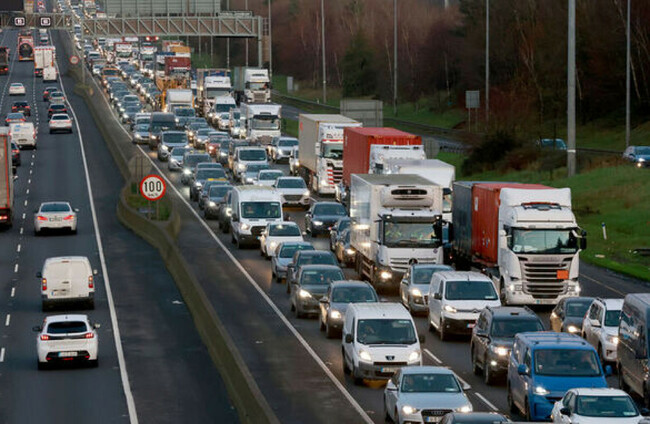
Traffic on the M50 last month

Think about it If public transport was free, would you use it more?

A nationwide, well-signalled trial of free public transport and shared bikes, for a defined period, would provide real evidence rather than assumptions, argues our roads expert.

ANYONE WHO HAS tried to get around Dublin recently doesn’t need convincing that stress levels on the roads are rising. The M50 has become a daily choke point, with an 11% increase of cars on this route since 2019, delays feel longer and more unpredictable, and what used to be a frustrating commute is now, for many people, a genuine source of anxiety.

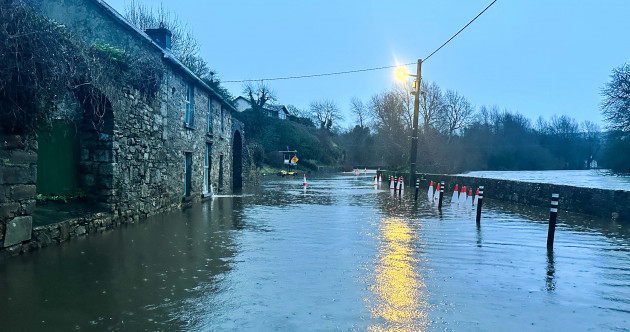
The disruption caused by Storm Chandra only sharpened that reality. Flooding brought parts of the road network to a standstill, but the real takeaway wasn’t just about extreme weather. As transport academic Professor Brian Caulfield argued in a recent Irish Times column, the chaos exposed a deeper problem: a transport system that lacks resilience and struggles to cope when anything out of the ordinary happens. Even areas that weren’t directly affected quickly seized up, showing how little slack there is in the system.

That observation matters, because at the same time motorists are being warned that further measures are coming to push people out of cars and into other modes of transport. The objective — reducing emissions and congestion — is understandable. The sequencing is not.

More cars are on the road now than at any point since before Covid. One of the reasons is rarely acknowledged in transport debates: the large-scale working-from-home experiment that Ireland ran during the pandemic has quietly been rolled back. Offices have refilled as bosses either feel the pressure of justifying expensive office leases or just prefer to have their eyes on employees – the thinking being if they can’t see you, you aren’t working.

Commutes have returned, and many journeys that once disappeared have been reinstated as if the past few years taught us nothing. I live in Cork and travel to Dublin on occasion and the M8 at 6am looks like it might at 8am. People are trying to leave earlier and earlier to have some control over the time they “might” arrive.

During Covid, traffic volumes collapsed, journey times improved, air quality improved and pressure on the network eased almost overnight. It showed that not every trip needs to happen every day, and that hybrid working can be a powerful transport policy tool when it’s taken seriously.

Today, much of that flexibility has been lost, and the roads are paying the price. We’ve seen an increase in electric vehicle sales, searches for EVs on DoneDeal Cars are up compared to last year and the end of month results from The Society of the Irish Motor Industry are set to show a dramatic increase in new EV registrations in January when their results come out shortly.

People are moving to cleaner cars all the time, but while the air might be getting slightly cleaner due to EVs, this isn’t doing much to help with the gridlock we are witnessing.
Against that backdrop, threatening further penalties for motorists risks missing the point. We already pay more than most EU countries for our cars, for the fuel that goes in them, or for the electricity that charges them if they are electric.

Few counties pay anything like the annual motor tax we pay for our cars, but there is pitiful evidence of where it is being used correctly given the events of late. If the transport system already struggles during storms, incidents or peak periods, what happens when we deliberately try to push large numbers of people onto alternatives that may not yet be able to cope?

Before reaching for more sticks, there’s a far more constructive step available: properly test the alternatives. A nationwide, well-signalled trial of free public transport and shared bikes, for a defined period, would provide real evidence rather than assumptions. Not during a quiet summer month, but right away, when traffic volumes are high and the system is under genuine pressure.

I called for this back in March 2023, and since then public transport use has increased but we have no idea if everyone who can use it, is.

Removing the cost barrier, even temporarily, would tell us a lot. If uptake increases sharply, that suggests many people are willing to change behaviour when public transport is affordable and accessible. If uptake remains low, it would confirm what many already suspect — that frequency, reliability, geography and journey time are the real barriers, particularly outside the main cities.

Such a trial would also expose where the system creaks. Capacity issues on busy routes, gaps in rural provision, and the knock-on effects of delays would all become visible very quickly. In other words, it would stress-test the network in a controlled way, rather than discovering its weaknesses during the next storm or disruption.

There’s another reality that often gets lost in policy debates. Data from platforms like DoneDeal Cars consistently shows that for many households, car ownership isn’t a preference but a necessity. People buy cars because they need them to work, to manage family life, or to function in places where public transport simply doesn’t meet their needs.

Cycling and walking are already free, but they don’t work for everyone, particularly over longer distances or in poor weather. Simply telling people to “choose differently” without ensuring viable alternatives exist only adds to frustration — and to stress on already congested roads.

If the goal is real behavioural change, not just headline announcements, then Irish people need a fair opportunity to try alternatives that actually fit their lives. Test them properly. Measure the results honestly. Support hybrid working where it clearly reduces pressure on the network.

If the alternatives work, invest in them and incentivise their use. If they don’t, fix what’s broken.

But until then, adding more penalties to a system already under strain risks making commuter stress worse, not better. Would you use public transport more if it was free? Or does it simply not exist where you are? Let us know in the comments.

Paddy Comyn is the Head of Automotive Content and Communications with DoneDeal Cars. He has been involved in the Irish Motor Industry for more than 25 years.

Note: Journal Media Ltd has shareholders in common with Done Deal Ltd 

Readers like you are keeping these stories free for everyone...
A mix of advertising and supporting contributions helps keep paywalls away from valuable information like this article. Over 5,000 readers like you have already stepped up and support us with a monthly payment or a once-off donation.

View 59 comments
Close
59 Comments
This is YOUR comments community. Stay civil, stay constructive, stay on topic. Please familiarise yourself with our comments policy here before taking part.
Leave a Comment
    Submit a report
    Please help us understand how this comment violates our community guidelines.
    Thank you for the feedback
    Your feedback has been sent to our team for review.

    Leave a commentcancel

     
    JournalTv
    News in 60 seconds