We need your help now

Support from readers like you keeps The Journal open.

You are visiting us because we have something you value. Independent, unbiased news that tells the truth. Advertising revenue goes some way to support our mission, but this year it has not been enough.

If you've seen value in our reporting, please contribute what you can, so we can continue to produce accurate and meaningful journalism. For everyone who needs it.

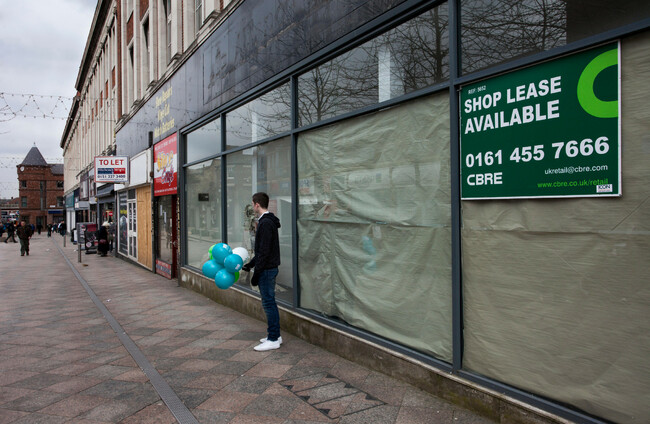
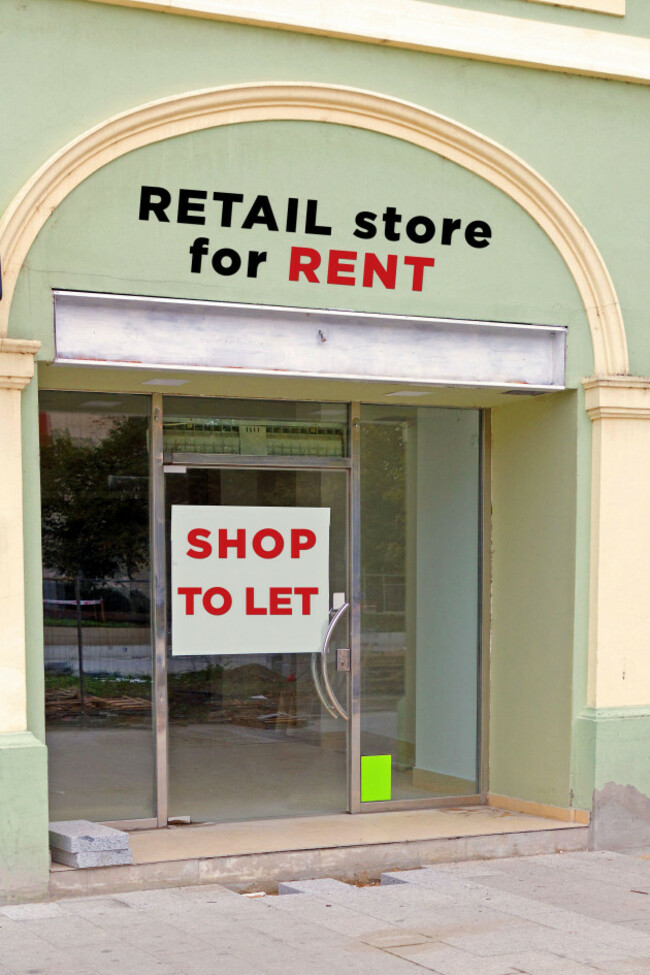
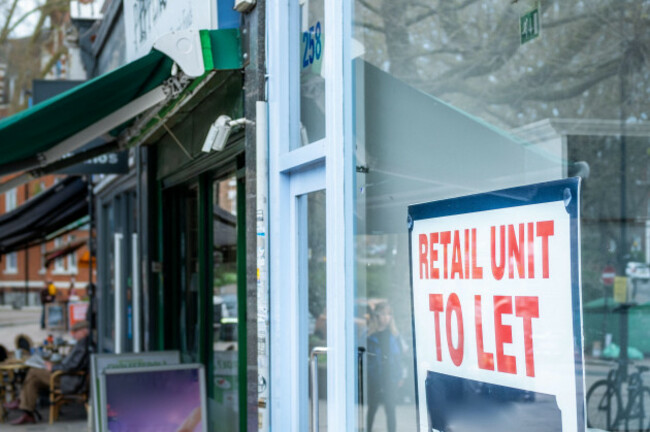
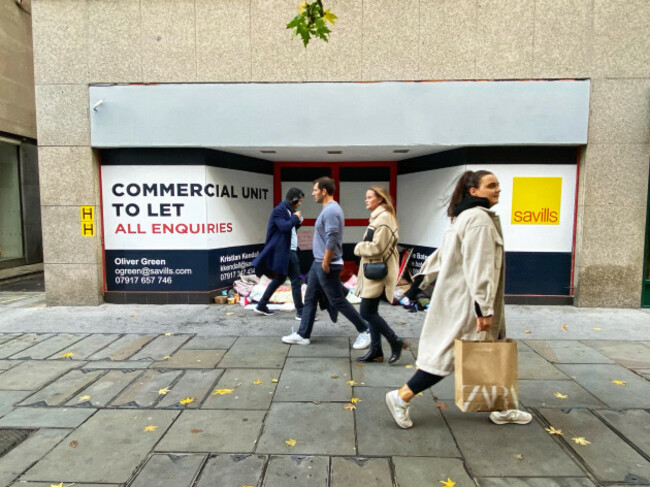
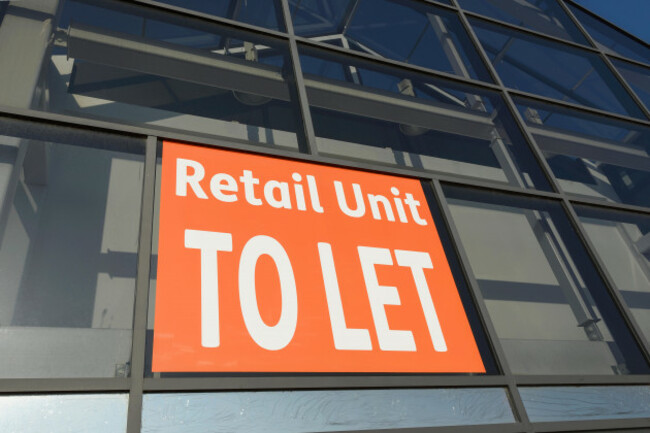
These empty and unused commercial units in the UK are typical of scenes playing out along Irish streets. Alamy Stock Photo

New apartments, empty shops The quiet scandal of Ireland’s modern dereliction

Jude Sherry and Dr Frank O’Connor look at how empty ground-floor retail units are becoming the newest blight on our urban centres.

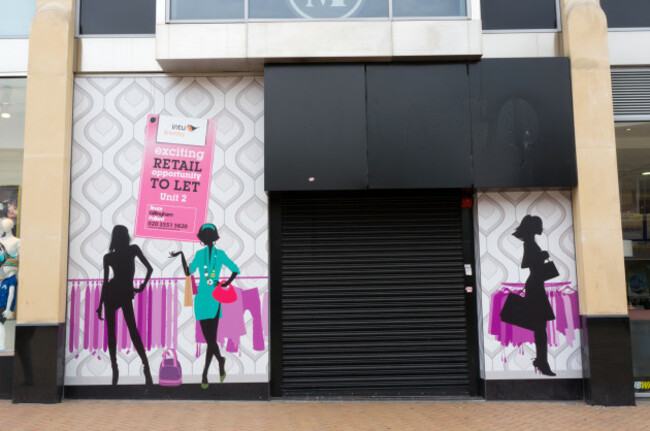
IT IS NOW widely accepted that dereliction is vandalism, a crime against society. Five years of the #DerelictIreland movement have seen to that. With a heavy focus on urban dereliction, our social media feeds are dominated by old, decaying buildings on historic streets, but what can get missed at times is what could be termed “modern dereliction”.

Unfortunately, decay and rot of modern streetscapes in newly constructed apartment blocks is all too common. When ground floor commercial units are left empty for years it causes many problems for the new communities that emerge around these seemingly abandoned units. But these problems also present an amazing opportunity.

empty-shop-for-rent Alamy Stock Photo Alamy Stock Photo

Just 2 minutes’ walk from our home here in Cork City, there are numerous examples of empty units below apartment blocks. The vast majority have been empty since we moved here in 2018, and they look like they have never been occupied.

Surely it can’t make financial sense to leave premises empty for so long. Yet clearly, for many owners, it does — otherwise developers and landlords would have gone out of business long ago. The inescapable conclusion is that, at some point, renting these units is deemed to be either financially unviable or simply not worth the hassle.

Why build them at all?

”But they have to build them to get planning” is the generic cry of defence we often hear, and it may be true, meaning the mixed-use developer has fulfilled their legal requirements. 

But what about the needs of the existing and emerging local communities that have to live with the blight of this modern dereliction? What about their need to feel safe walking home along these dead streets that facilitate unwelcoming criminal activities? These communities need to be surrounded by beauty, an essential public service according to renowned social practice artist Theaster Gates

london-retail-unit-to-let-sign-on-british-high-street Alamy Stock Photo Alamy Stock Photo

These are the easy-to-identify unmet needs. But what about the invisible opportunity costs that communities pay due to this modern dereliction? The missed chances that cannot be realised because, instead of renting out these low-demand spaces at a low rent to community-improving tenants, the owners let them rot.

The units are becoming a blight on the neighbourhood instead of positively contributing. This model results in a lack of third spaces for communities to grow, or for creatives to have freedom to experiment, while innovative hospitality or experience-based service start-ups are never given the opportunity to germinate.

So why are these units empty? How is this vacancy incentivised over occupation? Is it simply that landlords are demanding high rents or holding out for high returns that only large chains can afford? We know office and retail rents have not reduced much over the last five years despite having the highest retail vacancy rates in the history of the state, and even the highest office vacancy rates in Europe. This is not normal supply and demand market dynamics.

Another common excuse is that high commercial rates are deterring smaller businesses from renting these units (rates that don’t fully apply to empty units). The ongoing impact of online shopping, of course, should get a mention, as well as potential challenges with planning approval for change of use.

an-empty-shop-is-seen-advertised-to-let-by-savills-in-london-on-november-30-2021 Alamy Stock Photo Alamy Stock Photo

While some say that there is a cultural resistance to living above the shop in Ireland, surely that argument is wearing thin, particularly with modern sound insulation and an ever-diverse population of inhabitants. The list of excuses goes on. The reality is there are a multitude of reasons ranging from bad design and build flaws, issues with access and location, misaligned developer incentives and bad planning policies. However, all of these reasons are surmountable.

Policies need to change

We urgently need to stop this culture of leaving commercial units empty for years, but how do we do that? Firstly, we make sure business rates are applied to all commercial units when the full building is complete and not on the first commercial tenancy, as currently happens.

We also need to stop the Rates Rebate Schemes, where landlords get very generous discount rates on vacant units. A new commercial vacancy tax is also needed to disincentivise this hoarding of empty units after one year of being vacated, and at a similar rate to other countries, which set commercial vacancy fines of two or three times the business rates.

We are confident that such a vacancy tax would quickly decrease the vacancy rate and, over time, would reduce the commercial rents. Councils could then use this additional revenue to reduce the business rates of active companies. This would enable a flourishing of creative and community spaces to emerge in these wasted spaces.

retail-unit-to-let-sign Alamy Stock Photo Alamy Stock Photo

These empty units could also be converted into homes. As it happens, empty commercial units around the corner from where we live are in the process of being converted into homes. It’s taken a few years so far, but it is very positive to see this happening. What planner is going to say no to more homes? And if the conversion can be done in line with building regulations, there is no need to even go for planning.

These conversions are not always easy, and not all buildings will be suitable, but what if this conversion option were designed in from the start? Adaptable Design is a critical component of the Circular Economy for the built environment and is deemed best practice in many countries. Ideal for quieter streets with lower footfall, these ground-floor units should be designed to be flexible, to alternate between use as a home or a commercial unit when demand dictates.

Over the next decade, demand for homes will probably win out, but who knows what the long-term future holds? There might be a return to communal spaces or physical shops, and these units should be easy to convert back into commercial use, if designed and built appropriately from the outset.

retail-unit-to-let-in-intu-bromley-shopping-centre-formerly-the-glades-bromley-kent Alamy Stock Photo Alamy Stock Photo

Another quick and cost-effective solution is ‘Meanwhile Use’, the temporary use of the building, applying low rent and generous rate discounts. Ideal for locations where the landlord believes they will eventually get a long term high paying commercial tenant.

Back in 2021, we launched the meanwhile use concept ‘Leaba Te – A Hotbed of Innovation’, where communities, creatives and start-ups can easily access long-term empty commercial units for the short to medium term (one week to five years). Our report for the Collaborative Town Centre Health Check (CTCHC) Programme at the Heritage Council contains International Case studies that prove the idea works, a meanwhile use model canvas, feasible government policies and an initial roadmap to enable a creative regeneration of towns and cities across Ireland. While meanwhile use has become a commonly discussed policy across local authorities in recent years, it is very rarely applied, a missed opportunity for so many.

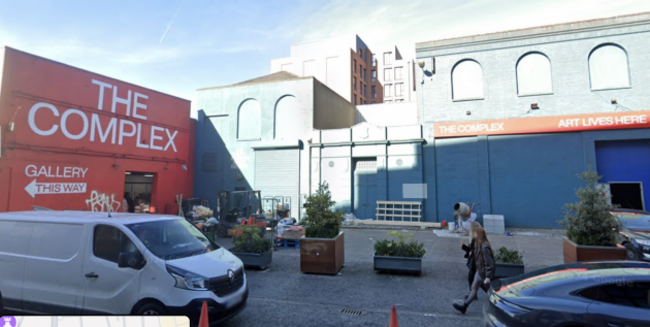
The recent shameful closure of The Complex arts centre in Dublin because of a commercial focus “exclusively on achieving vacant possession, to maximise the redevelopment value of the site”, is another example of how the cultural side of our cities suffers when vacancy is rewarded. Evicting the artists to leave the premises empty, when our urban areas are a wash with empty buildings they cannot access, is a regressive model.

Screenshot 2026-01-28 at 20.18.11 The Complex art centre, a recent casualty of the lack of support for arts and community initiatives in Dublin. Google Google

Meanwhile, the use of empty ground floor commercial units under new apartment blocks would offer the potential to help rejuvenate the dwindling night-time economy, especially non-alcoholic activities. I’m sure many of those living in the homes above these empty units would rather have activity in them, even late into the night, if it made their neighbourhoods feel safer, more connected and alive.

If our government and councils were serious about having these purpose-built commercial spaces used, they would bring in Compulsory Rental Orders. A similar approach was introduced last year in England, where councils can now auction leases for shops that have been empty for over a year. These High Street Rental Auctions are often for a five-year period and set no minimum rent, letting the market decide what they are actually worth.

We’d make a confident bet that everyone knows at least one modern derelict ground floor commercial development, built but never used. What would you like to see in these units? What would entice you out of your home or out of your car to come visit these ground floor units?

There are plenty of spaces to trial everyone’s wishes. We live with dóchas that many of these units will be quickly used. Let that be homes or community spaces or even some wacky café instead of being left to morph into what looks like a zombie movie set for years to come.

Jude Sherry and Dr Frank O’Connor are founders of anois.org, ffud.art and #DerelictIreland.

Readers like you are keeping these stories free for everyone...
A mix of advertising and supporting contributions helps keep paywalls away from valuable information like this article. Over 5,000 readers like you have already stepped up and support us with a monthly payment or a once-off donation.

Close
24 Comments
This is YOUR comments community. Stay civil, stay constructive, stay on topic. Please familiarise yourself with our comments policy here before taking part.
Leave a Comment
    Submit a report
    Please help us understand how this comment violates our community guidelines.
    Thank you for the feedback
    Your feedback has been sent to our team for review.

    Leave a commentcancel

     
    JournalTv
    News in 60 seconds