We need your help now

Support from readers like you keeps The Journal open.

You are visiting us because we have something you value. Independent, unbiased news that tells the truth. Advertising revenue goes some way to support our mission, but this year it has not been enough.

If you've seen value in our reporting, please contribute what you can, so we can continue to produce accurate and meaningful journalism. For everyone who needs it.

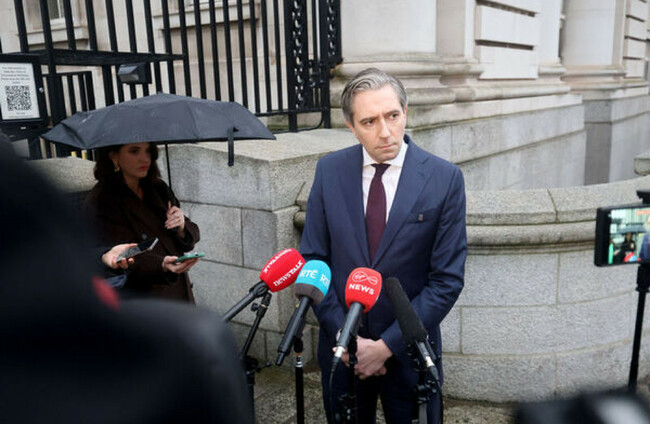
The new incentivised savings scheme is proposed by finance minister, Simon Harris. Rolling News

Simon Harris' saving scheme plan 'It could make Irish savings work harder, if done properly'

With billions sitting idle in low-interest accounts, the Government’s new investment strategy must focus on building a culture of long-term investing, not just more saving, writes Nick Charalambous.

THE GOVERNMENT HAS decided to develop a national savings and investment strategy. Taken at face value, this is both timely and necessary.

The details are sketchy, but we know that Minister for Finance, Simon Harris told RTÉ’s This Week programme that he is going to publish a framework for the initiative in the next few weeks.

He mentioned this could see people being able to get a return on a certain amount of their savings without having to pay tax and referred to a whole group of people locked out of investing.

It’s true to say that Irish households are not short of savings, we know that billions of euro remain in current accounts earning little or no return, and deposit balances remain historically high.

We also know that the issue is not a failure to save, but a failure to invest. Too much capital is just sitting idle, often due to apathy, caution or uncertainty about markets. What many do not realise is that, in real terms, money left in low-interest deposit accounts is quietly losing value to inflation.

Cautious savers

For many years, it’s been a policy that has led us to be more cautious about participating in investing. For example, Ireland’s tax take on investment profits is more than that of many of its European peers, our exit tax remains high compared to other countries, and the rule requiring Exchange Traded Fund (ETF) investors to pay tax every eight years interrupts the long-term compounding that helps build wealth.

At the same time, traditional deposit accounts continue to offer returns that frequently lag inflation; the consequence is that good savers can experience negative real returns over time.

If this new strategy is to have an impact, it must go beyond encouraging households to “put money aside.” We already know that Irish people are strong savers. The greater opportunity lies in creating a framework where investing is accessible, transparent and tax-efficient. We also shouldn’t forget the importance of financial education; people must be equipped to understand both the risks of investing and the risks of not investing.

The SSIA model

There’s no doubt that for many of us, of a certain vintage, four letters sprung to mind when we heard of a new state savings and investment initiative… SSIA.

For those younger readers, the Special Savings Incentive Account was basically a government savings scheme in the early 2000’s in which the State topped up your savings with a bonus if you left the money untouched for five years.

00091840_91840 Charlie McCreevy, former finance minister launched the SSIA savings scheme. Rolling News Rolling News

Some may look to the original SSIA model as a template for this proposal. However, while SSIA successfully increased short-term savings, it did little to embed a long-term investing culture.

The real challenge now is getting more people involved and keeping them involved. We must build a system that supports long-term saving and investing, not just short-term gains.

If the Government is serious about that, there are a few key issues it needs to tackle. These include further reductions in exit tax, reform or removal of the deemed disposal rule, broader access to diversified, low-cost investment vehicles, and integration with auto-enrolment pension policy.

Deposits feel safe. Inflation is not.

There is also a behavioural change. After years of economic volatility, from the financial crisis to the pandemic, many households understandably favour liquidity. Cash feels secure, and market fluctuations feel uncertain.

The problem is, we don’t see inflation in the same way as market volatility. When your savings account is earning just 1–2% while inflation is higher, you’re effectively losing money in real terms, even if the balance looks the same. It happens quietly, but over time your spending power is steadily chipped away.

euro-coins-in-a-jar-with-euro-banknotes-underneath-shown-on-a-tiled-table-top Alamy Stock Photo Alamy Stock Photo

We also see many people who take out loans against their own savings balances in the credit union, and they can’t access the savings until the loan is repaid. This means that they are effectively being charged interest to use their own savings. It’s an overly cautious mindset, and it is costing us.

This brings us back to the importance of education sitting alongside reform. Financial literacy cannot be an afterthought. If people don’t understand the policy, they won’t engage in it.

A cultural shift

Ireland has world-class expertise in funds and asset management. Yet, our own citizens often feel locked out of that system. A national strategy gives us an opportunity not just to tweak tax rates but to reshape the culture around money.

This can be the mechanism that moves us from the mindset of short-term saving to long-term ownership and from fear-based financial decisions to informed participation.

If done properly, this approach could work alongside Auto-Enrolment, improve retirement outcomes and ease Ireland’s heavy reliance on property as the go-to way to build wealth.

However, it will require clarity that investing is not only for the wealthy, that risk can also be managed, and that long-term growth is possible.

Ireland isn’t short of money; it’s short on confidence about how to put it to work. A smart savings and investment plan could fix that, not by telling people to save more, but by giving them better reasons to invest.

Nick Charalambous is Managing Director at Alpha Wealth

Readers like you are keeping these stories free for everyone...
A mix of advertising and supporting contributions helps keep paywalls away from valuable information like this article. Over 5,000 readers like you have already stepped up and support us with a monthly payment or a once-off donation.

Close
46 Comments
This is YOUR comments community. Stay civil, stay constructive, stay on topic. Please familiarise yourself with our comments policy here before taking part.
Leave a Comment
    Submit a report
    Please help us understand how this comment violates our community guidelines.
    Thank you for the feedback
    Your feedback has been sent to our team for review.

    Leave a commentcancel

     
    JournalTv
    News in 60 seconds