We need your help now

Support from readers like you keeps The Journal open.

You are visiting us because we have something you value. Independent, unbiased news that tells the truth. Advertising revenue goes some way to support our mission, but this year it has not been enough.

If you've seen value in our reporting, please contribute what you can, so we can continue to produce accurate and meaningful journalism. For everyone who needs it.

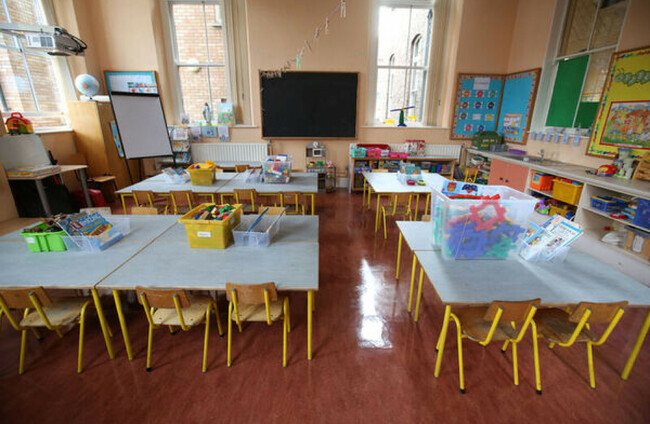
Alamy Stock Photo

Special Needs Assistants u-turn the talk of the Dáil amid government backlash from its own TDs

TDs from opposition and government parties say they were receiving worried calls from local schools.

THE REVIEW INTO Special Needs Assistants, which was quickly paused by government yesterday, was the talk of Leinster House with even government backbench TDs voicing their consternation. 

It’s been estimated that more than 180 schools were told they would lose SNAs, with about 300 SNA posts affected.

TDs were on their feet yesterday to say they had been contacted by schools around the country after they received notifications from the National Council for Special Education (NCSE) that their SNA allocations will be reduced for the next school year.

More than 40,000 people have signed a petition to stop the loss of Special Needs Assistant (SNA) posts after it emerged that hundreds of roles in mainstream primary schools could be redeployed from next September.

Only minutes before the Taoiseach was facing down questions on the controversy during Leaders’ Questions, Minister for Education Hildegarde Naughton had issued a statement saying the review would be paused. 

The minister said she had listened carefully to all the issues raised by parents and school communities in recent days, stating: 

I want to reiterate that there are no cuts to SNA numbers.

Anger at the Fianna Fáil parliamentary party meeting

The Fianna Fáil parliamentary party meeting last night was dominated with concerns raised about the SNA allocation review.

While people accepted the position that there was an overall increase in SNAs in 2026 and that no SNA was losing their job, members were angry that some schools had received notice that they would lose several SNAs in one go.

TDs and senators said they accepted that reviews were required, but said it was totally unacceptable that schools would face such a cliff edge, especially when it had been several years since the last review.

One Senator said the SNA programme was created by Fianna Fáil and the party needed to ensure it was defended.

The Taoiseach responded by saying the review had been paused and he had spoken to the NCSE and the Minister for Education on the matter. 

The matter was highlighted throughout the yesterday in the Dáíl, with one contribution from Redress Donegal TD Charles Ward stating that children with the most complex needs in Donegal are losing essential supports under the SNA review process.

Highlighting the case of Scoil Aodh Rua agus Nuala in Donegal town, the TD said there are children who rely on SNA supports to eat, to move and to communicate.

Schools facing big reductions

“These are their primary care needs and yet 2.5 SNAs are being cut from this school next September. It is far too much for this school to manage,” he said, stating that a reduction sometimes is appropriate but for this school, this is not one of these times.

Fianna Fáil TD for Dun Laoghaire-Rathdown Cormac Devlin also raised concerns about a local school, stating that Our Lady of Good Counsel Boys National School in Johnstown had been notified of a reduction in its SNAs from nine to 3.83 – a cut of over 57% in a school with 387 kids, including 55 with identified additional care needs.

“There is real anxiety in the school community, as the Taoiseach can imagine, and the redeployment arrangements for affected SNAs has yet to be fully understood or set out,” he said. 

One minister told The Journal that their phone was hopping on Monday night from concerned parents and schools.

Government sources state that the letters sent to schools provided “little rationale” for the changes in the number of SNAs allocated, but they said that people will now have time to absorb the changes that will be coming in September. 

While some TDs surmised that perhaps there wasn’t adequate communication between the NCSE and the government, which was perhaps caught on the hop when the letters were issued to schools, those behind the scenes state that it would be unusual for the NCSE to do anything without the Department of Education knowing about it. 

One source said the NCSE are under the aegis of the department and everything would be teased out with the department before any such letters would issue. 

Anything that is political, the department would be very clued in, they said, stating that it would be understood there would be a backlash. 

Letters issued with lack of clarity 

Whether there was a breakdown in communication or not, the result of letters issuing, and the lack of clarity as to why changes are being imposed, have not landed well in constituencies around the country. 

Again, this appears to be a controversy of the government’s own making. By not foreseeing around the corner that this was going to prove difficult, it has resulted in an embarrassing pause being put in place. 

It is rare for one issue to dominate much of Dáil proceedings, but that was the case yesterday, with the Taoiseach facing questions from the opposition, and those within his own party, about what was going on. 

Responding to questions, the Taoiseach said he has seen the number of SNAs grow from almost nothing to close to 25,000 in the school system. In the last five years alone the number of Special Needs Assistants has grown by 45%, he added.

“I accept that the manner in which letters went out and so forth did cause concerns… we need to say to all schools that no SNA will be removed from any school during the school year,” he said. 

The Taoiseach said no SNA will lose their job but added that there is a redeployment scheme getting underway, with local panels being created. 

He said he understood fully the stress, difficulty and fear around services being reduced in schools.

More regular reviews of schools needed, says Taoiseach

“Children move on from one school to another, so it is not plausible that there would not be reviews,” he said, stating that reviews should take place more regularly. 

“Different needs will arise on an annual basis. New children will come into schools and some that did not have a need will develop a need because of the number of children coming into the school in a new year,” the Taoiseach told the Dáil. 

Government sources also pointed out that SNAs are assigned to the pupil, not the school. 

Speaking to those working in schools, The Journal was told that while on paper, many SNAs are assigned to one child, it is often the case that they end up helping out with other children in the class with difficulties.

They argued that while SNAs are assigned to a child, schools do end up relying on them for other children with additional needs. 

The Taoiseach said over two thirds – 68% – of those that were part of the review of 585 schools will either see no change or an increase in their SNA allocation.

He said there is an appeals mechanism for schools that disagree with the allocation. 

Micheál Martin said if an assessment is made by the NCSE that a certain school does not require the SNAs it had two or three years ago, “it should not hit the school with a shock decision that it is making the call to take out three or four”.

“It should be done much more gradually,” he said. 

That is how matters will proceed now, he told the Dáil, stating that Minister Naughton is going to sit down and work it out with the NCSE. 

Government sources point out that the redeployment of SNAs from one school to another is a relatively new change, stating that it will take time for the system to adjust, but ultimately, the plan is to move SNAs between schools, where needed. 

While the pause has been put in place, it is by no means permanent, with the change in allocations likely to proceed unless appeals are lodged.

Martin said more regular reviews would be better, stating that the needs of the student population in each school do change year-on-year. 

A spokesperson for the Department of Education and Youth told The Journal in a statement that the SNA allocation circular 32/2025 outlined to the education system that the NCSE would be conducting reviews in schools in the 2025/26 school year.

The circular stated that the reviews would be a holistic examination of the care needs in all settings within the continuum of provision in a school so as to ensure that SNAs are allocated to schools with students who have the greatest level of significant care needs.


They said schools were also informed that all SNA reviews when completed by the NCSE would result in either no change to their allocation, an increase in their SNA allocation, or a reduction, dependent on the care needs identified in the school.

“The reason for the pause to process is because we have listened to concerns and are engaging intensively to ensure that all of the concerns raised are really understood and children with special educational needs are fully supported. No further letters on SNA review outcomes will issue until these engagements have concluded in the coming weeks,” said the department. 

Readers like you are keeping these stories free for everyone...
A mix of advertising and supporting contributions helps keep paywalls away from valuable information like this article. Over 5,000 readers like you have already stepped up and support us with a monthly payment or a once-off donation.

Close
23 Comments
This is YOUR comments community. Stay civil, stay constructive, stay on topic. Please familiarise yourself with our comments policy here before taking part.
Leave a Comment
    Submit a report
    Please help us understand how this comment violates our community guidelines.
    Thank you for the feedback
    Your feedback has been sent to our team for review.

    Leave a commentcancel

     
    JournalTv
    News in 60 seconds