We need your help now

Support from readers like you keeps The Journal open.

You are visiting us because we have something you value. Independent, unbiased news that tells the truth. Advertising revenue goes some way to support our mission, but this year it has not been enough.

If you've seen value in our reporting, please contribute what you can, so we can continue to produce accurate and meaningful journalism. For everyone who needs it.

At least a third of hot school meals don't meet basic nutritional standards, Minister says

Dara Calleary raised concerns over the availability of fruit and vegetables.

AT LEAST A third of hot school meals on offer do not meet basic nutritional standards, Social Protection Minister Dara Calleary said.

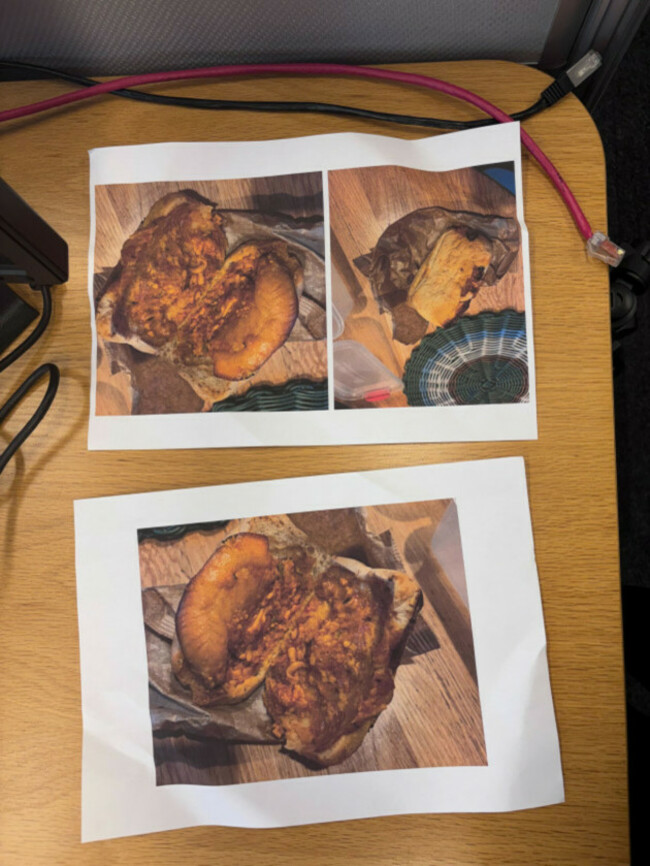
TDs, parents and others have raised concerns about the nutritional value of hot school meals, with celebrity chef Darina Allen comparing them to “airline food”, and Independent Ireland leader Michael Collins yesterday brandishing images of some of the meals at the media outside Leinster House.

One would need a “strong stomach” and to be a “very strong human being to put that inside you”, the TD said.

original A photograph provided to TD Michael Collins by a constituent of a lunch their child had brought home from school after refusing to eat it.

A dietitian was appointed in September who assessed 400 school meals on offer for free at primary schools across Ireland.

They assessed the meals for five basic nutritional values, out of a total of 16 different nutritional elements issued to providers as guidance.

Calleary said today a third of the meals offered did not meet at least three of the five basic nutritional standards.

“In our dietitian’s initial work, she has found general compliance [with] nutritional standards,” Calleary said on RTÉ Radio.

“There are issues. There are issues pertaining to the availability of fruit and vegetables.”

The 16 nutritional guidelines include a recommendation that every meal should contain two servings of fruit, vegetables or salad, that fish is served once a week, and that salt should not be added to water when cooking rice or pasta.

The guidelines also state fresh drinking water should be available every day and that funding “must not be spent on sugar-sweetened drinks”.

They were published in 2021 as part of Healthy Ireland, the national framework which aims to improve the health of the Irish population.

Calleary said the dietitian will next do random inspections in schools, and said 400 schools were inspected last year.

“There are 16 standards, she’s just looked at five initially. That’s why she wants to do more work,” he said.

“That’s why she wants to get into schools, because the predominance of her work to date has been desktop, looking at menus, so she’s going going to get out into schools.

“But I would say that the overall theme, the overall report, is in the right direction.”

He said that last April, he issued an instruction to remove high fat, high salt ‘treat’ foods from being offered, and 80% of food suppliers had adhered to it.

Calleary said he wanted to reduce the number of ultra-processed foods in the hot school meal programme and said he would be “weeding out that remaining 20%”.

“They were initially designed as once a week option, the high salt, the high sugar foods – they became five days a week, so we’ve taken them off completely. I moved very quickly in that,” he said.

He said there are cold options available in some schools but hot meals are “better” nutritionally, and said another issue being examined by the dietitian was portion sizes, which could help to address food waste.

The scheme began in 2019 as a pilot scheme to provide meals in an effort to ensure children get one hot meal a day, at a cost of €54.3m.

The hot school meals programme is expected to cost €280m in 2026, a cost of €3.20 per meal, and involves 300 suppliers, 3,200 schools, and 550,000 eligible students.

“We’ve taken universal approach to this because you don’t know what’s happening in any home, and for children in particular, it’s important that they’re not differentiated. I think the universal approach is a far more positive and fair approach.”

Close
23 Comments
This is YOUR comments community. Stay civil, stay constructive, stay on topic. Please familiarise yourself with our comments policy here before taking part.
Leave a Comment
    Submit a report
    Please help us understand how this comment violates our community guidelines.
    Thank you for the feedback
    Your feedback has been sent to our team for review.

    Leave a commentcancel

     
    JournalTv
    News in 60 seconds