We need your help now

Support from readers like you keeps The Journal open.

You are visiting us because we have something you value. Independent, unbiased news that tells the truth. Advertising revenue goes some way to support our mission, but this year it has not been enough.

If you've seen value in our reporting, please contribute what you can, so we can continue to produce accurate and meaningful journalism. For everyone who needs it.

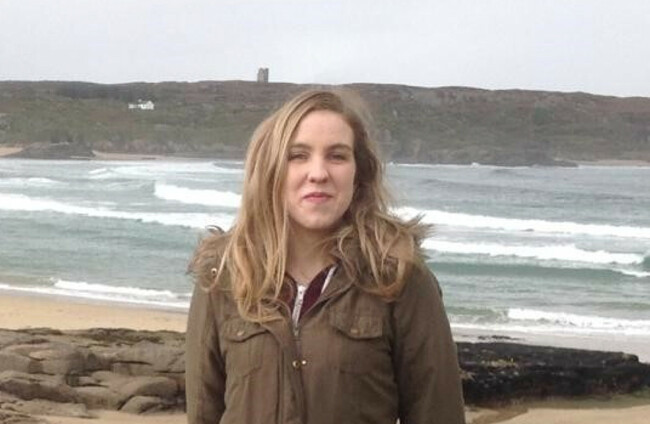
Natalie McNally was killed a week before Christmas in 2022 (Family handout/PSNI/PA)

Natalie McNally was killed in a 'prolonged assault', pathologist tells murder trial

Stephen McCullagh has denied murdering the 32-year-old, who was 15 weeks pregnant with their child, on 18 December 2022.

LAST UPDATE | 38 mins ago

A PREGNANT CO Armagh woman was killed in a “prolonged assault”, a murder trial has heard.

Natalie McNally (32) was killed at her home in Lurgan a week before Christmas in 2022.

Stephen McCullagh (36), of Woodland Gardens in Lisburn, has denied murdering his girlfriend Ms McNally, who was 15 weeks pregnant with their child.

McCullagh sat in the dock at Belfast Crown Court between two prison guards today during the second day of his trial.

Family and friends of Ms McNally were watching on from the public gallery.

A jury of six men and six women has been sworn in to serve during the trial, which is expected to last for around five weeks, before Judge Mr Justice Patrick Kinney.

Yesterday, prosecuting barrister Charles MacCreanor KC set out their case that Ms McNally’s murder was “planned, calculated and premeditated, one which he (McCullagh) hoped to get away with”.

Ms McNally’s time of death has been estimated to be between 8.50pm and 9.30pm on Sunday, 18 December 2022.

The emergency services were alerted on the following evening on Monday, 19 December.

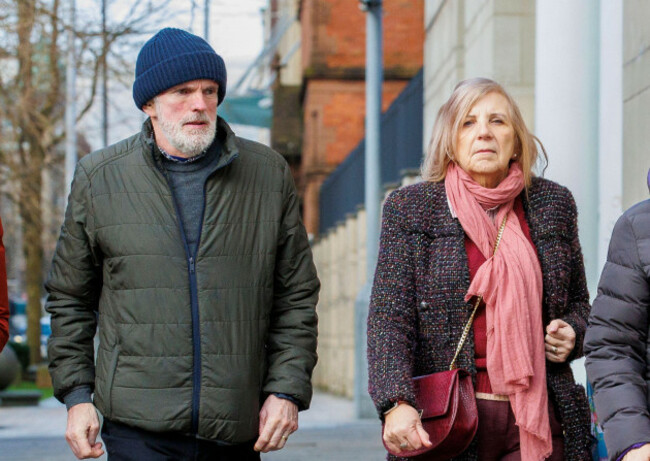
noel-and-bernie-mcnally-parents-of-natalie-mcnally-outside-belfast-crown-court-ahead-of-a-trial-for-stephen-mccullagh-who-is-accused-of-the-murder-of-natalie-mcnally-natalie-was-pregnant-when-she Noel and Bernie McNally, the parents of Natalie McNally, outside Belfast Crown Court yesterday. Alamy Stock Photo Alamy Stock Photo

Today, state pathologist for Northern Ireland Dr James Lynas – who carried out a post-mortem examination of Ms McNally on 21 December 2022 – gave evidence to the trial.

He said her death was caused by compression of the neck, stab wounds to her neck and blunt force trauma to her head, and detailed bruising and injuries across her head, neck and arms, as well as internal injuries.

“A male foetus of approximately 15 weeks gestation was within the womb… It seems likely that the foetus died as a result of the assault,” he added.

Lynas described Ms McNally as being of a slim build and 5ft 5in in height, and tests having shown no alcohol in her blood at her time of death, but a therapeutic concentration of an anti-depressant medication.

He said bruising on the left and right side of her neck had a circular profile suggestive of having been caused by fingertips, “as may have occurred if the neck had been forcibly grasped by a hand”.

‘Multiple bruises’

Meanwhile, he said the type of bruising on the left side of the neck may suggest that a ligature had been tightened around it, but also said such bruising may have also occurred if her neck had been gripped, particularly if there was “interposed clothing”.

He said the compression of the neck could have caused her to rapidly lose consciousness, and if sustained, caused her death.

However, there were also three stab wounds to her neck caused by a bladed weapon which, he said without medical attention, would have been expected to bleed quite rapidly and would have caused her death.

A third area of injuries were lacerations to her head, “in keeping with her having sustained at least five heavy impacts to the head”, which could have been caused by an object with a semi-sharp edge, such as the corner of a piece of furniture.

“There were also multiple bruises of the scalp and face, again in keeping with her having sustained additional blunt impacts, some possibly the result of blunt blows such as punches,” he added.

“Microscopic examination of the brain by a specialist neuropathologist revealed evidence to suggest that she possibly survived in her moribund condition for a short period of time.”

Lynas said bruising to her left wrist and right arm may suggest raising her arms to protect herself, while the finding of food in her lungs further indicates she may have survived for a short period of time in an unconscious state.

He said he believed it had been a “prolonged assault”.

“This is a complex case, and it is difficult to be certain of the exact fatal sequence from the autopsy findings alone,” he said.

“Both the neck compression and the stab wounds of the neck could have caused her death on their own… It is difficult to completely exclude the possibility that the multiple severe head injuries she had sustained may have played some part in the overall fatal sequence.

“The compression of the neck, stab wounds of the neck and blunt force trauma of the head all contributed to the fatal outcome.”

‘The ex-partner has done this’

Earlier today, the court heard McCullagh told police at the scene that her ex-partner was responsible.

Sergeant Stewart attended the scene at Ms McNally’s house on the night of Monday, 19 December and described seeing McCullagh “very upset”, and seeing him being led out of the house by a colleague.

He said Ms McNally was lying on her back at the top of the stairs in the townhouse, beside the living room in the property, with blood visible around her and a puncture wound on her neck.

He also saw a small black-handled knife lying on the floor of the living room and blood on the wall.

The uniformed sergeant said he briefed the on-call duty detective sergeant that night for Lurgan CID by telephone.

He said McCullagh was arrested at around 11.40pm and taken into custody at Banbridge police station.

The on-call detective sergeant also gave evidence to the trial today.

He said he briefed a senior officer who instructed him that the incident should be treated as murder.

He agreed that Sergeant Stewart told him McCullagh had told police at the scene: “I know what has happened, the ex-partner has done this”, and that he had directed McCullagh to be arrested for murder.

Constable Orr, who arrested McCullagh, said he said: “Murder, why?” in response to being arrested.

The trial continues and will hear the defence case set out by barrister John Kearney KC later this week.

Close
JournalTv
News in 60 seconds