We need your help now

Support from readers like you keeps The Journal open.

You are visiting us because we have something you value. Independent, unbiased news that tells the truth. Advertising revenue goes some way to support our mission, but this year it has not been enough.

If you've seen value in our reporting, please contribute what you can, so we can continue to produce accurate and meaningful journalism. For everyone who needs it.

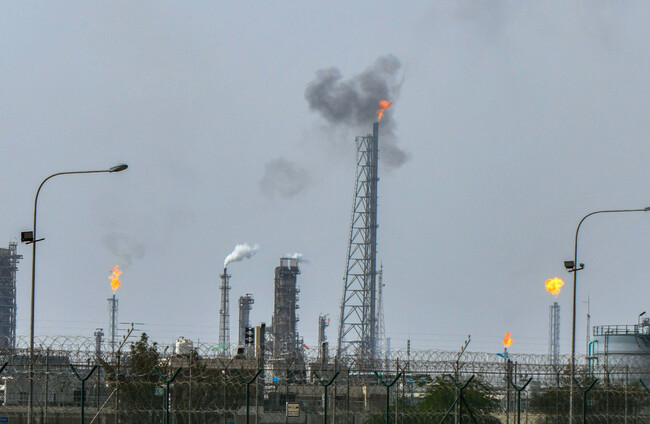
The Mina Al-Ahmadi refinery in Kuwait, which can process some 730,000 barrels of oil per day, was damaged yesterday in another Iranian attack. Alamy Stock Photo

Head of global energy watchdog warns Iran war is greatest energy security threat in history

The International Energy Agency has recommended a list of measures to member countries as a way to alleviate energy pressures caused by the conflict.

THE HEAD OF the International Energy Agency (IEA) has said that the US-Israel-Iran war is “the greatest global energy security threat in history”.

In an interview with the Financial Times, Fatih Birol said the volume of gas that has been cut off by the conflict is twice what Europe lost from Russia in 2022, while more oil has been lost than during the two oil shocks triggered by the 1973 Arab-Israeli war and the 1979 Iranian Revolution. 

He also told the newspaper that the scale of the crisis has been underestimated by politicians and the markets, adding that it would take six months for some oil and gasfields to be operational again, and “much longer” for others. 

His comments come the price of oil continues to soar amid the escalating conflict, leading to surging fuel prices. 

Brent crude oil, the international standard, was around $107 (€93) in morning trading today, up more than 47% since the start of the war. 

The IAE has set out a list of measures that “can be implemented quickly” by governments, businesses and individuals to try to ease the energy pressures caused by the conflict. 

The energy watchdog said working from home where possible would reduce fuel demand for commuting, while lowering speed limits by at least 10 kilometres per hour would cut fuel use across both passenger vehicles and freight.

They also recommended encouraging a shift from private cars to public transport, car sharing, avoiding air travel and switching to electric cooking, where possible. 

Besides road transport, the IAE said governments ”can lead by example through public sector measures, regulatory action and targeted incentives while ensuring that support for consumers is timed appropriately and focused on those most in need”.

“Experience from previous crises shows that well-targeted support mechanisms are more effective and fiscally sustainable than broad-based subsidies,” the organisation said.

Minister for Transport Darragh O’Brien has confirmed that a government intervention aimed at reducing fuel prices will be voted on in the Dáil and put in place next week, once it is approved by Cabinet next Tuesday.

Iran strikes Gulf oil facilities

Meanwhile, Iran has defiantly insisted that it is still building missiles nearly three weeks into the conflict. 

US and Israeli leaders have said that its strikes have decimated Iran’s military. But the country has stepped up its attacks on energy sites in Gulf Arab states after Israel bombed its massive South Pars offshore natural gas field earlier in the week.

Iran’s attacks on energy infrastructure in the Gulf combined with its stranglehold on shipping in the Strait of Hormuz, a strategic waterway through which a fifth of the world’s oil and other critical goods are transported, has raised concerns of a global energy crisis.

Two waves of Iranian drones attacked a Kuwaiti oil refinery early today, sparking a fire.

The Mina Al-Ahmadi refinery, which can process some 730,000 barrels of oil per day, is one of the largest in the Middle East. It was damaged yesterday in another Iranian attack.

Bahrain’s interior ministry said a fire broke out after shrapnel from an intercepted projectile landed on a warehouse, and Saudi Arabia reported shooting down multiple drones targeting its oil-rich Eastern Province.

Heavy explosions shook Dubai as air defences intercepted incoming fire over the city, where people were observing Eid al-Fitr, the end of the holy Muslim fasting month of Ramadan.

In Iran, meanwhile, many were marking Nowruz, the Persian new year – even as Israel said it had launched new strikes, and explosions were heard over Tehran.

Loud explosions could also be heard in Jerusalem after the Israeli army warned of incoming Iranian missiles.

In addition to steadily striking Iran, Israel has regularly hit Lebanon, targeting Iran-backed Hezbollah militants.

Today, it broadened its attacks to Syria, saying it hit infrastructure there in response to what it described as attacks on the minority Druze population in the southern province of Sweida.

More than 1,300 people have been killed in Iran during the war.

Israeli strikes in Lebanon have displaced more than one million people, according to the Lebanese government, which says more than 1,000 people have been killed. Israel says it has killed more than 500 Hezbollah militants.

In Israel, 15 people have been killed by Iranian missile fire. Four people were also killed in the occupied West Bank by an Iranian missile strike.

At least 13 US military members have been killed.

With reporting from Press Association

Readers like you are keeping these stories free for everyone...
A mix of advertising and supporting contributions helps keep paywalls away from valuable information like this article. Over 5,000 readers like you have already stepped up and support us with a monthly payment or a once-off donation.

Close
32 Comments
This is YOUR comments community. Stay civil, stay constructive, stay on topic. Please familiarise yourself with our comments policy here before taking part.
Leave a Comment
    Submit a report
    Please help us understand how this comment violates our community guidelines.
    Thank you for the feedback
    Your feedback has been sent to our team for review.

    Leave a commentcancel

     
    JournalTv
    News in 60 seconds