We need your help now

Support from readers like you keeps The Journal open.

You are visiting us because we have something you value. Independent, unbiased news that tells the truth. Advertising revenue goes some way to support our mission, but this year it has not been enough.

If you've seen value in our reporting, please contribute what you can, so we can continue to produce accurate and meaningful journalism. For everyone who needs it.

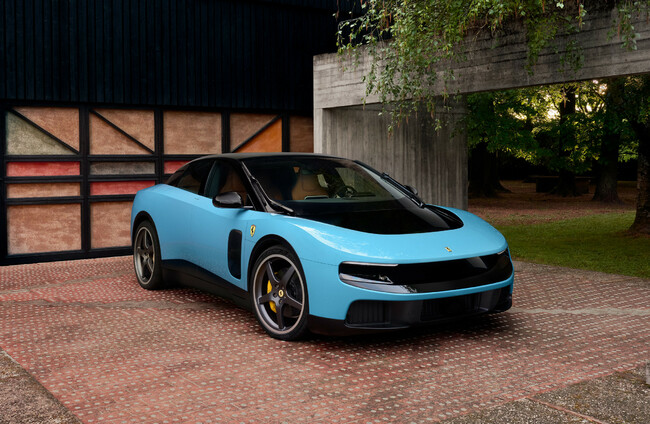
The Ferrari Luce. Ferrari

When cars nearly destroyed the companies that made them

Ferrari’s first electric car just wiped billions off the company’s value in a single day – but this is far from the first time a car has threatened to undo its own manufacturer.

PHOTOGRAPHS AND MEMES have been circulating on social media all week of the new Ferrari Luce.

Designed in part by Jony Ive, the designer who gave the world the iPhone, it is Ferrari’s first fully electric car, its first five-seater, and priced at an eye-watering €550,000.

It is also, if the reaction from investors and the public is anything to go by, potentially one of the most damaging things Ferrari has ever done to itself.

Ferrari shares fell sharply after the Luce’s unveiling. Former Ferrari president Luca di Montezemolo, the man who oversaw some of the brand’s greatest years, was scathing in the Italian media and even suggested the prancing horse should be removed from the car.

Italy’s transport minister weighed in too. Social media, predictably, caught fire.

Ferrari has defended the design as deliberately divisive, while CEO Benedetto Vigna has argued that people are often wary of what is new. He may be right.

Ferrari may recover. The Luce may, in time, be reassessed. But this week, for a few extraordinary days, a single car threatened to destabilise one of the most valuable and storied automotive brands on earth.

It is not the first time this has happened. Not even close.

The Ford Edsel: $250 million on a car nobody wanted

In 1957, Ford in the US decided to fill a perceived gap in its model range between the standard Ford and the more premium Mercury. What followed was one of the most famous and expensive disasters in corporate history.

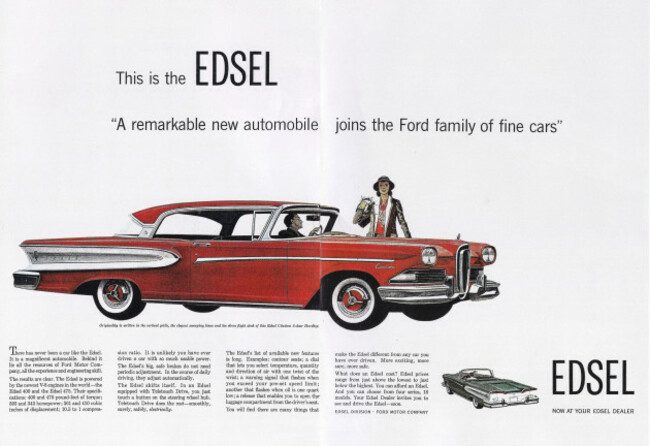
1957-ford-edsel-ad-this-is-the-edsel A 1957 advertisement for the Ford Edsel. Alamy Stock Photo Alamy Stock Photo

The Edsel arrived in 1958 with enormous fanfare and extraordinary hype. Ford had spent $250 million (€214.7 million) developing and marketing it, which is around $3 billion (€2.58 billion) in today’s money.

The car itself was not exactly what you would call subtle. The front grille, a vertical oval sitting in the centre of the horizontal grille, was widely described as the automotive equivalent of a toilet seat.

It did not help that the cars were riddled with quality issues straight off the production line – doors that jammed, bonnets that would not open, push-buttons that did not push.

Then there was the timing. The Edsel landed at the precise moment a recession hit the American market, just as buyers were turning away from large, expensive cars toward smaller, more economical ones. The Edsel was the wrong car, for the wrong moment, at the wrong price, with the wrong face.

Ford killed the brand after just three model years. It became so synonymous with failure that ‘Edsel’ entered the English language as a byword for corporate misjudgement. Ford survived, of course, because it was too large to sink, but the psychological damage to the company lasted for years.

The Ford Pinto: the car that asked how much a human life was worth

The Edsel was expensive. The Pinto was dangerous.

Launched in the US in 1971 as Ford’s answer to rising competition from Japanese and European small cars, the Pinto was rushed to market in just 25 months, which is roughly half the time normally allowed for a new vehicle programme. In that rush, something went badly wrong.

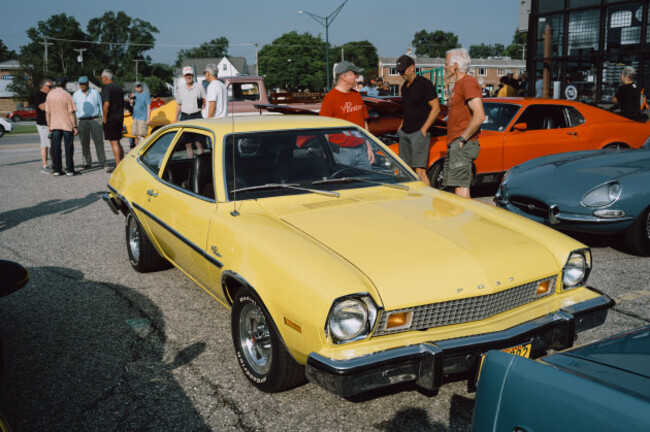
a-ford-pinto-at-a-cars-and-coffee-style-event-in-birmingham-michigan-usa The Ford Pinto. Alamy Stock Photo Alamy Stock Photo

The fuel tank was positioned behind the rear axle with just nine inches of crush space between it and the rear bumper. In a rear-end collision at anything above a moderate speed, the tank was liable to rupture. Cars caught fire. People died.

Ford knew about the flaw before the car launched.

What made the Pinto scandal uniquely damaging was not just the deaths. At least 27 people were killed in Pinto fires, though higher estimates have circulated – but the memo.

Internal Ford documents, later revealed in court, showed the company had done a cost-benefit analysis that concluded it was cheaper to pay out compensation claims than to fix the fuel tank at an estimated $11 (€9) per vehicle.

The scandal became a defining example of the dangers of reducing safety to a balance-sheet calculation.

The story broke nationally in 1977. Ford was forced to recall 1.5 million vehicles the following year. The brand took a reputational beating it did not fully recover from for a generation.

The Pinto became a case study not just in automotive failure but in corporate ethics, or the absence of it.

The Pontiac Aztek: ugly enough to end an 84-year-old brand

Not all automotive disasters kill people. Some just kill companies slowly, by eroding identity until there is nothing left to save.

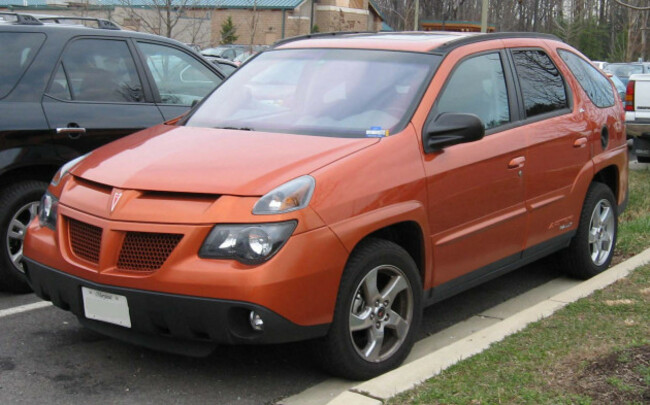
The Pontiac Aztek, unveiled at the Detroit Motor Show in 2000, has been called the ugliest car ever made so many times that the description has almost become affectionate. Almost.

the-2002-2005-pontiac-aztek-is-a-compact-crossover-suv-known-for-its-distinctive-styling-and-versatile-interior-with-a-spacious-cabin-ample-cargo-space-and-a-range-of-unique-features-it-offers-pra The Pontiac Aztek. Alamy Stock Photo Alamy Stock Photo

Pontiac’s own focus groups warned against building it. The bosses pressed on. When it launched, it was immediately and mercilessly mocked. The Aztek sold about 119,000 units in five years before being mercifully discontinued in 2005.

The car itself did not kill Pontiac. What it did was something perhaps worse: it became the symbol of a brand that had lost its way.

Pontiac had once stood for performance, for excitement, for the GTO and the Firebird. By the time the Aztek appeared, it stood for nothing in particular, and the Aztek made that nothingness visible and unmissable.

When General Motors restructured during the 2009 financial crisis, Pontiac was axed.

The Aztek was later placed first on Edmunds.com’s list of the hundred worst cars ever made and has often been treated as a symbol of Pontiac’s decline.

That may be slightly unfair as GM’s financial implosion had many causes but the Aztek remains the most visible monument to what happens when a car brand stops knowing what it stands for.

Breaking Bad later made the Aztek culturally iconic by giving it to Walter White. The irony is perfect: a car that represented catastrophic failure became the defining vehicle of a show about catastrophic failure.

Aston Martin and the Cygnet

Ferrari is not the first luxury performance brand to look at the world changing around it and make a decision its customers wished it hadn’t.

In 2011, Aston Martin launched the Cygnet.

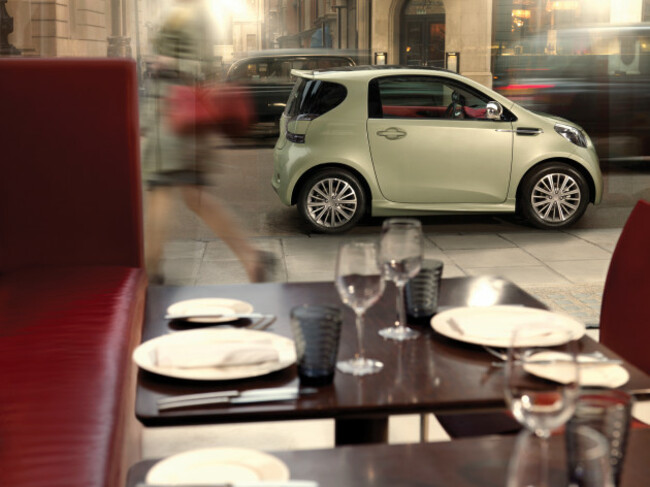
2011-2013-CYGNET-13 The Aston Martin Cygnet. joe windsor-williams joe windsor-williams

It was, at its core, a rebadged Toyota iQ city car, sold for around £30,000 (€35,000) which was roughly three times what the Toyota iQ cost new on the basis that Aston Martin customers might want a small car to navigate city streets.

The idea made a certain corporate sense: EU fleet emissions regulations required Aston Martin to bring its average CO2 figure down, and a small city car would help. The execution was execrable.

Customers who had spent £100,000 (€115,000) on a DB9 did not want a city car with an Aston Martin badge. They found the whole thing faintly insulting.

The Cygnet sold in very small numbers and was discontinued in 2013. And here is where the story takes a delicious turn: those same Cygnets, the cars that almost nobody wanted, have since become sought after precisely because they are so rare.

At least one UK seller has recently advertised a Cygnet at £52,000 which is more than a used 2014 Aston Martin DB9. Scarcity, it turns out, is its own kind of desirability.

What the Luce is really about

Ferrari is in a different position to any of these companies. It is extraordinarily profitable. Its order books are full years in advance. Its customers are, by definition, among the wealthiest people on earth.

One bad week on the stock market will not sink Maranello.

But the Luce story is more interesting than a share-price wobble.

What it reveals is the particular vulnerability of brands built almost entirely on emotion. Ferrari does not just sell cars. It sells a feeling: speed, history, Italian craftsmanship, Formula 1, sound.

The Luce, a silent, five-seat, four-door electric car designed by the man who made the iPod challenges every one of those things at once.

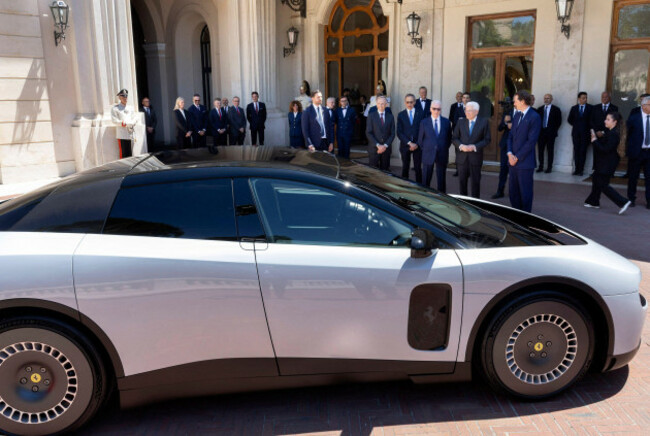
roma-italia-26th-may-2026-rome-president-sergio-mattarella-with-john-elkann-and-piero-ferrari-respectively-chairman-and-vice-chairman-chief-executive-officer-of-ferrari-spa-accompanied-by-be The Ferrari Luce. Alamy Stock Photo Alamy Stock Photo

For context on how rare and rarefied that feeling is in Ireland: right now, there are about 18 Ferraris listed for sale on DoneDeal Cars. In the whole country.

The cheapest will still cost you the guts of six figures.

These are not functional transport decisions. They are aspirational ones bought by people for whom the badge, the sound, the history is almost the entire point.

The Luce asks those buyers to reconsider what Ferrari means. That is not a small ask.

Vigna is right that people fear change.

He is also right that the automotive industry must change. But the history of cars is full of companies that underestimated how much their customers’ emotional attachment to the brand was the product.

When you rupture that attachment, you are not just launching a new model; you are gambling with everything you have built.

Ford learned it with the Edsel. Pontiac learned it too late with the Aztek. Aston Martin got a reminder with the Cygnet.

Ferrari may be different. The Luce may, over time, find its audience and its place in the brand’s history. But this week, on the streets of social media and in the trading rooms of Milan, the prancing horse looked, for a moment, as though it were stumbling.

In the car business, that is never a comfortable sight.

Paddy Comyn is the head of automotive content and communications with DoneDeal Cars. He has been involved in the Irish motor industry for more than 25 years.

Journal Media Ltd has shareholders in common with DoneDeal Ltd

Readers like you are keeping these stories free for everyone...
A mix of advertising and supporting contributions helps keep paywalls away from valuable information like this article. Over 5,000 readers like you have already stepped up and support us with a monthly payment or a once-off donation.

Close
JournalTv
News in 60 seconds