Sign in. It’s quick, free and it’s up to you.
An account is an optional way to support the work we do. Find out more.
Sign in. It’s quick, free and it’s up to you.
An account is an optional way to support the work we do. Find out more.
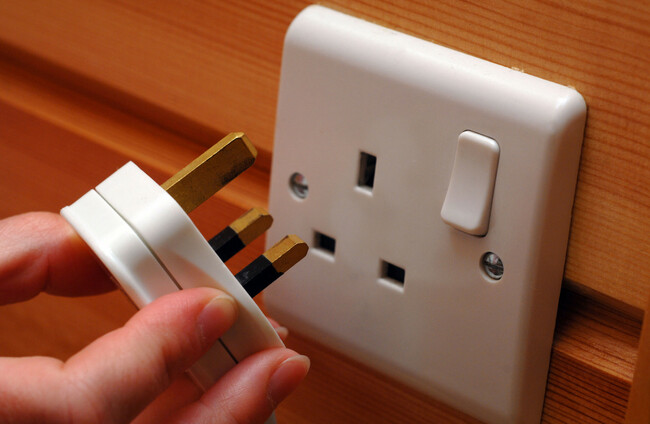
IT’S A BANK holiday weekend, it’s June, it’s a time for putting the feet up – but if you’ve an hour to spare over the next few days, there’s a job that could save you hundreds of euro this year: switching your energy supplier.
I know, what a pain, right? However, the advice comes as energy prices climb. Electric Ireland, which supplies energy to more than 1.2 million homes and businesses across Ireland, announced this week that the average electricity bill will rise by 8% and the average gas bill by 7.7% from 1 July.
The electricity and gas unit rate will both increase by 9.5%.
Yuno Energy announced similar news on Friday for its 100,000 customers, as it confirmed its electricity prices will increase by 9.5%, while its gas prices will rise by 11% on estimated annual household bills.
Ireland has the highest household electricity prices in the European Union, almost 40% above the EU average.
Despite the soaring costs, thousands of households are still sitting on expensive energy bills simply because they have never switched suppliers.
“There are probably huge numbers of people still with Electric Ireland and Bord Gáis simply because they were the old incumbents,” Daragh Cassidy, head of communications at price comparison site Bonkers.ie, told The Journal.
“A lot of people have genuinely never switched or considered switching. They may still call it the ESB. But if you haven’t switched in years, there’s a very good chance you’re massively overpaying.”
According to the Commission for Regulation of Utilities (CRU), the process is much easier than many people realise.
“It’s quick, it’s easy, it’s free, and it can usually be done online in just a few minutes,” Cassidy added.
“There’s no interruption to your electricity or gas supply. Nobody is coming out to dig up your driveway or install new wires. It’s literally just getting a bill with a different logo on it.”
Roughly 25,000 electricity customers and around 10,000 gas customers switch suppliers every month in Ireland, either by contacting suppliers directly or using one of the four comparison websites approved by the regulator:
The good news is that most of the information needed is already sitting on your latest bill.
According to the CRU, households should first locate their Meter Point Registration Number (MPRN) for electricity and their Gas Point Registration Number (GPRN) for gas.
These numbers identify your property and can both be found near the top of your bill.
You’ll also need a recent meter reading, your latest bill, and your bank details if you plan to pay by direct debit.
“It’s really just a few basic details,” Cassidy said.
“Once you have those, you can compare pretty much every plan on the market within minutes.”
The CRU also advises people to check how much energy they use annually and whether they are still tied into a fixed contract. If your contract hasn’t expired yet, there may be an early exit fee.
Cassidy said some suppliers can charge up to €100 per fuel (i.e. separate charges for gas and electricity contracts) for leaving early.
“So if you’re only halfway through a contract, it’s worth checking first,” Cassidy said.
“But for lots of people, especially those who haven’t switched in years, the savings can still far outweigh any exit fee.”
The first step is checking what deal you’re currently on.
Many households signed up to introductory discounts years ago without realising those discounts eventually expire. Once they do, customers are often quietly rolled on to much higher standard rates.
“The people paying the most are usually the people who haven’t switched in a long time,” Cassidy said.
“If you switch regularly every year or two, you’re normally getting some kind of discount, but if you stay put for years, you can end up paying full standard rates without really noticing.”
The CRU recommends first contacting your existing supplier to see if they can offer a better deal or loyalty discount before deciding to leave.
“Your current supplier won’t want you to switch,” the CRU states on their site.
After that, consumers can compare offers using one of the CRU-approved comparison websites.
There are currently 11 main electricity and gas suppliers operating in Ireland, with plans for each varying depending on usage, direct debit discounts, cashback offers and smart meter tariffs.
Once a customer chooses a supplier and confirms the switch, the process itself usually takes only a few days.
You should receive an automated sign-up confirmation email from your new supplier immediately once you register to switch to them.
When you switch supplier, there’s a 14-day cooling-off period, meaning you have 14 days to change your mind and cancel the switch without any penalty.
According to Bonkers.ie, households switching both gas and electricity suppliers can currently save roughly €500 to €600 a year, depending on usage and their current tariff.
“Some people can save as much as €800,” Cassidy said.
“People will jump through hoops to save €50 annually on car insurance, but there are households sitting there paying €500 or €600 more than they need to on energy.”
He said customers who remain loyal to the same provider for years often end up subsidising the better discounts offered to new customers.
“If you haven’t switched your broadband, your mobile provider, your energy supplier or your mortgage in years, you can be pretty certain you’re overpaying somewhere,” Cassidy said.
Cassidy believes many households still assume the process is stressful or overly technical, particularly older customers who may never have switched before.
“There’s definitely a level of inertia there,” Cassidy said.
“Sometimes people think it’s going to be difficult or that they’ll only save a small amount of money. But for most households it’s genuinely straightforward, and the savings can be very significant.”

To embed this post, copy the code below on your site














have your say