We need your help now

Support from readers like you keeps The Journal open.

You are visiting us because we have something you value. Independent, unbiased news that tells the truth. Advertising revenue goes some way to support our mission, but this year it has not been enough.

If you've seen value in our reporting, please contribute what you can, so we can continue to produce accurate and meaningful journalism. For everyone who needs it.

Gary Gannon Dublin city centre is out of control this week, we cannot accept this as normal

On his walk home through Dublin last night, the Social Democrats TD saw a capital city in chaos, with clear indications that Ireland’s drug and policing policies have utterly failed.

YESTERDAY EVENING I walked home from Leinster House.

It’s a walk I’ve made countless times over the years. First as a councillor, now as a TD for Dublin Central.

Down through College Green, onto Westmoreland Street, across O’Connell Bridge and up O’Connell Street. I know every part of that walk.

Yesterday, though, it felt different.

Not because I saw anything entirely new. It was because none of it surprised me any more.

On Westmoreland Street, before I’d even reached the bridge, a young garda was talking to a woman sitting in a doorway. She was clearly in the grips of addiction. There was no shouting. No confrontation. He spoke to her gently and with respect.

That stayed with me.

But so did the reality of what he was actually there to do. He couldn’t treat her addiction. He couldn’t get her into recovery. The only thing he could really do was remind her she was breaching her bail conditions and ask her to move on.

There’s a quiet sadness in how deeply unfair that is on everyone involved.

Inadequate resourcing

We’re asking gardaí to deal with problems that policing alone can never solve. Addiction, homelessness, untreated mental illness, poverty. These aren’t policing failures, but we have placed our criminal justice system in a position of responding to crises that are, at their heart, failures of the State.

By the time I got to O’Connell Bridge, the mood had completely changed.

bottle-caps-between-paving-stones-in-temple-bar-dublin-ireland Alamy Stock Photo Alamy Stock Photo

Groups of young men standing at either end of the bridge openly dealing drugs. No attempt to hide it.

They were confident. Organised. Operating in groups, protecting their trade through intimidation and the threat of violence.

We all know it’s happening. Prime Time showed exactly these scenes after filming there over four weeks, only a couple of weeks ago. This isn’t hidden from the public. It isn’t hidden from government. It certainly isn’t hidden from the people who use the city every day.

Yet, thousands of people still crossed the bridge yesterday evening. Families. Tourists.

People heading home from work. Most barely looked up.

Not because they didn’t care. But because we’ve slowly become so accustomed to passing through this marketplace.

Outside the GPO, another queue.

Not for a concert. Not for a match.

A queue for food.

Just last week the government announced yet another new vision for the GPO and the future of O’Connell Street. And look, regeneration is important. Of course, it is.

But standing there, looking at queues of people waiting patiently for a hot meal, you can’t escape the thought that any vision for O’Connell Street has to start with the people living on it. Otherwise, what exactly are we regenerating?

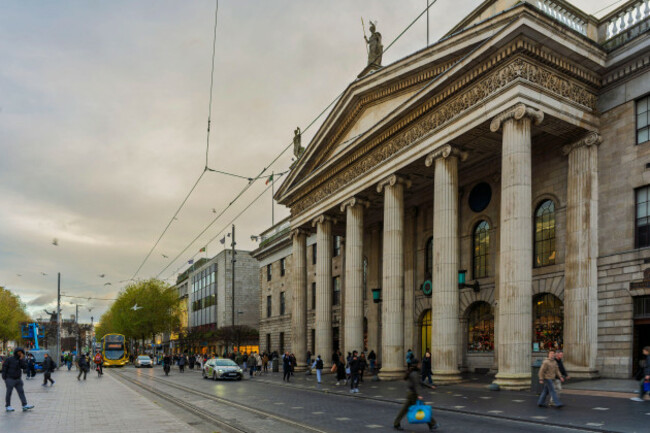
general-post-office-on-oconnell-street-in-dublin-with-pedestrians-traffic-and-tram-tracks-at-this-historic-city-landmark The government has plans for the GPO, but do they include inner city communities? Alamy Stock Photo Alamy Stock Photo

As I continued up towards the Ambassador, something else struck me.

Casinos. Vape Shops. Fast-food chains.

None of them is to blame for the addiction, poverty or organised crime.

But together they all add to a feeling that’s hard to describe.

Everything felt transactional.

Drugs. Vapes. Fast food. Slot Machines.

Every few metres, somebody was buying something, selling something, surviving or simply being moved along.

The system has failed

Yesterday was one of the hottest evenings of the year.

You’d expect the capital and the city’s main thoroughfare to be full of people out enjoying themselves. Sitting outside after work. Families enjoying the sunshine. Visitors seeing Dublin at its best.

Instead, what I kept seeing was vulnerability.

Some people making money from it. Others trying desperately to manage it.

Very few escaping it.

I’ve lived in Dublin Central my entire life. I’ve represented it in one form or another for more than 12 years.

These aren’t just streets I walk through. The people sleeping rough, the businesses trying to keep going, the gardaí trying to do impossible jobs, the addiction workers, youth workers and residents who refuse to give up on this city.

They’re people I’ve worked alongside for years. People I’ve grown up with.

People often ask me what the answer is.

The truth is, Dublin isn’t suffering from a shortage of ideas.

I’ve chaired the Oireachtas Committee on Drug Use. I’ve worked with gardaí, addiction specialists, youth organisations, residents’ groups and local businesses. I’ve argued for violence reduction strategies and health-led approaches to addiction.

We’re not short of evidence any more.

We’ve had the reports. We’ve had the recommendations. We’ve had the taskforces.
What we’re lacking is the political will to keep going after the headlines move on.

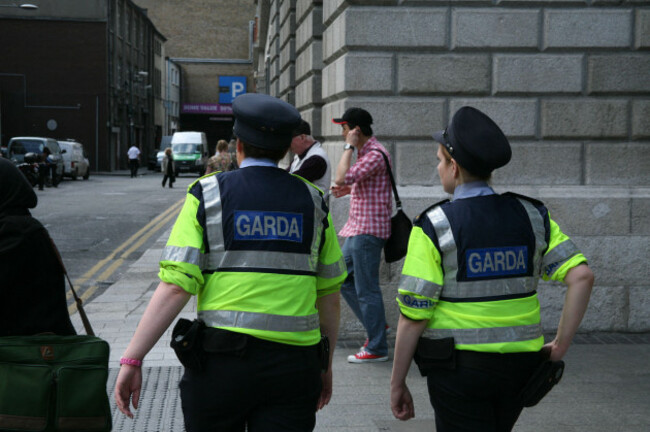
dublin-ireland-23rd-may-2012-two-female-garda-officers-on-patrol-on-dublins-oconnell-street Alamy Stock Photo Alamy Stock Photo

The cycle has become dangerously predictable…

Something happens. Another taskforce. Another review. Another government photoshoot at the press launch.

Everyone nods. Then O’Connell Street is left waiting.

Yesterday, I saw gardaí doing their absolute best.

I also saw the limits of asking policing to compensate for failures everywhere else.

Gardaí can’t arrest addiction.

Nor should we expect them to.

Every time I talk about supervised consumption facilities or decriminalising possession for personal use, someone says it’s soft on crime.

I’d ask those people to take that same walk I took yesterday evening.

Because the current approach certainly isn’t tough on crime.

The current approach is organised criminal gangs openly selling drugs on the capital’s main street.

The current approach is people with severe addictions cycling through the courts again and again without ever getting the treatment they need.

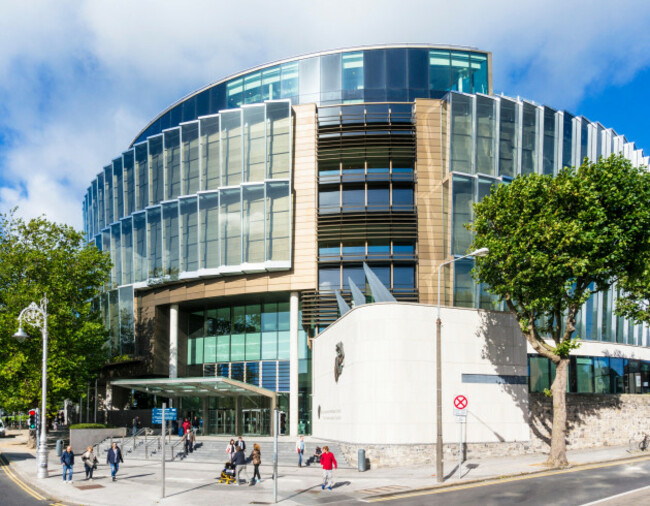
criminal-courts-of-justice-dublin-ireland-europe-eu Funnelling addiction through the courts is just not solving the problem. Alamy Stock Photo Alamy Stock Photo

The current approach is expecting gardaí to manage a public health crisis with powers that were never designed for it.

If that’s the hard-line approach, then it deserves to be judged by its results.

And the results are on display every day on the main street of our capital.

We don’t need another argument about whether supervised injection facilities work. We know they save lives.

We don’t need another decade debating whether criminalising addiction has failed. We know it hasn’t broken the grip of organised crime.

And we certainly don’t need another taskforce made up of people discussing streets they rarely spend time on.

We need decisions. We need delivery. We need funding.

Most of all, we need the courage to stop defending a status quo that is failing everyone: the residents, the business owners, the gardaí, the people trapped in addiction and the wider city.

O’Connell Street isn’t just another street.

For so many people, it’s Ireland.

It’s where visitors form their first impression of this country.

It’s where we gather in celebration, in grief and in protest.

It’s the heart of our capital, the front door of the Republic.

Walking home last night, I found myself asking a very simple question…

If we can’t summon the ambition to restore dignity, safety and hope to the most important street in our capital, where can we?

Because that’s what frightens me more than anything else. Not what I saw on my walk home, but the possibility that we’ve started accepting it as normal.

Gary Gannon is the Social Democrat TD for Dublin Central and the party’s Justice Spokesperson.

Readers like you are keeping these stories free for everyone...
A mix of advertising and supporting contributions helps keep paywalls away from valuable information like this article. Over 5,000 readers like you have already stepped up and support us with a monthly payment or a once-off donation.

View 53 comments
Close
53 Comments
This is YOUR comments community. Stay civil, stay constructive, stay on topic. Please familiarise yourself with our comments policy here before taking part.
Leave a Comment
    Submit a report
    Please help us understand how this comment violates our community guidelines.
    Thank you for the feedback
    Your feedback has been sent to our team for review.

    Leave a commentcancel

     
    JournalTv
    News in 60 seconds