We need your help now

Support from readers like you keeps The Journal open.

You are visiting us because we have something you value. Independent, unbiased news that tells the truth. Advertising revenue goes some way to support our mission, but this year it has not been enough.

If you've seen value in our reporting, please contribute what you can, so we can continue to produce accurate and meaningful journalism. For everyone who needs it.

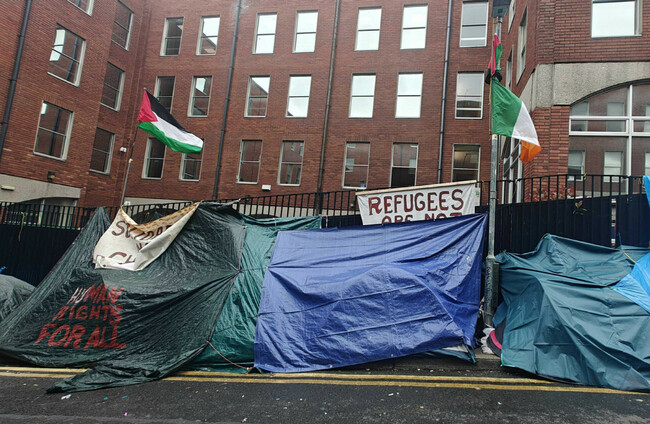
A refugee camp formed beside the International Protection Office on Mount Street last year. The Journal

Record number of people in Ireland's international protection system died last year

A migrant rights group said Ireland was still not providing “critical” vulnerability assessments for new arrivals.

A RECORD ANNUAL number of asylum seekers died in the international protection system last year, according to new figures which show 14 deaths took place in 2024.

The data from the International Protection Accommodation Service (IPAS) also shows another three asylum seekers have already died in the first six weeks of this year.

Responding to the figures, one migrant rights group said the Irish state was still not providing “critical” vulnerability assessments for newly arrived asylum seekers.

The number of people in Ipas accommodation has soared in recent years, with the latest weekly report showing 33,007 people in the system on February 16 last. As recently as December 2021, the figure was 7,224 people.

While 49 IPAS centres host 6,438 people, another 25,007 people are residing in 265 emergency accommodation centres and 722 people are in tented accommodation.

Eleven men and two women normally resident in IPAS accommodation died in 2024, alongside one other whose gender was not known or specified.

Three of the deaths happened in IPAS accommodation, while the other 11 deaths occurred offsite.

Of the three asylum seekers who have died so far this year, one was Quham Babatunde, a 34-year-old Nigerian man who died after a violent incident on South Anne Street in Dublin city centre in the early hours of February 15.

A number of people have already been charged in connection with his death.

The latest figures, covering the period 2022 to February 17 last, show that a total of 131 people in the direct provision system have died in that period, including 31 children aged 17 or under.

In over a third of all cases a cause of death is not available, while 15 are attributed to accidents, poisonings and violence.

Fiona Hurley, CEO of Nasc, the Migrant and Refugee Rights Centre, expressed sympathy to the families and loved ones of those who passed away and said the Irish state was still not providing “critical” vulnerability assessments for newly arrived asylum seekers.

“The increase in deaths in IPAS accommodation centres must be looked at in the context of the increased numbers of people applying for international protection in Ireland,” Hurley said.

Hurley outlined that 18,651 people applied for asylum in Ireland in 2024, a figure around 5,000 more than in 2023.

“The increase in the number of international protection applicants in 2024 has put additional pressure on an already strained accommodation system and the conditions for men who are left homeless for months and months waiting for accommodation to become available are dreadful,” Hurley said.

“Prolonged homelessness takes a significant toll on mental and physical health.

“Nasc is also concerned that the State has yet to reinstate vulnerability assessments for newly arriving asylum seekers. Without these critical assessments the State is legally obligated to provide, individuals with serious illnesses may not be identified early on and connected with the appropriate healthcare and support services they need.

“Nasc together with other organisations have raised our concerns that the State is failing in its legal duty to provide these vulnerability assessments.”

Hurley said long waiting lists for healthcare in Ireland, which affect all communities, also made the situation even more difficult for asylum seekers.

“Many are left without access to GP treatment or essential healthcare services, further exacerbating their vulnerability and isolation,” she said. “The State needs to take urgent action to address these systemic issues and ensure that no one is left without the care and support they need.”

Readers like you are keeping these stories free for everyone...
A mix of advertising and supporting contributions helps keep paywalls away from valuable information like this article. Over 5,000 readers like you have already stepped up and support us with a monthly payment or a once-off donation.

Close
JournalTv
News in 60 seconds