We need your help now

Support from readers like you keeps The Journal open.

You are visiting us because we have something you value. Independent, unbiased news that tells the truth. Advertising revenue goes some way to support our mission, but this year it has not been enough.

If you've seen value in our reporting, please contribute what you can, so we can continue to produce accurate and meaningful journalism. For everyone who needs it.

A selection of the meals provided for one school. The Journal

'Wrecked by dietitians' and 'sweaty' packaging: Your views on Hot School Meals

Politicians heard this week that the scheme isn’t sustainable, while some teachers said the short time allowed for children to eat isn’t helping.

MENU FATIGUE, A healthy eating backlash and “soggy” chicken goujons — these are just some of the issues raised by dozens of readers over the Hot School Meals scheme.

The programme began in 2019 before expanding significantly to now be eligible to some 3,700 primary schools across the country.

That means as many as 682,000 children can get fed through the scheme, but the Oireachtas education committee heard this week that the scheme is not sustainable in its current form.

Representatives from various school bodies outlined the challenges with the scheme, saying the quality and a weariness around the menu were reasons some families choose to opt out of the scheme. Overall, they felt it was a positive and impactful new school policy, but that the execution was so flawed so far.

The Journal asked our readers for their views on the scheme, whether they were a parent or a teacher, and the response has honed in on the various positives and drawbacks facing the school meals.

In recent years, we have used this Your Stories format to cover issues of the day, and this is one of the highest numbers of responses we’ve ever received.

What’s notable is that although there are a number of issues raised about Hot School Meals, the benefits of the scheme were also clearly outlined again and again by readers.

As one teacher put it, “Some of the kids who you would be worried about are getting a meal” instead of going hungry.

Change in attitudes by children toward the food

Multiple people made the same point in their responses, explaining that they had seen the views of schoolchildren change over time, taking against the food on offer.

Others told us that the food is often left uneaten, which they put down to problems around presentation and quality.

One parent from Waterford said that her daughter’s lunches come in “sweaty cardboard boxes” and that the food often goes to waste.

“The guilt at it going in the bin or to the dog every day really upset me,” this parent said.

I am not a wasteful person and the amount of waste accumulated with this scheme is phenomenal. We opted out.

She further asked: “What’s wrong with a piece of fruit and a sandwich for those needing a meal – add a soup in! It’s not hard.”

Brian from Cork said the “novelty quickly vanished” for his daughter, replaced with a belief that the meals are “often unappetising” instead.

“She became turned off by the menu, frequently coming home hungry,” Brian said.

“She often explains that she doesn’t feel like a heavy hot meal at midday, preferring the freshness of a sandwich, yet the system lacks flexibility.”

The meals are prepared centrally by one of around a dozen providers who have won the contract for that region. 

This father questioned whether the meals being centrally produced have meant they travel long distances and arrive “soggy and over-processed, resulting in textures that fail to tempt children”. Often, this happens because many primary schools don’t have the ability or facilities to provide hot cooked meals on site, so they sign up to contracts with food providers as part of the scheme. 

What does the food look like?

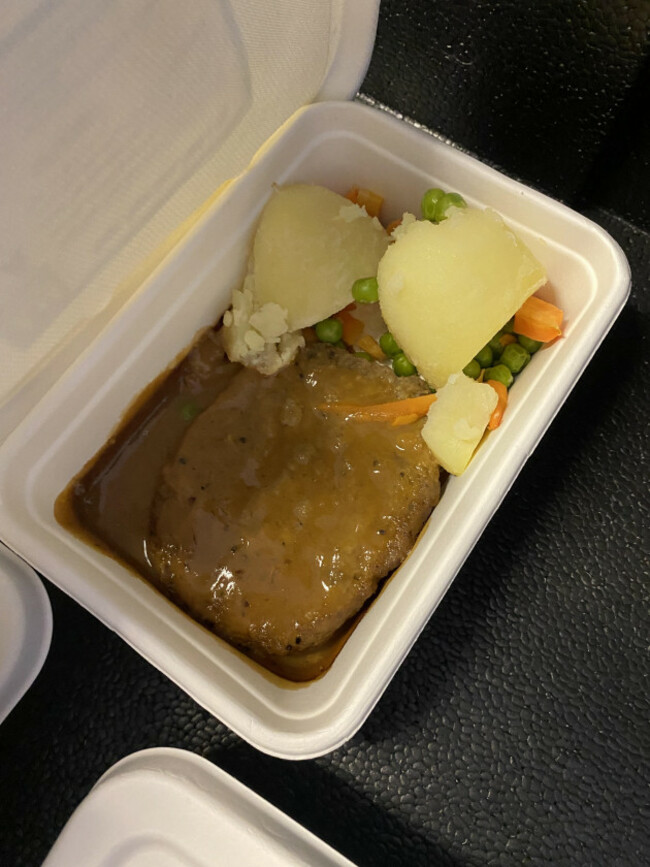
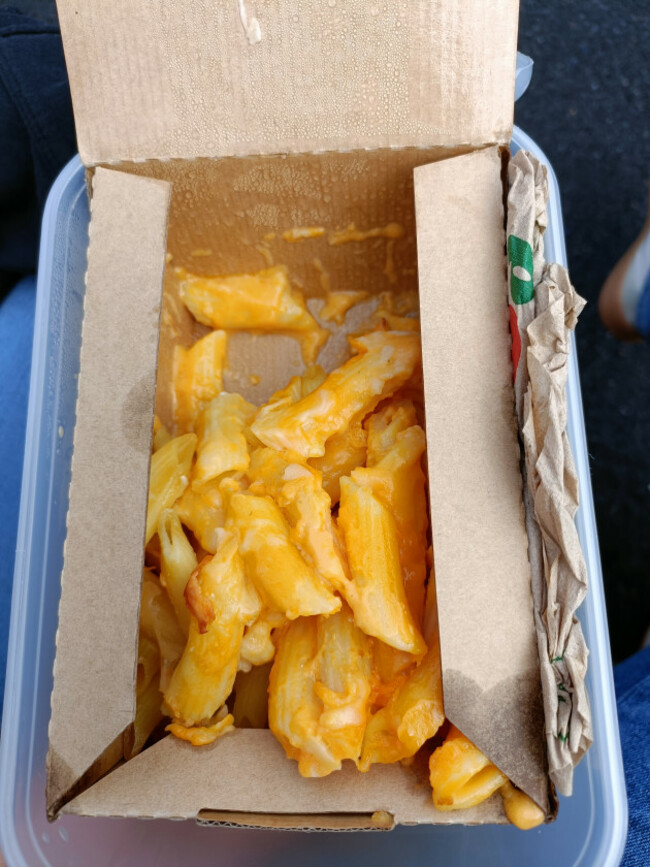
A number of parents and school staff sent us pictures of the food on offer through the scheme.

Some criticised the presentation of the meals, while others argued that the boxed packaging may not help their case.

unnamed (65)

Others said we needed to become realistic about the food on offer. You can’t please everyone, as many of these parents noted.

1000043569

Setting expectations, or ‘The food is fine’

One mum of two living in Ireland, but originally from the UK, said she believes that expectations are “too high” for the quality of the meals.

“I’ve told my kids they are eating the hot school dinners and that’s it. I think most parents in Ireland are relatively new to the concept of school dinners and are expecting restaurant-quality food,” this woman added.

Coming from the UK, where school dinners have been provided for decades, I didn’t expect anything more than just basic, uninspiring food – school dinners are famously shite and are indeed what has united us all in the UK.

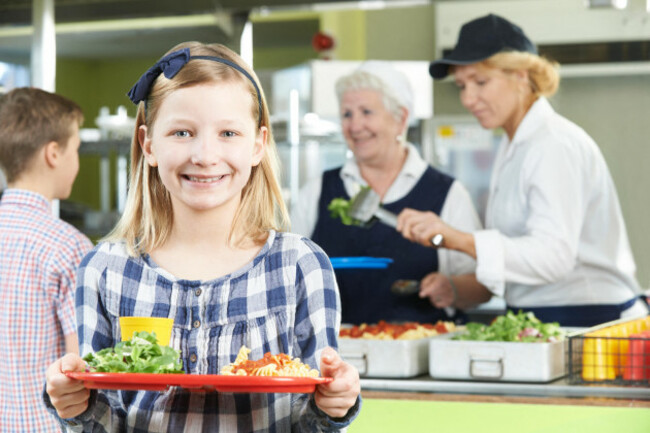
female-pupil-with-healthy-lunch-in-school-canteen UK schools have a long tradition of hot, cooked school meals served on site, usually in school canteens staffed by in-house cooks, 'dinner ladies'. Alamy Stock Photo Alamy Stock Photo

Elsewhere, a primary teacher in Dublin who described themselves as working in a Gaelscoil in an “upper middle class suburb” summed up the food as “fine”.

“Like any canteen food, you’d eat it but… It’s fine,” they said, before adding: “There is a lot of choice, to be fair.”

A teacher from a rural Co Galway school told us that the scheme is a great idea in theory but warned it’s a “far cry” from this in reality.

They described “wet and soggy” goujons, chicken curry with “scraps” of chicken and, worse again, “potatoes like soap” and pizza resembling cardboard.

‘Encourages kids to eat’

Ailbhe from Co Kildare told us that the scheme has been a big help for her family, broadening her children’s culinary horizons and helping her household as an added result.

“It is very helpful for parents as the prep for school is simpler and encourages kids to eat things they wouldn’t otherwise, because they see their peers eating them,” she explained.

“For families on low income, it ensures children are fed well.”

While a number of parents said their children would much prefer a cold sandwich at lunchtime, one mother in Dublin said the hot meals are a “blessing” for child’s school.

“For someone who doesn’t like cold sandwiches, having an opportunity to eat hot meal is appreciated,” this mother said.

Kids shared their meal during the breaks which gave them more interaction and a feeling of equality. For parents not to deal with lunch boxes is a bonus and a time saver.

However, several teachers raised what they called a “staggering” amount of waste as a result of meals going uneaten.

One described how the “waste would bring a tear to your eye”, having seen too many meals going half-eaten or even unopened and untouched.

“It’s a shocking and depressing daily waste of food and money,” this teacher said.

Similarly, a teacher in South Tipperary said their school’s caretaker “brings out six big bin bags of food waste a day” as a result.

He also voted in favour of cold lunches.

But this teacher also raised the quality of food on offer.

“The staff would prefer to go hungry when they forget lunches than eat them,” he said, adding that providers may be making a “financial killing” because they are paid per lunch, whether it’s eaten or not.

One day, when mistakes were made with the order and the food wasn’t delivered, school staff brought in ham and chicken rolls instead.

“They went down much better,” this teacher said.

‘All the bells and whistles’ at the start

One principal, who has taken part in the procurement process at two previous schools, is no longer using it at their current school.

“Upon choosing a company, all the bells and whistles are wheeled out upon sampling to students, staff and parents,” they said, claiming that this changes over time.

Other parents and school staff queried whether a greater effort may be made by some food providers early on, and if this is to blame for the reported drop-off in interest from children.

A Co Clare mother said her son enjoyed plenty of the meals on offer when it launched for their school two years ago – but this has shifted since.

“This year’s choice was reduced and beef and chicken roast with mash and gravy was substituted with sausages and dry chicken pieces, so I opted out as my son wouldn’t eat them,” she said.

It was further queried by this mother and other readers whether the quality “deteriorates” after companies get a foothold in schools.

Nutrition concerns

One parent said that the programme is well-intended, but it’s significantly flawed due to the “dubious” nutritional quality of the food on offer. The parent feared that the food is “high in additives, often highly processed, high in salt, sugar and saturated fat” and may lead to worse impacts on children.

“While I understand the programme aims to meet a fundamental need of deprived children – and that is welcome – we can do much better,” this parent said.

This was echoed by a teacher who has seen the meals ever since taking part in its pilot rollout several years ago. These meals, according to this teacher, are creating a habit of eating “poor quality, beige” food.

“We are going to see the results in a few years,” they warned.

However, another mother in Dublin felt that there’s too much ‘pearl clutching’ around the scheme and that everyone is expecting too much, too soon. “I’m afraid we’re in danger of throwing the baby out with the bathwater here. The scheme is in its infancy; we have to let it improve, breathe.

“I am appalled at the number of parents in our school, only a year in, pulling their kids from the scheme.

All because the child has decided there’s nothing they want, despite the fact that there are at least 10 choices on the app, they can vary it hugely. It is deeply disappointing. I have told my children that they are eating the meals, and that’s it.

She said she feels the wider societal benefits will be lost, “The scheme is there to bring food to the children of this country, too many of whom are living below the poverty line. If the families who can afford to leave it do, then once again, the children who cannot afford lunches will be ‘othered’. This is wrong.

“For the greater good, even if it means your child eats a chicken goujon or a soggy bowl of pasta once in a while, really, what is wrong with that? Are you telling me that every other meal they get at home is 100% healthy? Yes, the scheme needs improving, there’s no question of that, but please, can we not ruin what is a really good idea, at this early stage?”

Have those concerns posed fresh problems?

Others who spoke to us outlined that they believe this attitude is causing problems for the scheme’s popularity.

One mother told us that her daughters have increasingly grown tired of the meals, and now the family is withdrawing its involvement.

“The food has been wrecked by dietitians who don’t understand that children don’t want a pizza that resembles a brown pitta bread and bears no resemblance to a pizza in an Italian restaurant,” she said.

“Force-fed like foie gras geese”

Some parents and teachers complained of a lack of time allotted to allow children to eat their food.

On this, one teacher said the timetable, “Treats kids like foie gras geese being panic-force-fed, gulping and swallowing down food as quickly as possible with the múinteoir shouting at them to ‘Brostaigí oraibh! Tá sé in am dul amach.”

This teacher said Ireland could learn from schools in France and Finland, where longer lunchtimes allow children to eat their lunch in a “normal, digestible” amount of time.

Elsewhere, several disagreed with the universality measure of the scheme, allowing any child to avail of the meal.

One teacher at a Deis school said there is a “disgusting” waste from the programme.

“We went from struggling to get free lunch cards for students who actually needed it before Covid to free, poor-quality food for all,” this teacher said.

The debate around the quality of food, portion size and packaging feels a world away for some readers in rural areas, who simply want the service in their local area.

This was the sentiment for one woman who lives in Dromahair, Co Leitrim.

“Other schools have had hot meals for months now,” she said, “we are further disadvantaged due to our location.”

What the schools say

At the Oireachtas education committee this week, Educate Together Chief Executive Emer Nowlan said schools have seen “menu fatigue” and “dissatisfaction” leading some families to opt out of the scheme.

Overall, Nowlan believes the meals programme been “good policy, but with flawed execution” that needs reversing.

Schools have also found themselves “crushed” by the administration involved in the procurement of the scheme, redirecting many hours from staff towards managing the meals.

Readers like you are keeping these stories free for everyone...
A mix of advertising and supporting contributions helps keep paywalls away from valuable information like this article. Over 5,000 readers like you have already stepped up and support us with a monthly payment or a once-off donation.

Close
109 Comments
This is YOUR comments community. Stay civil, stay constructive, stay on topic. Please familiarise yourself with our comments policy here before taking part.
Leave a Comment
    Submit a report
    Please help us understand how this comment violates our community guidelines.
    Thank you for the feedback
    Your feedback has been sent to our team for review.

    Leave a commentcancel

     
    JournalTv
    News in 60 seconds