We need your help now

Support from readers like you keeps The Journal open.

You are visiting us because we have something you value. Independent, unbiased news that tells the truth. Advertising revenue goes some way to support our mission, but this year it has not been enough.

If you've seen value in our reporting, please contribute what you can, so we can continue to produce accurate and meaningful journalism. For everyone who needs it.

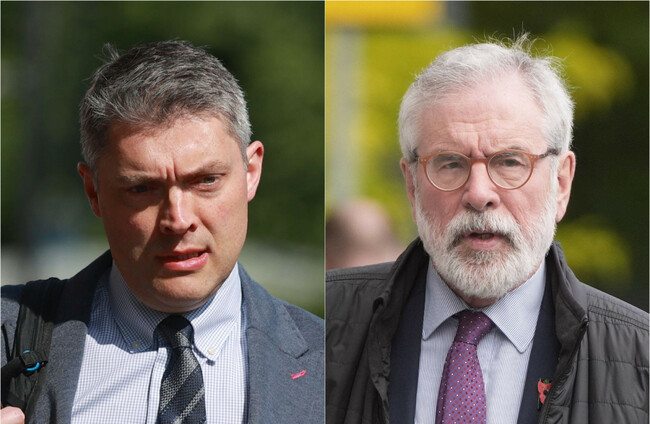
BBC NI Director Adam Smyth and Gerry Adams Alamy

BBC has 'no intention' of blocking programmes in Republic following Gerry Adams libel action win

Politicians north and south had been critical of the idea, saying it wouldn’t be in the public interest.

THE BBC HAS said it will not stop its programmes from being aired in the Republic of Ireland after Gerry Adams won his libel action.

Adams had claimed that a BBC Spotlight programme, and an accompanying online story, defamed him by alleging he sanctioned the killing of former Sinn Féin official Denis Donaldson, for which he denies any involvement.

A jury at the High Court in Dublin found in his favour last Friday, after determining that was the meaning of words included in the programme and article.

It also found the BBC’s actions were not in good faith and that it had not acted in a fair and reasonable way.

It had been reported that the BBC was considering the move in an attempt to avoid future defamation lawsuits in the south.

Politicians north and south had been critical of the idea, saying it wouldn’t be in the public interest.

A spokesperson for Sinn Féin said such a move would be a “backwards step”. They said that Dublin South-Central TD Aengus Ó Snodaigh has a Bill submitted to the Dáil Bills Office, aiming to end RTÉ’s geo-blocking of audiences in the North because it is “against the spirit of the Good Friday Agreement”. 

The party said the BBC geoblocking its southern audience would be imposing “a new form of partition in media”.

Former SDLP leader Colum Eastwood said he wrote to the Director of BBC Northern Ireland yesterday, Adam Smyth, to seek clarity about the speculation, saying it wouldn’t serve audiences.

“We live shared lives in a complex place – narrowing the media landscape that helps people understand, engage in and inform themselves about current affairs and political debate can only be a bad thing.

“Any reaction which seeks to erect new barriers between the lives of people who share this island would be a fundamental mistake.”

Smyth stood by the reporting, which he said the court accepted was “of the highest public interest”.

He said the implications of the case will be “profound”.

“If the BBC’s case cannot be won under existing Irish defamation law, it’s hard to see how anyone’s could.”

Smyth said in a letter to staff yesterday evening that the BBC “have no intention of limiting our journalism and programmes, or their general availability, as a result of Friday’s verdict”.

He said he stands by everything he said in court.

“However, the last few days haven’t been easy and some of what’s been said about the BBC and its integrity has been very wide of the mark.”

He added the BBC “exists for the whole community”.

Readers like you are keeping these stories free for everyone...
A mix of advertising and supporting contributions helps keep paywalls away from valuable information like this article. Over 5,000 readers like you have already stepped up and support us with a monthly payment or a once-off donation.

Close
JournalTv
News in 60 seconds