We need your help now

Support from readers like you keeps The Journal open.

You are visiting us because we have something you value. Independent, unbiased news that tells the truth. Advertising revenue goes some way to support our mission, but this year it has not been enough.

If you've seen value in our reporting, please contribute what you can, so we can continue to produce accurate and meaningful journalism. For everyone who needs it.


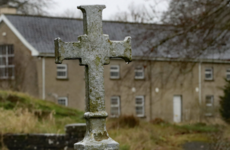
A report by the Farrelly Commission into the ‘Grace’ case was published yesterday. Alamy Stock Photo

Irish social workers say commissions of inquiries 'not suitable' for safeguarding reviews

The 2,000-page report on the ‘Grace’ case published yesterday found no evidence of physical, emotional or sexual abuse.

LAST UPDATE | 16 Apr 2025

COMMISSIONS OF INQUIRIES are “not suitable” for investigating safeguarding concerns due to significant thresholds relating to evidence, the Irish Association for Social Workers has said.

It comes following the publication of a report by the Farrelly Commission yesterday, which stated that the inquiry was not satisfied that there was evidence of physical, emotional or sexual abuse into the ‘Grace’ case.

The case concerns a young woman with profound intellectual disabilities who was left in a foster home in the Waterford area for almost 20 years, despite a succession of sexual and physical abuse allegations.

The controversy resulted in the then-HSE Director General Tony O’Brien apologising to the 47 families – including Grace’s – who were in the care of the home belonging to a family named Family X in the report.

In a statement today, the Irish Association for Social Workers (IASW) expressed solidarity with Grace, her mother and those who supported justice for the woman but also expressed dissatisfaction with how the inquiry was conducted.

It said the report, which runs to nearly 2,000 pages and does not have an executive summary or list of recommendations, is “inaccessible for most people, even those most impacted by it”.

Children’s minister Norma Foley told reporters yesterday that she had asked for an Executive Summary to be included in the final document and was told by the commission that the request would not be granted.

The IWAS said that while much has been said about the evidence in the case, it is still the position of the representative organisation that Commissions of Inquiry – usually led by judges – are unsuitable when investigating cases of alleged safeguarding breaches.

While the commission said it was not satisfied that marks and bruises seen on Grace was a result of her having been subjected to physical abuse, the final report does state that the woman was neglected in terms of her clothing and personal hygiene. 

There was also a level of financial mismanagement or abuse when it came to Grace’s disability allowance, it said.

The report did not explain why a decision to remove Grace from the home was overturned in 1996, keeping her there until a whistleblower made a complaint in 2009.. 

The IWAS said: “The threshold of evidence used in the Farrelly Commission of Inquiry is very different to those used in expert safeguarding reviews.”

It added that the organisation has “long called for safeguarding reviews to be carried out by competent safeguarding experts which promotes meaningful learning”, and continue to do so.

It called on government to act on the findings of the Farrelly report and deliver robust safeguarding legislation.

 Taoiseach reaction 

Speaking about the report today, Taoiseach Micheál Martin said he would appreciate an explanation from the Commission as to why those involved in the inquiry not notified in advance of the report’s publication yesterday. 

Speaking with Newstalk’s Pat Kenny, the Taoiseach said was his “personal view” it is a “fundamental principle” of any inquiry. 

Children’s minister Normal Foley told reporters yesterday that she had asked the commission that those involved in the case be notified but that the commission said her request could not be fulfilled.

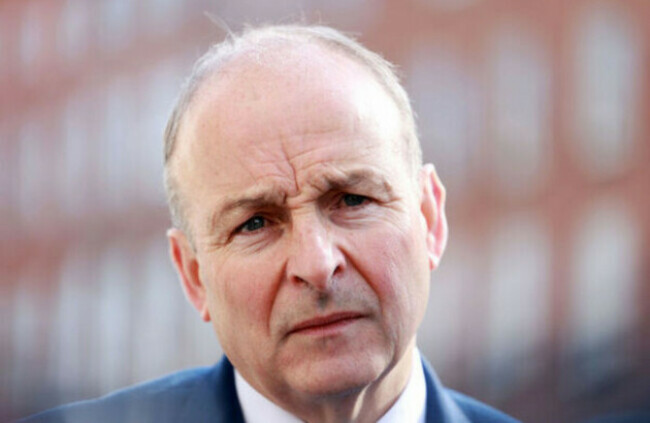
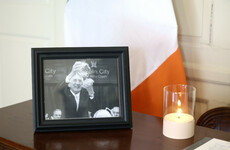
taoiseach mmm Taoiseach Micheál Martin said would appreciate an explanation from the Commission as to why those involved in the inquiry not notified in advance of the report's publication yesterday. © RollingNews.ie © RollingNews.ie

When asked if he understood the rationale of the commission in not giving people early warning of publication, Martin said he did not: ”I do not understand that. And that’s a matter for the commission to explain.”

When pressed on whether he wants an explanation from the commission, the Taoiseach said: “I would appreciate one.”

On the omission of an Executive Summary, Martin said: “There is always a need for an Executive Summary to be to be written in respect of an inquiry of this size and scale.”#

He added, however, that government could not interfere with the commission in order  to preserve its independence. Martin said the State needs to reflect on whether there is a better way of “cutting to the truth” in a more effective and quicker way.

HSE boss

Speaking this morning, HSE CEO Bernard Gloster said has accepted the report from the ‘Grace’ case inquiry, adding “we will never know the full life experience of Grace” and the significant lack of oversight in her care. 

Gloster said he is not aware of any withholding of information on the HSE’s part and that it answered questions truthfully and apologised again on behalf of the HSE, acknowledging the “anxiety and concern” over the report’s findings.

There are still findings here that are absolutely truly shocking, even by the standards of the 1990s.

He described it as “an absolute abject failure”.

With reporting by Christina Finn and Muiris Ó Cearbhaill

Readers like you are keeping these stories free for everyone...
A mix of advertising and supporting contributions helps keep paywalls away from valuable information like this article. Over 5,000 readers like you have already stepped up and support us with a monthly payment or a once-off donation.

Close
JournalTv
News in 60 seconds