Sign in. It’s quick, free and it’s up to you.
An account is an optional way to support the work we do. Find out more.
Sign in. It’s quick, free and it’s up to you.
An account is an optional way to support the work we do. Find out more.
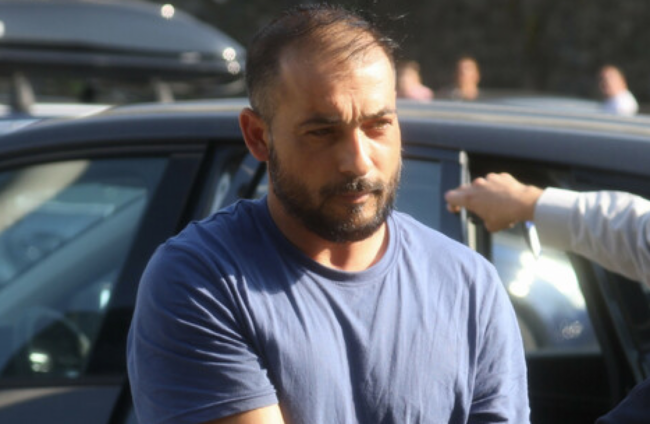
AN EXPERT WITNESS has told a Central Criminal Court jury that blood stains on the clothing of a man accused of murder contained DNA that matched that of his partner, who was found stabbed to death in their home.
Forensic scientist Dr Yvonne O’Dowd said that blood matching that of Larisa Serban (26) was found on the t-shirt of her partner Daniel Blanaru (37), while there were “extensive blood stains” and blood spatters on the walls, floors and doors of the house they shared in Co Meath.
Blanaru, from Rathmore, Athboy, Co Meath, has pleaded not guilty to the murder of Larisa Serban on 12 August 2022.
The State has claimed that she was stabbed to death by Blanaru, whom they argue was a “jealous” and “controlling” partner.
The jury previously heard that in garda interview, Blanaru said that he “might have” stabbed Larisa with a “very sharp” knife, but he could not say how deep into her body it went.
He also told gardaí: “I am guilty, I killed her. Please lock me up.”
O’Dowd gave evidence today to counsel for the Director of Public Prosecutions, Eilis Brennan SC.
She explained that she was given a number of items to examine, including a knife recovered from the scene, a second knife recovered from the accused’s car, swabs of blood stains, items of clothing, and DNA samples from Blanaru and the deceased.
O’Dowd said she carried out an examination of the scene at Rathmore to perform a blood stain pattern analysis, finding “extensive blood stains” in the hallway and front bedroom of the house on the floors, walls and doors.
She said that there were drip stains in the bedroom, which form as the result of blood drops falling onto a surface.
The drip stains were all very similar, being circular and having come from above.
O’Dowd said there was one drip stain on the bed, one on the floor, then a third and fourth, which created “a drip trail”. She said that a drip trail was something one would expect to see if an object with blood on it or a person with an actively bleeding wound was moving along that trail.
The forensice scientist went on to say that there was a pool of blood with clotting on the floor towards the door, which one would expect to see if a person with injuries was stationary and bleeding.
She said that there was spatter staining around this pool, which can be caused when an external force is applied to an injury.
O’Dowd explained that there was also a pool of dried blood in the hallway, which again indicated a person who was bleeding and stationary, with spatter stains on the hall floor. There was spatter staining on the glass and frame of the door, and spatter on the floor.
All the swabs from the scene were sampled by O’Dowd and DNA profiles were generated, with all of the profiles with the exception of one matching the DNA of Larisa Serban.
O’Dpwd said that she found no blood on a small knife that was found in the closet of the house, nor on a small knife found in Blanaru’s car.
The accused’s clothing were also examined by O’Dowd, who found a blood stain near the waist area of a t-shirt which had a DNA profile that matched Larisa’s.
There was a small blood stain on his shorts that contained a mixed DNA profile, with the accused, Larisa and a third contributor found. O’Dowd also examined the accused’s jacket, runners and belt, but she said that no blood was found on these.
Defence counsel Giollaíosa Ó Lideadha SC said that the science used was strong at establishing a person’s DNA, but as to the timing of when blood stains were made, all that can be said is that they likely occurred since a garment was last washed.
O’Dowd confirmed that it was not possible to say the timing of when blood stains were made.
The trial continues tomorrow before Justice Eileen Creedon and an enlarged jury of eleven men and four women.
To embed this post, copy the code below on your site














have your say