Take part in our latest brand partnership survey

We need your help now

Support from readers like you keeps The Journal open.

You are visiting us because we have something you value. Independent, unbiased news that tells the truth. Advertising revenue goes some way to support our mission, but this year it has not been enough.

If you've seen value in our reporting, please contribute what you can, so we can continue to produce accurate and meaningful journalism. For everyone who needs it.


Alamy Stock Photo

Budget 'judgement call' to make whether to boost childcare places or slash fees, says Harris

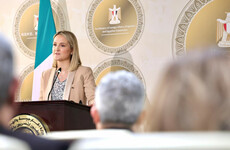
The Tánaiste said many women are opting out of the workforce as childcare is too expensive.

GOVERNMENT WILL HAVE to make a “judgement call” in this year’s Budget about whether to invest resources into boosting the number of childcare places or whether to slash fees further, according to Tánaiste Simon Harris. 

The Programme for Government commits this government to progressively reduce the cost of childcare to €200 per month per child.

However, asked whether parents will see further fee reductions in this year’s Budget, Tánaiste Simon Harris said:

“I think that the judgment call for us in this budget is going to be, how much do you invest in the capacity piece versus is there also room to do stuff on the fees?”

Speaking to The Journal in Washington DC, he said the government will get the cost down to €200 per month, but over the lifetime of the government, rather than in the short-term.

“In my own hometown, people say to me, that’s good that you reduced childcare [costs], and we have quite a few times… but it’s not much use to reduce the price if you can’t get a place,” he said. 

Choice between increasing place numbers or reducing fees 

Speaking to reporters in Canada, Taoiseach Micheál Martin also indicated that ensuring there are more childcare places must be a priority. 

“Places is a growing issue… we’re acutely aware of the pressure on places and the need for more places,” he said. When asked if the priority will be more rolling out more places over cutting fees for parents, Martin replied: “It depends. I mean, the discussion is on.”

The Tánaiste said the government needs to show parents there is a way forward when it comes to childcare costs.

“I am meeting far too many people around the country, disproportionately women, not exclusively, but disproportionately women, who are now having to make decisions, or find themselves making decisions, about their labour force participation, their career, their work, based on an inability to access child care. It’s not good enough,” said Harris.

The Journal has reported extensively on the strain experienced by families around the country as they try to access the limited childcare places available — and afford the high fees.

The Tánaiste said there are 21 commitments in the programme for government on childcare, stating that how these will be tackled will be set out in a new action plan on childcare.  

In June this year, Children’s Minister Norma Foley announced that some families that are facing the highest childcare costs in the country will see their weekly fees reduced from this month.

The reduction will impact families in around 10% of early learning and childcare providers that are in receipt of core funding from the State.

The Taoiseach has said that tackling child poverty is a key focus in this year’s Budget, and while the two-tier child benefit scheme might not be ready in time for October’s Budget a boost to the child-support payment will attempt to be equal substitute. 

He told his party think-in in Cork last week that the additional support will channelled through an increase in the child support payment, which is understood to be increasing by €4 weekly for under-12s and €8 for over-12s. 

Social welfare payments won’t to rise as much as last year

As for social welfare increases, as reported by The Journal earlier this month, the pension and other social welfare payments are not expected to rise at the same rate as last year. 

With warnings of tighter purse strings and minimal tax cuts in this year’s budget, government sources have indicated that a weekly social welfare hike of €10 is more realistic for Budget 2026 than what people received last time round.

In last year’s budget, all weekly social welfare payments (including jobseekers benefit and allowance, illness benefit, disability allowance, and others) increased by €12.

Separately, on the issue of the Rent Tax Credit, the Tánaiste said the government has increased it on a number of occasions.

“We’ve done that because we believe it, it provides some degree of support to people at a time of very high rents,” stating that he is certainly committed to its continuance. 

“Whether we’re in a position to increase it does remain to be seen,” he said. 

The rent tax credit of €1,000 per person – or €2,000 for a couple – is likely to rise again, especially due to the changes to rent regulations announced earlier this year. 

In an interview with The Journal, prior to the election, Martin pledged to boost the Renters’ Tax Credit to €2,000 per person.  

Fine Gael, in its election manifesto promised to increase Rent Tax Credit to €1,500 per renter or €3,000 per couple, to support tenants in managing expenses.

In the programme for government, there is a commitment to progressively increase the Rent Tax Credit. 

Readers like you are keeping these stories free for everyone...
A mix of advertising and supporting contributions helps keep paywalls away from valuable information like this article. Over 5,000 readers like you have already stepped up and support us with a monthly payment or a once-off donation.

Close
JournalTv
News in 60 seconds