Take part in our latest brand partnership survey

We need your help now

Support from readers like you keeps The Journal open.

You are visiting us because we have something you value. Independent, unbiased news that tells the truth. Advertising revenue goes some way to support our mission, but this year it has not been enough.

If you've seen value in our reporting, please contribute what you can, so we can continue to produce accurate and meaningful journalism. For everyone who needs it.

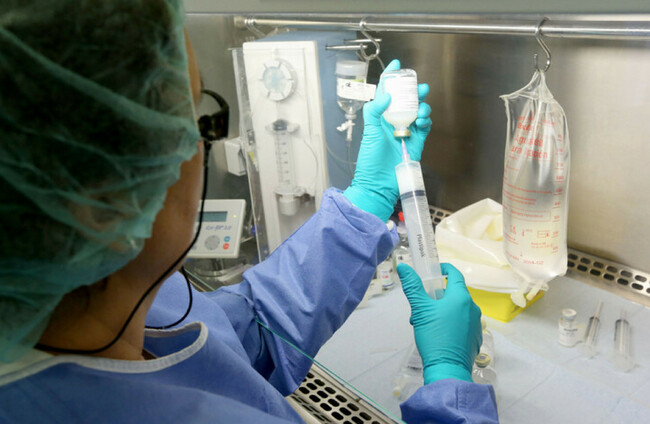
There were concerns that there would be a spike in patients getting late diagnoses. Alamy Stock Photo

Cancer survival in Ireland held steady despite Covid-19 hospital disruptions

Despite early Covid-19 service disruptions, there is no evidence that delayed diagnoses led to worse outcomes for patients.

SURVIVAL RATES FOR cancer patients in Ireland held firm during the Covid-19 pandemic, with no clear rise in late-stage diagnoses or deaths, according to data from the National Cancer Registry Ireland (NCRI).

The NCRI report tracked cancer diagnoses, stage at detection, mortality and one-year survival from the start of the pandemic through 2022.

While the number of new diagnoses fell sharply by 27% in spring 2020, particularly for breast, colorectal, prostate and lung cancers, services were quickly reconfigured.

Cancer diagnosis levels had also returned to expected levels by 2022, the report found.

There was no consistent increase in late-stage cancers following the pandemic, and survival rates for all cancer types in 2020 and 2021 were in line with previous years.

Slight increases in deaths over the period matched expected demographic trends rather than pandemic-related delays.

Professor Deirdre Murray, NCRI director, said the findings provide reassurance for patients and families.

“Some may have feared, for example, that the pause in screening programmes, and the fact that all GP appointments were now phone calls rather than face-to-face visits, would lead to a sharp rise in late-stage diagnoses, cancers that had progressed, post-pandemic,” Murray said.

“There is, however, no evidence of this in the data.”

The registry will continue monitoring trends to detect any delayed effects that may arise in the future.

Readers like you are keeping these stories free for everyone...
A mix of advertising and supporting contributions helps keep paywalls away from valuable information like this article. Over 5,000 readers like you have already stepped up and support us with a monthly payment or a once-off donation.

Close
5 Comments
This is YOUR comments community. Stay civil, stay constructive, stay on topic. Please familiarise yourself with our comments policy here before taking part.
Leave a Comment
    Submit a report
    Please help us understand how this comment violates our community guidelines.
    Thank you for the feedback
    Your feedback has been sent to our team for review.

    Leave a commentcancel

     
    JournalTv
    News in 60 seconds