We need your help now

Support from readers like you keeps The Journal open.

You are visiting us because we have something you value. Independent, unbiased news that tells the truth. Advertising revenue goes some way to support our mission, but this year it has not been enough.

If you've seen value in our reporting, please contribute what you can, so we can continue to produce accurate and meaningful journalism. For everyone who needs it.

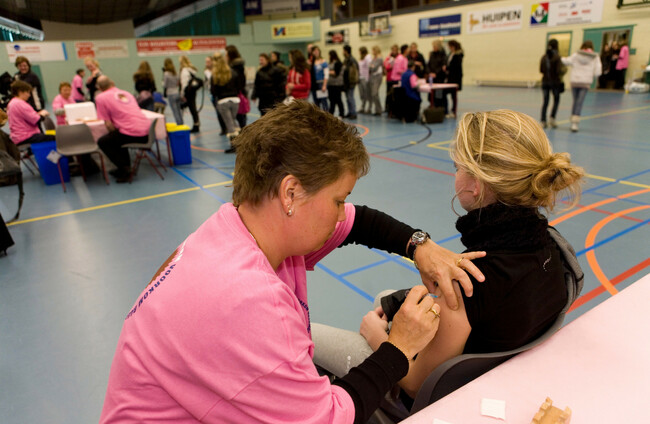
Uptake of the HPV vaccine remains high among first-year students in Ireland. Alamy Stock Photo

Ireland may be on track to eliminate cervical cancer by 2040 as first ‘Elimination Day’ marked

A new HSE report shows Ireland advancing toward its 2040 elimination goal as global progress remains uneven.

THE HSE IS marking the first World Cervical Cancer Elimination Day today, the first official global health day dedicated to eliminating a cancer.

The occasion coincides with the first anniversary of Ireland’s Cervical Cancer Elimination Action Plan, with a new progress report published to outline developments over the past year.

The HSE says the day offers an opportunity to review national and global progress.

About 250 people are diagnosed with cervical cancer each year in Ireland, and around 90 people die of the illness annually here. Worldwide, cervical cancer continues to cause more than 340,000 deaths annually.

The World Health Organisation has warned that global efforts are not yet on track to meet its 2030 targets, with HPV vaccination rates below target in some regions, uneven access to screening and treatment, and significantly higher risks for women living with HIV.

In Ireland, the new report has highlighted advances across HPV vaccination, screening and early detection.

A national communications toolkit has been launched to support community awareness, and landmarks including the Rock of Cashel and Dublin’s Custom House will be illuminated in teal this evening as part of the international #CervicalCancerElimination campaign.

Progress has been made in vaccinations here, including continued delivery of the HPV vaccine to all first-year secondary school students and community engagement projects with Traveller, Roma and migrant groups to create culturally appropriate information.

Research is also continuing into lower uptake in DEIS schools.

In screening, preparations for HPV self-sampling feasibility studies are underway to expand access for women who are under-screened.

Trauma-informed screening clinics have been introduced in Limerick Prison and other specialised settings, and development continues on a new national CervicalCheck register designed to strengthen data quality and integration.

Improvements in early detection and treatment include new standardised guidance for managing early-stage cervical cancers and updated clinical guidance to support GPs in assessing women presenting with symptoms, helping ensure timely referrals and care.

Minister for Health Jennifer Carroll MacNeill said Ireland remains committed to its goal of eliminating cervical cancer by 2040, noting €530,000 in funding to support initiatives that increase screening and vaccination uptake.

“Today marks an important opportunity to reflect on our progress to date, and to reaffirm our commitment to achieving our elimination goals through vaccination, screening and treatment,” MacNeill said.

HSE Chief Clinical Officer Dr Colm Henry encouraged the public to take one action today to raise awareness or support others to access vaccination or screening.

Dr Caroline Mason-Mohan, Director of Public Health and lead for the Cervical Cancer Elimination Partnership, said Ireland’s incidence rate is now 11 per 100,000 women, with long-term trends continuing to decline.

Mason-Mohan highlighted progress including expanded HPV vaccination outreach, trauma-informed screening services, preparations for HPV self-sampling studies, and new national clinical guidance to support early detection and GP management.

A continued focus is ensuring equitable access.

More than 90 community champions have been trained to promote vaccination and screening, with expanded programmes in prisons, homeless services and Sexual Assault Treatment Units.

“Every post, poster and conversation helps,” Dr Mason-Mohan said.

“Your one act can make a real difference.”

Readers like you are keeping these stories free for everyone...
A mix of advertising and supporting contributions helps keep paywalls away from valuable information like this article. Over 5,000 readers like you have already stepped up and support us with a monthly payment or a once-off donation.

Close
JournalTv
News in 60 seconds