We need your help now

Support from readers like you keeps The Journal open.

You are visiting us because we have something you value. Independent, unbiased news that tells the truth. Advertising revenue goes some way to support our mission, but this year it has not been enough.

If you've seen value in our reporting, please contribute what you can, so we can continue to produce accurate and meaningful journalism. For everyone who needs it.

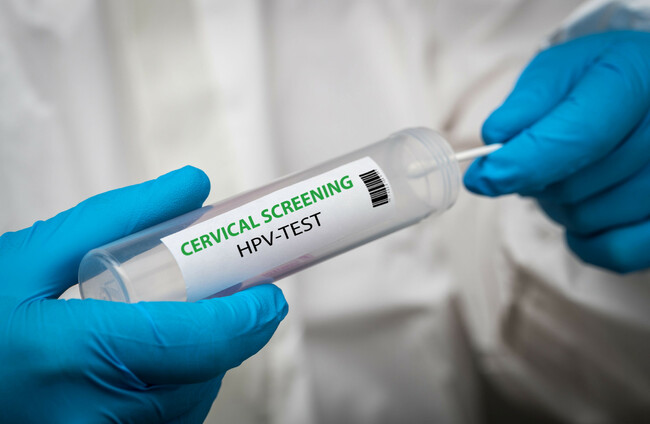
File photo of a cervical screening HPV test. Alamy Stock Photo

CervicalCheck to roll out at-home self-sampling tests from next year

The self-sampling test checks for the presence of HPV – which causes over 90% of cervical cancer.

THE GOVERNMENT IS rolling out at-home human papillomavirus (HPV) self-sampling tests to improve uptake in checks for cervical cancer.

The self-sampling test checks for the presence of HPV  - which causes over 90% of cervical cancer – but it is not the same as a smear test as it doesn’t take cervical cells.

If the HPV result is positive, the person is referred to their GP or practice nurse for a cervical sample and potential follow-up.

The programme is organised by CervicalCheck, a free scheme run by the Department of Health to detect cervical cancer for people aged between 25 and 65.

Fianna Fáil senator and Seanad spokesperson on health Teresa Costello said the move will help the State achieve its aim of eliminating cervical cancer by 2040.

Attending your GP surgery for the test should still be the priority as self-sampling will not be a replacement for clinician screening but an option to help improve uptake in under-screened women.

It may be helpful for people with cultural or personal barriers and those who find clinic visits difficult.

CervicalCheck is currently planning a feasibility study in general practice in Ireland in early 2026 to determine how they can offer HPV self-sampling as an additional screening option for women who have never attended or are not attending for screening.

Full details on how the programme will work are to be released next year.

Costello said the move will remove one of the largest barriers to testing: “This is a no-brainer. Women are busy, and many of us feel embarrassed, uncomfortable, or anxious about going to the GP for a smear.”

“I know that feeling myself. Being able to do the test in your own time, in your own home, will make testing more accessible, especially for women who are overdue or have never been screened.”

She added that Ireland is now catching up with other EU countries that have already introduced home testing.

“We’re coming into line with the rest of Europe. In Stockholm, the first year of home sampling saw a 10% jump in screening coverage – from 75% to 85%. If we can achieve anything close to that here, we give ourselves the best shot at eliminating cervical cancer by 2040.”

As a breast cancer survivor, Senator Costello spoke personally about why she believes this rollout matters.

“Early detection saves lives. I know it – I’ve lived it. I understand the fear, and I understand the discomfort, but a few seconds of discomfort could save your life.

“I’m alive today because my cancer was found early. If home testing gives another woman that same chance, then we have to grab it with both hands.”

Readers like you are keeping these stories free for everyone...
A mix of advertising and supporting contributions helps keep paywalls away from valuable information like this article. Over 5,000 readers like you have already stepped up and support us with a monthly payment or a once-off donation.

View 15 comments
Close
15 Comments
This is YOUR comments community. Stay civil, stay constructive, stay on topic. Please familiarise yourself with our comments policy here before taking part.
Leave a Comment
    Submit a report
    Please help us understand how this comment violates our community guidelines.
    Thank you for the feedback
    Your feedback has been sent to our team for review.

    Leave a commentcancel

     
    JournalTv
    News in 60 seconds