Sign in. It’s quick, free and it’s up to you.
An account is an optional way to support the work we do. Find out more.

Sign in. It’s quick, free and it’s up to you.
An account is an optional way to support the work we do. Find out more.
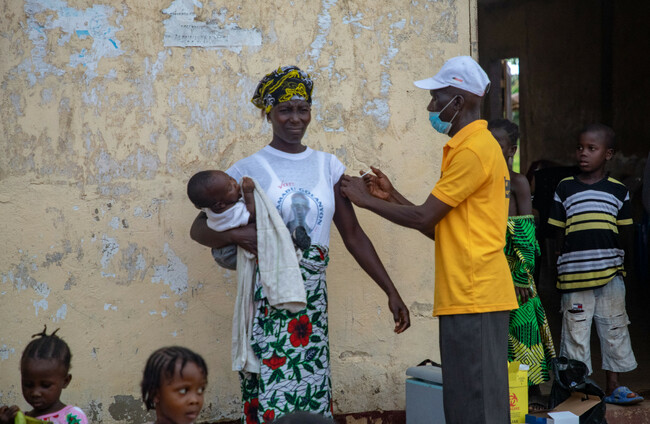

WITH 51% OF the population in Liberia living below the national poverty line, the arrival of coronavirus in 2020 brought with it an enormous threat to thousands of communities.
Liberians have faced an unfathomable number of challenges in recent decades: Fourteen years of devastating civil war, which ended in 2003, left infrastructure destroyed and the economy shattered. The country was just starting to recover when, in 2014, it was hit by Ebola.
Most recently, there’s the ongoing challenge of Covid-19. Naana Adjei, Programme Manager of the ECHO project with Concern in Liberia, says communities across the country have been deeply affected.
Widespread challenges
“Communities who depend on agricultural yield to support their families and improve their livelihood couldn’t take their goods to the market due to lockdowns,” she says. In turn, this lead to a substantial loss of income for many people.
Another challenge, says Naana, was the lack of opportunity for families to spend time together. “As per tradition, families in Liberia regularly gather together. However, Covid-19 restrictions blocked those interactions in some ways and brought divisions among families.”
On top of this, fear of being infected with the virus “affected the behaviour of citizens who were already unwell, which lead to treatable diseases worsening in communities and lead to an increase in rate of deaths in the community”.
Vaccine availability
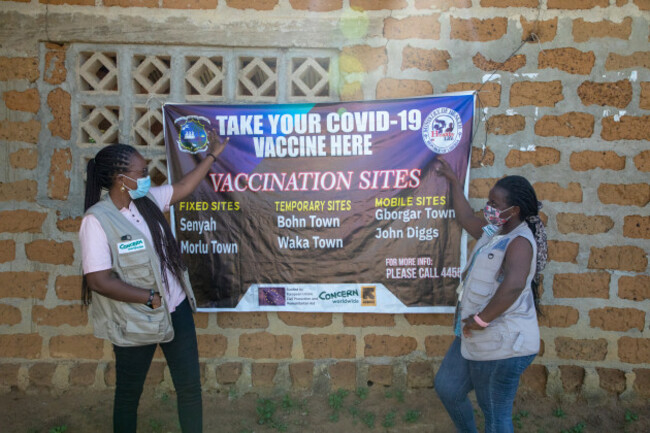
As of this month, about 28% of the population of Liberia is fully vaccinated. While it can be easy to look past other countries’ vaccination statuses, it’s important to remember that everyone in every country is entitled to a vaccine, says Sarah Cundy, Concern’s National Health Coordinator in Sierra Leone.
“Globally, development budgets have been slashed as traditional institutional donors have been forced to divert funding away from low middle income countries to their own responses or economic stability interventions. And that has really been felt,” she says. “We’ve seen programmes being completely cancelled in a lot of developing countries or having their budget slashed in devastating ways.
Historical inequities in healthcare budgets, I think, are the reason why the virus is still winning. And I think every virus after this will still win if we don’t change the way we look at global health security.
Targeting healthcare workers
A key step in increasing vaccine uptake in Liberia was vaccinating healthcare workers, which was aided by a vaccination programme funded by European Civil Protection and Humanitarian Aid Operations (ECHO). The €2.3m vaccination programme, which is being implemented through Concern and the International Rescue Committee, is underway in Sierra Leone and Liberia.
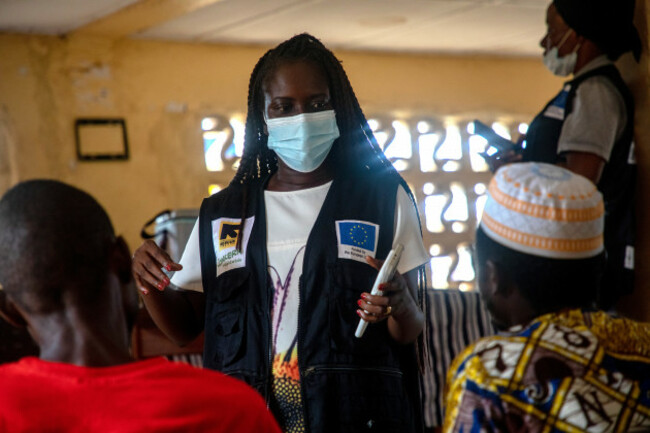
Vaccinating healthcare workers “restores confidence for people to take the vaccine,” says Sarah.
“It also gives people confidence to go and access routine services at health facilities, whether that be childhood immunisations, anti-natal care or emergency care,” she says.
I think that was really important because in any health emergency response, we have to make sure we’re maintaining essential services at the baseline.
This, combined with the funding of the vaccine, lead to increased awareness and created demand for vaccines across the country, says Naana. “These awareness messages contributed massively to the drastic increase in the vaccine uptake as myths and misinformation surrounding the vaccines were dispelled.
“Compared to the previous, slower responses from communities, we can safely say now that communities are more interested in getting vaccinated as a result of all the efforts that have been put in by the National Government and partners like ECHO.”
Concern’s vaccination programmes in Sierra Leone and Liberia are funded by the European Union. Learn more about Concern’s work in responding to the Covid-19 pandemic in Sierra Leone and Liberia here.
To embed this post, copy the code below on your site













have your say