Sign in. It’s quick, free and it’s up to you.
An account is an optional way to support the work we do. Find out more.
Sign in. It’s quick, free and it’s up to you.
An account is an optional way to support the work we do. Find out more.
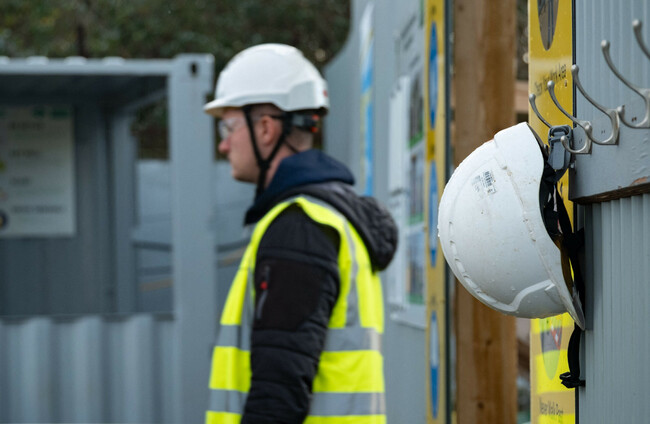
IN AN EFFORT to claw Ireland out of the housing crisis, the Government spent over €400,000 in 2024 and 2025 on advertising campaigns to attract construction workers back to the country.
However, despite the significant spend, no reporting metrics were gathered to track whether the campaign was successful or not.
The ‘Build Back Home’ campaign was launched by the Department of Higher Education and Skills in 2024, in an effort to encourage Irish people who had emigrated to Australia and Canada to move back to Ireland. In 2025, the campaign was extended to target workers in the US.
Central to the campaign was an effort to dispel “myths around moving back home” and reassure people that experience gained abroad would be “valued on return”.
Figures released via a response to a parliamentary question submitted by Social Democrats housing spokesperson and TD Rory Hearne show that €166,889 was spent on the campaign in 2024 and €246,681 spent in 2025.
Of this, over €90,000 was spent on market research, with the rest spent on production, testimonials, and the purchase of advertising space.
In its response to Hearne, the Department said that between now and 2030, Ireland needs between 69,000 and 79,000 additional construction workers in order to deliver on housing and retrofitting targets.
According to the Department, the market research was undertaken with Irish construction workers abroad to discover the barriers to returning home.
“The research found that after two years abroad, life can become difficult, visas are hard to renew, friends they travelled out with move on, and it is as hard to buy and rent in major cities (Vancouver, Toronto, Sydney, Melbourne) as it is in Ireland. They are seeing friends at home settle down,” the Department said.
The Department said returning migrants are not surveyed to see whether an ad campaign influenced their decision to come home, but maintained that the campaign’s reach and engagement provide a strong indication that the target audience has been effectively reached.
It added that while “definitive causal effects cannot be concluded”, the campaign will have had a contributory effect on the increase in construction workers that has been documented by the Central Statistics Office (CSO).
According to the CSO, the number of construction workers in Ireland who mainly worked in the housing sector was 96,700 at the beginning of 2024. At the end of 2025, this had increased to 114,800.
Commenting on the spend, Rory Hearne told The Journal that it was “a waste of public money”.
He added that it would have been better to use the money to help set up a State construction company to provide “quality employment in constructing affordable homes that would actually entice Irish construction workers home”.
“It had to be galling for young construction workers in Australia and Canada to hear adds enticing them home when they were forced to leave because the lack of affordable homes available,” Hearne said.
He added: “And the Government fails to ensure permanent decent quality employment in construction.”
A government housing plan published in November aimed to deliver a minimum of 300,000 new homes by 2031, or an average of 50,000 homes per year from 2026 onwards.
An internal report by the Department of Housing - which was circulated just one week after the government announced its plans – warned housing completions could begin to decline from 2028, citing a drop in planning approvals.
Figures published by the CSO in January showed there were 36,284 new houses built last year, almost 30% short of the average needed over the next five years.

To embed this post, copy the code below on your site








have your say