We need your help now

Support from readers like you keeps The Journal open.

You are visiting us because we have something you value. Independent, unbiased news that tells the truth. Advertising revenue goes some way to support our mission, but this year it has not been enough.

If you've seen value in our reporting, please contribute what you can, so we can continue to produce accurate and meaningful journalism. For everyone who needs it.

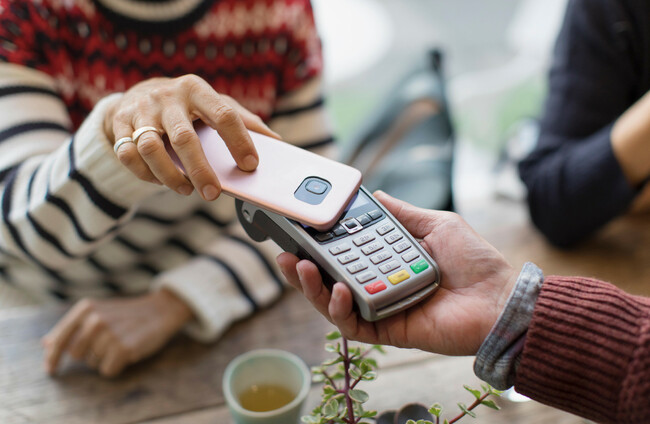
Contactless payments dominate point of service sales in Ireland. Alamy Stock Photo

Put your wallet away - most contactless payments now done with phones

Nine in ten card payments in the first half of this year were contactless.

IF YOU’RE STILL tapping your bank card, you’re in the minority – most contactless payments in shops, restaurants and other outlets were made using phones and smartwatches in the first half of this year.

A new report from the Banking & Payments Federation Ireland (BPFI) found the 58% of contactless payments made using the likes of Apple Pay and Google Pay was up from 52% in the same period of last year.

Contactless payments continue to dominate point of service sales in Ireland, accounting for almost nine out of ten card payments made from January to June.

The report also found that the these habits vary by region, with Dublin having the highest number of contactless and mobile wallets payments per capita. 

Carlow had the second highest number of contactless payments per capita, followed by Limerick and Waterford while Roscommon came in with the lowest amount per capita.  

In a recent survey commissioned by BPFI, only seven percent of consumers said they don’t use cash at all, while over 50% had less than €50 on them. 

The European Central Bank (ECB) has proposed a digital euro that would be a digital form of cash, issued by the central bank and available to everyone in the euro area. The proposal was first made in 2020 by ECB President Christine Lagarde suggested the idea.

This plan has been met with privacy concerns across the European Union which has led to the proposal being altered to give member states more control. Under the new proposal, set to be discussed this week, member states would be able to set a maximum amount of digital euros consumers can hold.

The new BPFI report found that almost one in four in Ireland do not plan on using the digital euro while “14% of consumers say they they didn’t know how much digital euro they expected to hold”.

Just under half of participants said they are “likely or very likely to use a digital euro for online purchases, sending money to friends or family or for point of service payments.”

BFPI say these results show the need for raising greater consumer awareness of the digital euro and how consumers could benefit from using it in the future.

Readers like you are keeping these stories free for everyone...
A mix of advertising and supporting contributions helps keep paywalls away from valuable information like this article. Over 5,000 readers like you have already stepped up and support us with a monthly payment or a once-off donation.

View 66 comments
Close
66 Comments
This is YOUR comments community. Stay civil, stay constructive, stay on topic. Please familiarise yourself with our comments policy here before taking part.
Leave a Comment
    Submit a report
    Please help us understand how this comment violates our community guidelines.
    Thank you for the feedback
    Your feedback has been sent to our team for review.

    Leave a commentcancel

     
    JournalTv
    News in 60 seconds