We need your help now

Support from readers like you keeps The Journal open.

You are visiting us because we have something you value. Independent, unbiased news that tells the truth. Advertising revenue goes some way to support our mission, but this year it has not been enough.

If you've seen value in our reporting, please contribute what you can, so we can continue to produce accurate and meaningful journalism. For everyone who needs it.

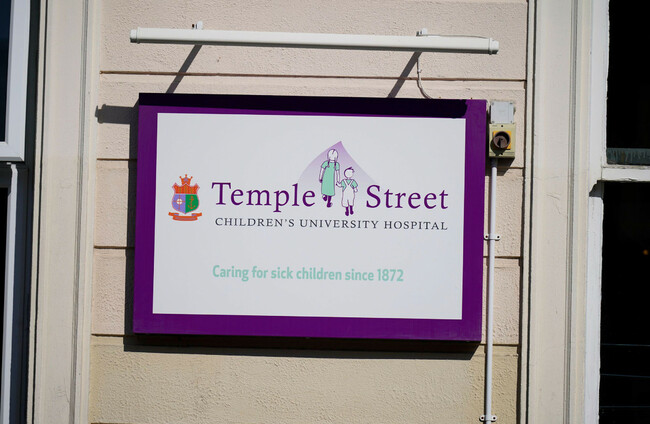
Nellie Lannen had the springs inserted in her during spinal surgery in Temple Street in 2020.

Almost €1m settlement for girl (11) over unapproved spring inserted in her body during spinal surgery

It is the first case to come before the High Court since the controversy surrounding the use of unauthorised springs during spinal surgeries at Temple Street.

AN 11-YEAR-OLD GIRL who sued Children’s Health Ireland after a non-approved spring was inserted in her body during a spinal surgery in Temple Street children’s hospital in Dublin has settled her case for €950,000. 

Nellie Lannen, of Churchtown, Dublin, brought a claim against CHI through her mother Brigitta Lannen.

It is the first such case to come before the High Court arising from the controversy surrounding the use of unauthorised springs during spinal surgeries at Temple Street.

Speaking outside court, her father Stephen Lannen said the family are very pleased with the settlement and that it would improve the quality of care they provide to Nellie going forward.

However, he said: “This does not deter from the fact that the negligence of CHI robbed Nellie of her only opportunity to get the correct surgery for her severe kyphosis.

“As a result, her quality of life will be significantly worse and her life expectancy has been severely curtailed.

She deserves so much better than the very negligent care she received.

He said while the settlement would help them to look after her, they are “very angry that she’s missed her opportunity to have the correct surgery”.

“Her kyphosis is very severe. There’s no way we can correct that now. That’s what it means for us.”

The Health Information and Quality Authority (Hiqa) found in a review last year found that springs which were not marked as CE-compliant under EU health and safety rules were implanted in children by a consultant paediatric orthopaedic surgeon with the intention of treating scoliosis of their spines. 

The Hiqa review found that the use of the unlicensed springs formed part of “a well-intentioned but ill-considered effort to provide an alternative approach to surgical treatment, involving a single operation, for a number of children with life-limiting conditions” who had otherwise been facing multiple operations, each with its associated risks.

It also found that governance changes within CHI meant that a number of policies and safety checks “were not properly applied” in treating the children affected, “resulting in the springs being used inappropriately”.

‘In and out of hospital’

Jonathan Kilfeather SC, instructed by Ciara McPhillips, told Mr Justice Paul Coffey that Nellie was born with spinal muscular atrophy type l (known as SMA Type 1), a neuromuscular disorder that causes severe muscle weakness and difficulty swallowing and breathing.

The court heard that she was diagnosed in September 2015 when she was six months old, before the advent of spinraza, a drug that is used to treat SMA 1. She was prescribed the medication when she was two years old. 

She was under the care of a number of medical practitioners at CHI and was “in and out of hospital” with various infections for years before she was ultimately referred to a consultant paediatric orthopaedic surgeon at Temple Street in 2020. 

Kilfeather told the court that Nellie’s parents Stephen and Brigitta Lannen knew that surgery “was always on the cards” for their daughter as she developed kyphosis, an excessive outward curvature of the upper spine which gets worse as she ages.

If left untreated, the excessive force on the front of the vertebrae can cause collapse, which can have a knock-on effect on lung capacity, which can in turn result in severe breathing difficulties. 

The court heard that Nellie had surgery on 19 October 2020, which was described to her parents as experimental, but “required to prevent the kyphosis from bringing about a situation where she wouldn’t be able to breathe”. 

The surgery involved the insertion of bilateral spinal rods either side of her spine attached to her pelvis. Kilfeather told the court that the surgeon used a spring system that was not certified. 

“After the surgery, it became apparent that Nellie was in severe pain,” he said. After five days, she underwent a revision operation for the rod on the left side of her spine. 

14 remedial operations

Kilfeather told the court that when the spring system activated, “it literally pushed the rod through her pelvis, causing the pelvis to essentially shatter”. 

The court heard that between 24 October 2020 and 24 January 2023, Nellie underwent a further 14 remedial-type operations. 

The little girl was “in and out of hospital”, often staying for several days or weeks to be treated for repeated infections and the metalwork protruding from various locations in her back.

Kilfeather told the court that her father had at one stage described it as “almost as if a coat hanger-type device was inserted into her and she was on that coat hanger”. 

The court heard that on 3 July 2022 during a family holiday in France, the rod protruded through the top of her back. An air ambulance could not be arranged and she stayed overnight in France before returning to Ireland on a ferry on 4 July 2022, when the left side rod was removed. 

Nellie’s care was transferred to another consultant orthopaedic surgeon in May 2023. 

Kilfeather argued that the first operation should never have been performed and that had a different operation been performed, Nellie “would have avoided all of the subsequent operations”. 

He said that Nellie was subsequently referred to Stewart Tucker, a consultant spinal surgeon in Great Ormond Street Hospital in London. The court heard that he expressed “in no uncertain terms” that a spinal fusion should have been performed on Nellie in 2020. 

This operation permanently connects two or more vertebrae in the spine using bone grafts and metal hardware. 

Tucker said that had that been performed, all of the 14 subsequent operations that Nellie went through would have been avoided, Kilfeather said. 

He said her kyphosis was never treated and continues to increase. 

The court heard that Tucker indicated he was willing to perform the fusion operation and the family attended Great Ormond Street in May 2025. However, the anaesthetic team at the hospital was not prepared to do it because they felt the risk to Nellie’s life was too significant. 

Tucker also indicated that he would carry out the fusion operation if there was a suitable team available to him in Ireland, but that no team was prepared to assist him.

Kilfeather read from an expert medical report by Professor Hilali Noordeen that was procured which stated that it was “entirely unreasonable to perform the surgery using the spring system” and that the manner in which Nellie’s pelvis was fixed was “unconventional”.

He also read from a letter sent to Nellie’s parents in April 2026, which expressed that a further spinal surgery would not be expected to improve her quality of life and it would not be in her best interest to proceed with further spinal surgery at this stage.

Asked by Mr Justice Coffey whether the initial surgery had any success in halting the progression of kyphosis, Kilfeather said Nellie is now in a worse situation because as things stand, she can’t have surgery which would improve her condition. 

Life expectancy shortened as a result

He said the family remain hopeful that she may be able to have the surgery in the future, but that this is only a hope and not an expectation. “I don’t think I can put it further than that,” he said. 

Kilfeather said CHI admitted a breach of duty in relation to Nellie’s pre-operation management, the consent process, the design and performance of the spinal rods and springs and the post-operation management. He said the latter refers to the five days it took to carry out the first revision surgery, during which she was in “severe and excruciating pain”. 

Causation remains disputed, with Kilfeather telling the court that CHI did not admit that all the remedial procedures were caused solely by the admitted breaches or the use of the springs. 

He said the progression of Nellie’s kyphosis has caused issues for her breathing and her chest wall shape, and that her life has been shortened as a result of what occurred. 

The court heard that the settlement of €950,000 includes €300,000 for general damages and €260,000 for retrospective care costs, physiotherapy and the cost of aids and appliances. A further sum of €340,000 was agreed for her future care.

The settlement will be reviewed in two years, when the case will return to the courts to decide on Nellie’s future care needs. 

Mr Justice Coffey said the settlement was “eminently reasonable” from what he had heard, adding that there were “compelling medical reports” presented and that he was satisfied that the matter had been resolved on a full liability basis.  

Addressing Nellie’s father Stephen, who was present in court, the judge said he was “delighted that the mater has been resolved to your satisfaction” and he wished the family and Nellie in particular “the very best for the future”.  

Readers like you are keeping these stories free for everyone...
A mix of advertising and supporting contributions helps keep paywalls away from valuable information like this article. Over 5,000 readers like you have already stepped up and support us with a monthly payment or a once-off donation.

Close
JournalTv
News in 60 seconds