We need your help now

Support from readers like you keeps The Journal open.

You are visiting us because we have something you value. Independent, unbiased news that tells the truth. Advertising revenue goes some way to support our mission, but this year it has not been enough.

If you've seen value in our reporting, please contribute what you can, so we can continue to produce accurate and meaningful journalism. For everyone who needs it.

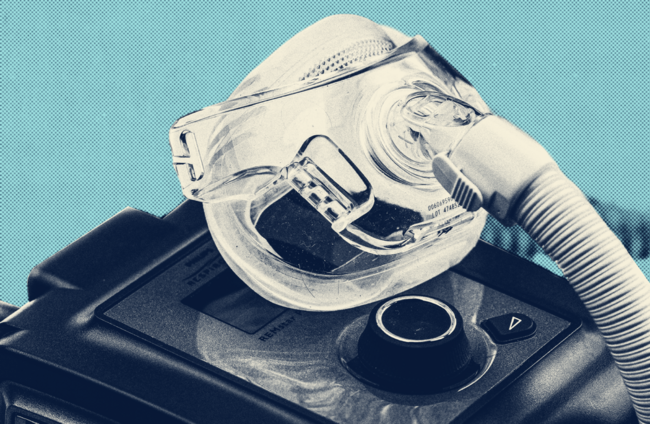
Around 18,000 breathing machines remediated in Ireland after defect led to recall

Some 70 incident reports potentially related to the affected machines were received by the Health Products Regulatory Authority.

THOUSANDS OF SLEEP and respiratory care devices have been recalled in Ireland due to a defect related to foam inside them, The Journal Investigates can reveal.

Warnings were issued against potentially inhaling or ingesting particles of foam contained in certain ventilators, CPAP machines and BiPAP machines manufactured by Philips Respironics, which is owned by Philips.

CPAP and BiPAP machines are designed to help people breathe. They are commonly used by people who have sleep apnoea, a condition that causes breathing to stop and start while you sleep.

It is understood that the industrial foam was used to reduce sound and vibration in the devices so that users can sleep better. Philips Respironics used polyester-based polyurethane (PE-PUR) foam, which is found in furniture and other products.

However, Ireland’s Health Products Regulatory Authority issued a safety notice about a number of the devices in 2021, warning about ingesting or inhaling degraded foam particles and the chemicals emitted by them.

A Philips Respironics spokesperson confirmed to The Journal Investigates that around 18,000 affected devices have now been remediated in Ireland, a current total which includes almost 8,000 devices distributed from the HSE.

We can now reveal that to date, the HPRA has received 70 incident reports potentially related to the affected machines, and it has engaged with a number of patients and representatives as a result.

Of those 70 reports, released to The Journal Investigates under Freedom of Information, some 25 included observations of black particulates, debris or soot or dust-like material, while 20 identified that there was either no evidence or signs of foam degradation or no problem detected.

The other 15 reports included references from patients and healthcare professionals to mild symptoms including nasal irritation, sinus issues, asthma, headaches, eye irritation and tiredness.

“The number of reports alleging more serious health consequences is less than
five,” the HPRA said.

The Journal Investigates also understands that one legal action has been instigated in the circuit court in Ireland in relation to such a device, while separately, one man we spoke to said that he believes he contracted a serious lung condition as a result of using one of the machines for around a decade.

fda-food-and-drug-administration-americas-health-and-safety-regulator Alamy Stock Photo Alamy Stock Photo

Investigations like this don’t happen without your support… Impactful investigative reporting is powered by people like you.

The US recall

Philips Respironics first informed the US Food and Drug Administration (FDA) of its concerns about the sleep therapy devices in April 2021.

According to the FDA, between April 2021 and January 2024, it received more than 116,000 medical device reports (MDRs) about the machines in the US. These MDRs are used to monitor device performance and detect potential safety issues but are unverified and do not establish a clear causal relationship between a device and an event.

The MDRs in this instance included 561 reports of death reportedly associated with the breakdown of the foam inside the devices. A wide range of injuries were cited in these reports, including cancer, pneumonia, asthma, infection, headache, cough, dizziness and chest pain.

Millions of the devices were recalled, with the FDA classifying the recall as a Class I – the most serious type of recall where there is a reasonable probability that the use of or exposure to a product “will cause serious adverse health consequences or death”.

Philips Respironics said it “comprehensively rejects” allegations reported in some US media related to the recall and has done so consistently since 2023.

A company spokesperson said: “In the years prior to 2021, complaints related to possible PE-PUR foam degradation were investigated, evaluated, and addressed by Philips Respironics primarily on a case-by-case basis. When Philips became aware of the issue and its potential significance in early 2021, Philips and Philips Respironics took actions that led to the voluntary recall in June 2021.”

Philips Respironics reached a $1.1bn (€945m) settlement in 2024 in the US to resolve a class action lawsuit and a number of individual cases – though the company did “not admit any fault or liability, or that any injuries were caused” by the devices.

The recall in Ireland

In Ireland, three companies were contracted by the HSE to provide the machines directly to patients: Air Liquide, BOC and Direct Medical. There is no suggestion of wrongdoing by these firms. 

A spokesperson for the HSE said it was first informed about the defective devices on 14 June 2021 and “immediately engaged with the three contracted companies to trace and resolve the issues reported in the FSN [field safety notice]”.

This meant “discovering all devices that were issued with a manufacture date before 26 April 2021.

“This was to ensure that the companies quantified the devices they supplied to patients, and to frequently monitor the progress of each company in providing exchange devices to patients,” the HSE spokesperson said.

The Health Products Regulatory Authority [HPRA] said it engaged extensively with Philips and relevant distributors to ensure that anyone who may have been affected by the machines was identified and informed of the safety notices.

A HPRA spokesperson said: “In June 2021, the HPRA was informed by Philips Respironics that, as part of a global action, they issued Field Safety Notices (FSNs) advising of two issues related to a number of different devices in the area of sleep and respiratory care.

“The issues involved the release of particles and chemicals from the sound abatement foam used in the devices and the potentially impacted devices may be used by patients either at home or in healthcare institutions such as hospitals or long-term care facilities.

“As part of our evaluation of this issue, the HPRA engaged extensively with both Philips and the relevant distributors/service providers in Ireland to ensure that all potentially impacted users of these devices were identified and informed of the FSNs. These communications were supplemented by a HPRA safety notice issued in June 2021.”

The regulator also held outreach sessions with patient advocacy groups alongside the HSE to make sure they were aware of the corrective actions Philips Respironics was taking in response.

In a page on its website which, at the time of writing, is inaccessible, the HSE recommended that all patients and people using the devices continue to use them as prescribed until they could be repaired or replaced. It said there have been “no reports of serious illness as a result of these issues”.

Almost 8,000 machines affected

In figures obtained by The Journal Investigates under Freedom of Information, the HSE said some 7,889 CPAP and BiPAP machines that it distributed were affected by the foam breakdown.

Of those, 5,241 were distributed by Air Liquide, 923 by BOC and 1,726 by Direct Medical.

“As these three companies were the front-line providers to the patient for this equipment, all engagements were between the companies and the patient,” a HSE spokesperson said.

They said that when the safety notice was issued by Philips Respironics, the HSE “immediately engaged with these three companies to ensure that the companies quantified the devices they had supplied to the patients and to frequently monitor each companies [sic] progress in providing exchange devices to the patient”.

As of January 2025, 7,067 of the affected devices have been collected or replaced, with the HSE spokesperson saying that while the three contracted companies were able to locate that many devices, some were still unaccounted for as they did not receive responses from everyone.

“Despite multiple attempts to contact all assigned users, a number of users did not respond, resulting in it not being possible to receive consent or make arrangements for the return of 822 machines,” the HSE spokesperson said.

It said the contracted suppliers provided contact details to affected customers “to allow them to follow up at any time”, while the original safety notice issued by the HPRA and published on its website also provided contact details for the suppliers.

“Any affected customers concerned about their machines can make contact with the contracted suppliers using the details already provided to them or can access details from their supplier website.”

In a statement, a spokesperson for Air Liquide Healthcare Ireland said it “immediately collaborated” with the HPRA and the HSE to carry out “a safe and orderly action plan” after the recall was initiated by Philips Respironics.

The company created a structured “swap-out” programme to replace affected devices with either repaired units or HSE-approved alternatives, and established a dedicated patient support helpline.

“All devices distributed by Air Liquide Healthcare Ireland are tracked by serial number and linked to the customer’s recorded address. As part of our protocol, if mail is returned or calls go unanswered, we attempt to reach the patient during its yearly service intervention,” the spokesperson said.

“At present, all the devices have been proposed to be either replaced or removed. If a patient has any concerns, he is welcome to contact Air Liquide Healthcare Ireland.”

Closing of remediation 

The Journal Investigates asked Philips Respironics how many of the affected devices were distributed to Ireland in total, and how many have been replaced or collected.

A company spokesperson said approximately 18,000 affected devices “have been remediated in Ireland”, adding that Philips Respironics is “working towards closing the remediation of ventilator devices in Europe, including Ireland, in 2026”.

They said that in addition to the devices distributed by the HSE in Ireland, “a significant number of devices were provided to patients from sources other than the HSE, such as Durable Medical Equipment (DME) providers, as well as private healthcare providers.”

The Philips Respironics spokesperson told The Journal Investigates that patient safety and quality “are Philips’ highest priorities”.

They said the company has conducted “extensive testing” with five independent laboratories and third-party experts since June 2021.

“Based on the results as published most recently in July 2023, Philips Respironics and the third-party experts concluded that use of the sleep therapy devices is not expected to result in appreciable harm to health in patients,” the spokesperson said.

“Additional testing as requested by the FDA in October 2023 has now been completed and confirms the validity of the earlier findings.”

Philips Respironics said it formally submitted for closure of the sleep therapy devices remediation process in Ireland in July 2025.

A report on the toxicology risk of the foam, which was prepared for Philips Respironics by research group Exponent, concluded last January that use of the affected CPAP devices “is without appreciable harm to health under worst case conditions of use”.

Former user: “It does affect me”

tom fallon Tom Fallon.

Separately, Tom Fallon, a retired Dublin man, told The Journal Investigates that he believes his affected CPAP machine resulted in him contracting idiopathic pulmonary fibrosis (IPF) in 2021.

IPF is a progressive condition with no known cure. It causes scar tissue to develop on the lungs, with symptoms including shortness of breath, a persistent dry cough and tiredness.

Fallon, who is 76 years old, is a non-smoker and has no history of any environmental or occupational exposure. He was diagnosed with sleep apnoea in 2011.

After attending a sleep consultant in St Vincent’s Hospital in Dublin, he was advised to use a CPAP machine continually at night, which is a common treatment option for the condition. He bought a Philips machine, which he used for around a decade before changing to a smaller device in 2021.

Fallon said he first learned of the Philips recall through a news article, when he discovered that his own machine was on the list of suspected faulty devices.

He contacted the company in the UK and was advised to submit it for investigation. In July 2024, he sent his device to Philips in Germany, who then sent it to be examined in the US.

In a letter sent to Fallon by Philips after the device was examined by a technician, seen by The Journal Investigates, the company said that “small black particles consistent with sound foam breakdown were observed on the air inlet seal and bottom enclosure”.

The top cover of the device was also found to have “small, dried liquid spots from an unknown source” and an “unknown dust-like contaminant” was found on several parts of the device, while the blower wires grommet “were found to have not been seated correctly into the blower box cap.”

Philips also told Fallon that “an unknown black contaminant” was found on the interior of the blower. They concluded that the technician “was able to confirm the presence of degraded sound abatement foam”.

Two medications – Pirfenidone and Nintedanib – have been shown to help slow down how quickly IPF progresses in some people, but they can’t treat the symptoms of the condition or reverse it.

Fallon has tried both of them, but could not continue using them because of the side effects. “You get nausea, diarrhoea and vomiting, particularly with one of them named Nintedanib. I couldn’t tolerate it at all,” he said.

The impact of IPF varies from person to person. For Fallon, his breathing has worsened in the four years since he was diagnosed.

“It does affect me,” he said.

Even putting my clothes on in the morning, I get very breathless and I have to take my time at it.

“My lungs are getting hard and they’re not able to push the oxygen into the blood. This is progressing. I do not need oxygen yet, but it could only be a matter of time.”

Legal Actions elsewhere

It is understood co-ordinated litigation across different European jurisdictions was filed against Philips in Italy in 2024. More than 20 lawyers from 15 different firms are involved in the litigation.

For its part, the HSE told The Journal Investigates: “The HSE has no record of proceedings issued against the HSE concerning the Philips Non-invasive ventilators (CPAP, BiPAP and Trilogy) that were exchanged by three Philips equipment suppliers as a result of this Field Safety Notice (FSN).

“However, any personal injury claims that might arise from this issue would be managed by the State Claims Agency separately.”

In a statement to The Journal Investigates, a spokesperson for the State Claims Agency said product liability claims are excluded from its statutory remit.

Fallon said he had intended to pursue a case against Philips and engaged a solicitor, but last year, he decided not to proceed with litigation.

“I would have had to get an independent assessment to state that the pulmonary fibrosis was caused by using their machine, and to categorically state that would be very hard for any pulmonary consultant to do.”

He said an independent report from a consultant in the UK would have cost over STG£5,000 [€5,780], on top of the costs of engaging a legal team and a toxicologist to assess the chemicals that were in the fibres of the foam.

“At the end of the day then, maybe [the consultant] couldn’t categorically state that a Philips machine caused it. I am convinced that it was the use of that machine.”

While Tom has decided not to pursue legal action, The Journal Investigates understands that one legal action was instigated in the Circuit Court against Philips in relation to a device.

Philips awareness campaigns

A spokesperson for Philips Respironics said it initiated and maintained broad worldwide public communications regarding the device recall since 2021.

“In addition to field safety notices to customers, patients, durable medical equipment providers (DMEs) and clinicians, the company issued press releases, and created patient and clinician web pages, particularly the registration portal for devices affected by the recall.”

The spokesperson said national healthcare services and national regulators worldwide also issued “numerous public communications regarding the recall”, including the HPRA.

“It is important to note that in many countries, including Ireland, Philips did not have individual patient contact information, as affected devices were provided directly to patients via Durable Medical Equipment providers or via their healthcare service, or other provider,” the spokesperson added.

“For this reason, in addition to wide awareness campaigns by Philips Respironics, focused communications to DMEs and clinicians were also sustained to help ensure patient awareness.”

The Journal Investigates

Reporter: Jane Moore and Maria Delaney • Editor: Noel Baker • Social Media: Cliodhna Travers • Main Image Design: Lorcan O’Reilly

Investigations like this don’t happen without your support...
Impactful investigative reporting is powered by people like you. Over 5,000 readers have already supported our mission with a monthly or one-off payment. Join them here:

Close
6 Comments
This is YOUR comments community. Stay civil, stay constructive, stay on topic. Please familiarise yourself with our comments policy here before taking part.
Leave a Comment
    Submit a report
    Please help us understand how this comment violates our community guidelines.
    Thank you for the feedback
    Your feedback has been sent to our team for review.

    Leave a commentcancel

     
    JournalTv
    News in 60 seconds