We need your help now

Support from readers like you keeps The Journal open.

You are visiting us because we have something you value. Independent, unbiased news that tells the truth. Advertising revenue goes some way to support our mission, but this year it has not been enough.

If you've seen value in our reporting, please contribute what you can, so we can continue to produce accurate and meaningful journalism. For everyone who needs it.


A cyber security expert scanning a screen. Alamy Stock Photo

Companies must begin to search for child sexual abuse imagery on work computers, expert says

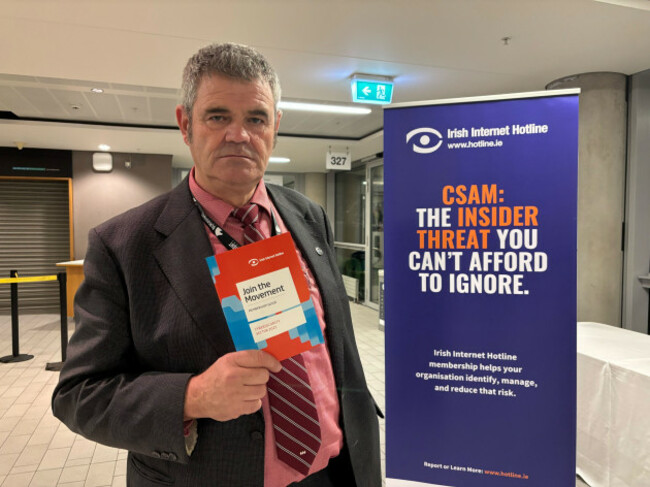
Mick Moran, CEO of Hotline.ie, spoke to The Journal at a major international cyber security event in Dublin.

A CYBER CRIME expert has said that companies must begin to search for child sexual abuse imagery on work computers.

Mick Moran, one of Europe’s leading experts in policing child sexual abuse material (CSAM), was recently appointed as the head of Hotline.ie. 
Hotline.ie was set up in the late 1990s by tech companies so that people could report illegal activities online. The non-profit body works closely with tech companies, the Irish Government and NGOs to combat illegal content online.

Those activities include everything from sexual abuse images to online scams.

Moran spoke to The Journal at an event in Dublin, IRISSCON, which brings together international and Irish experts in cyber security to discuss developing trends. Speakers from Europe, the US and Britain outlined their experiences in various areas of cyber security and confronting hackers. 

The event is organised by IRISS-CERT which is Ireland’s first Computer Security Incident Response Team (CSIRT). It provides services to all users within Ireland.

Moran, who had previously served as a garda detective and also with Interpol, has said that the rising incidence of CSAM on work computers must be confronted by businesses. 

The expert said that the nature of the content is images and video of child abuse and these are being found on work computers. 

IMG_5690 Mick Moran, CEO of Hotline.

Frontline

Moran explained that his group believes that businesses could form part of the frontline in detecting the content.

He said that if companies are watching for computer viruses and hacking threats already inside files on devices and servers then they could also monitor for CSAM files.

“If you’re scanning the network for viruses, malware, remote access, trojans… for all of these cyber security threats that are out there. How is it you can’t be scanning for CSAM?”

Moran explained that a Swedish company has developed a solution and that firms could use this to check for the illegal material. 

“Companies see CSAM as being a toxic issue – their response is to keep it at arm’s length, bury it under the ground. The problem with that is that there are two legal instruments in Ireland that they are breaching.

“If, as a company, you find CSAM on your network and you sack the guy and delete the files you’re committing offences under the Child Trafficking and Pornography Act and the Criminal Justice Act of 2012.

“Companies and compliance risk officers need to understand that CSAM is essentially an insider threat,” he said. 

Moran said that it is critical that companies engage with the gardaí and groups such as Hotline to find a way to implement the solution.

He said that CSAM is a societal issue and that all parts of society must be brought into deal with the issue, including businesses. 

IMG_5691 Dr Hazel Murray of MTU. Niall O'Connor / The Journal Niall O'Connor / The Journal / The Journal

Cyber champions

Another speaker at the cyber security event was Dr Hazel Murray of the Munster Technological University. 

She spoke to The Journal regarding a separate subject – her work and research finding a way to help older adults who may not be as digitally aware and careful as more younger users. 

Murray said that people are being targeted and exploited by criminals in scams and other cyber related crime. 

She explained the key is to upskill “cyber safety community champions” who would work with groups such as Age Action and National Cyber Security Centre. 

Murray added: “I’m looking at really the human element of cybersecurity, but also raising the bar of cybersecurity for everyone.

“Sometimes when we think of cybersecurity, we think of the big multinationals, the people in the basement that are doing the hacking, maybe like the nation state actors but cybersecurity will affect people, real people,” she said. 

In response Murray said her work is about going into communities and giving “cyber safety support”. 

There are people who are giving classes to older adults in libraries on the use of digital equipment but there is some short coming on cyber security. 

“Those people in the library, like a lot of us, don’t know the answers to cyber safety questions like.

“What we’ve been doing is we’ve been upskilling community cyber safety champions so there are people in communities around Ireland that can help with cyber safety for anyone, vulnerable people in particular, but really it’s useful for everyone,” she added. 

The initiative was piloted successfully in Donegal, and every library in Donegal now has a cyber safety champion in it. 

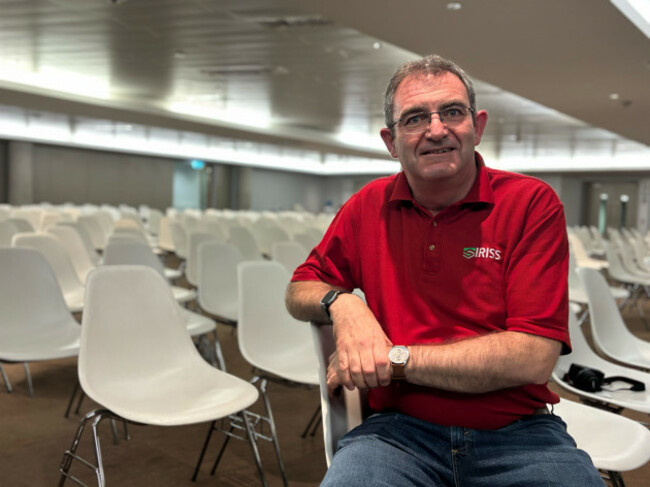
IMG_5685 Brian Honan, Founder and Head of IRISSCERT, who organised the event. Niall O'Connor / The Journal Niall O'Connor / The Journal / The Journal

Human factor

Organiser of the event Brian Honan, a long term cyber security expert as well as head and founder of IRISSCERT, said the theme of the event was to focus on the human element.

“Technology continues to evolve, but human behaviour remains at the core of most security incidents.

“Our aim this year is to help businesses understand, manage, and reduce that human risk, particularly as AI begins to amplify both opportunities and threats in cybersecurity,” he added. 

Readers like you are keeping these stories free for everyone...
A mix of advertising and supporting contributions helps keep paywalls away from valuable information like this article. Over 5,000 readers like you have already stepped up and support us with a monthly payment or a once-off donation.

Close
JournalTv
News in 60 seconds