We need your help now

Support from readers like you keeps The Journal open.

You are visiting us because we have something you value. Independent, unbiased news that tells the truth. Advertising revenue goes some way to support our mission, but this year it has not been enough.

If you've seen value in our reporting, please contribute what you can, so we can continue to produce accurate and meaningful journalism. For everyone who needs it.

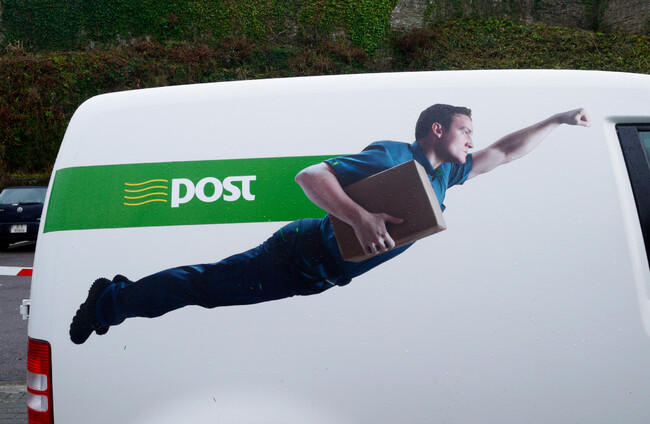
An Post van pictured in Kinsale, County Cork. Alamy Stock Photo

An Post reveals some householders are setting dogs on postal workers

The deliberate attacks make up some of 400-plus dog incidents or injuries sustained by postal staff since 2023, The Journal can reveal.

DOG ATTACKS ON postal workers remain one of the leading causes of workplace injuries at An Post since the Covid-19 pandemic, new figures reveal.

Over 120 animal attacks have already been recorded this year, including cases where dogs were deliberately set on staff, Noel Lacey, the company’s Head of Group Safety, said.

The figure follows 150 attacks in 2023 and 148 in 2024, indicating that the problem has remained persistently high in the years since pandemic restrictions eased.

The Journal can reveal that An Post is so concerned about the incidents, it plans on launching a nationwide campaign aimed at householders surrounding the dangers dogs can pose to its staff.

Lacey revealed that dog attacks have now climbed from being a relatively rare cause of injury, to becoming one of the most common risks faced by postal workers across the country.

Some cases have been serious enough to require hospital treatment, surgery under general anaesthetic and, in a small number of instances, plastic surgery.

“We record the incidents as animal attacks, because we do have the odd cat scratch, spider bite or seagull attack,” he said. “But you could count those on one hand. Overall, 99.9% of incidents involve dogs.

“When I joined An Post in 2018, dog attacks would have been maybe the 11th or 12th most common cause of injury,” he said. “Since Covid, it has stuck solidly in the number three or number four position.”

Surgery required for some attacks

An Post employs around 5,000 postal workers, delivering to approximately 2.2 million addresses across the country.

While slips, trips and falls remain the single biggest cause of injuries, followed by manual handling incidents linked to parcel deliveries, dog attacks now consistently rank just behind them.

The majority of dog-related injuries are relatively minor, Lacey said, often involving bites to the hand or fingers. However, some have been more serious.

“There have been one or two severe incidents this year,” he said. “And while the overall severity tends to be lower than, say, a serious fall or back injury, the impact on those colleagues is significant – not just physically, but psychologically.”

Figures show that 26 “lost-time” injuries due to dog bites have been recorded so far this year, with 15 absences exceeding three days, a pattern broadly in line with previous years.

The company categorises lost-time incidents as any incident which required more than a couple of hours off work. Absences exceeding three days are automatically reported to the Health and Safety Authority.

In 2023, An Post recorded 29 lost-time incidents and 18 absences of more than three days linked to animal attacks. In 2024, those figures stood at 26 and 15 respectively.

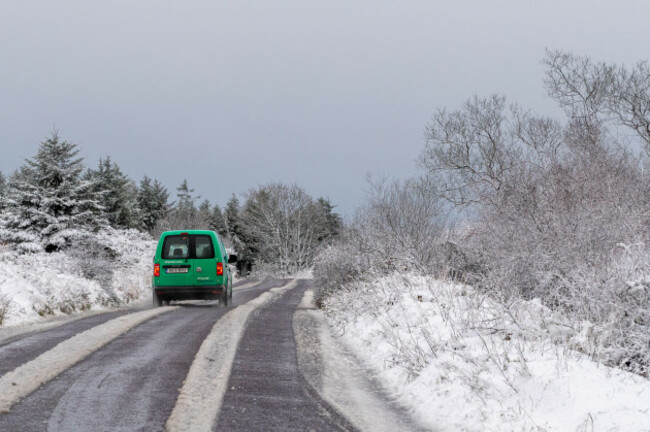
an-post-van-drives-through-snow-near-dunmanway-west-cork-ireland An Post van drives through snow near Dunmanway, West Cork. Alamy Stock Photo Alamy Stock Photo

Dogs deliberately set on postal staff

Lacey stressed that while dog attacks are not the most severe category of injury overall, a small number of serious cases can account for a disproportionate amount of lost working time.

“Two or three colleagues requiring stitches and ongoing treatment can account for a large number of lost days,” he said.

“That’s very different to something like slips or manual handling, which might affect hundreds of people but for shorter periods.”

He said An Post has also encountered cases where dogs were deliberately set on staff, particularly in situations involving TV licence inspections or difficult deliveries.

“We do have incidents where certain householders might set a dog upon a colleague,” he said. “That’s not normally the postman – it can be a TV licence inspector – but those situations do arise.”

The company said it operates a graduated response when safety concerns are raised, including warning letters, engagement with householders, and, in rare cases, withdrawal of service.

An Post also works with local authorities, dog wardens and gardaí where necessary, though Lacey said most postal workers do not want dogs harmed even after being bitten.

In the past, we have had, unfortunately, dogs that were destroyed.

“But nine out of 10 of our postal operatives – even if they’re bitten – don’t want any harm to go to the dog,” Lacey said.

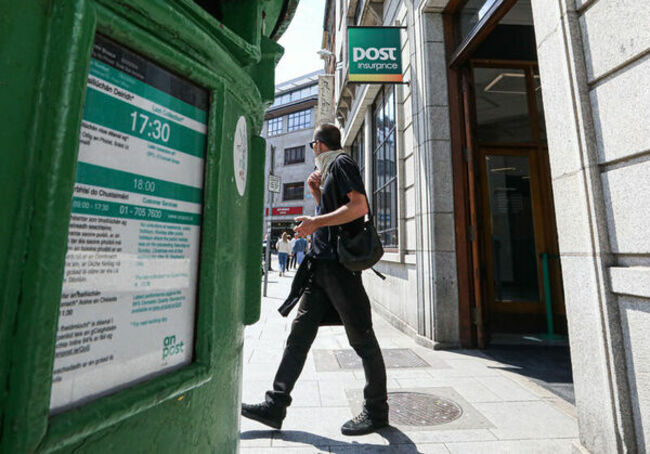
Dublin Post Offices 001_90627173 A post box pictured outside St Andrew's Street Post Office in Dublin.

New 2026 awareness campaign 

An Post plans to relaunch a public awareness campaign next year reminding dog owners of their responsibility to secure pets during deliveries.

Lacey said the surge in dog ownership during the pandemic is suspected of contributing to the problem.

“Anecdotally, a lot of people got dogs during Covid and then went back to work,” he said. “Some of those dogs are anxious and nippy. That seems to be a factor.”

He added that responsibility ultimately lies with householders.

“If you want your mail delivered, you have to make it safe for the person delivering it,” he said. “That’s just the reality.”

Lacey said that a new campaign next year will hopefully remind households which do have dogs to be more mindful.

“We can’t train 5000 people to be like dog psychologists. We give our staff the do’s and the don’ts.

“Sometimes you have colleagues who have little bones or treats in their pockets, and others, if they saw a sight of a dog, wouldn’t even get out of the car. Both things are right.”

Patricia Devlin is an investigative reporter with The Journal Investigates.

Our investigative unit is dedicated to lifting the lid on how Ireland works. This takes time and it takes resources. Find out how you can help:

Readers like you are keeping these stories free for everyone...
A mix of advertising and supporting contributions helps keep paywalls away from valuable information like this article. Over 5,000 readers like you have already stepped up and support us with a monthly payment or a once-off donation.

Close
JournalTv
News in 60 seconds