Sign in. It’s quick, free and it’s up to you.
An account is an optional way to support the work we do. Find out more.
Sign in. It’s quick, free and it’s up to you.
An account is an optional way to support the work we do. Find out more.
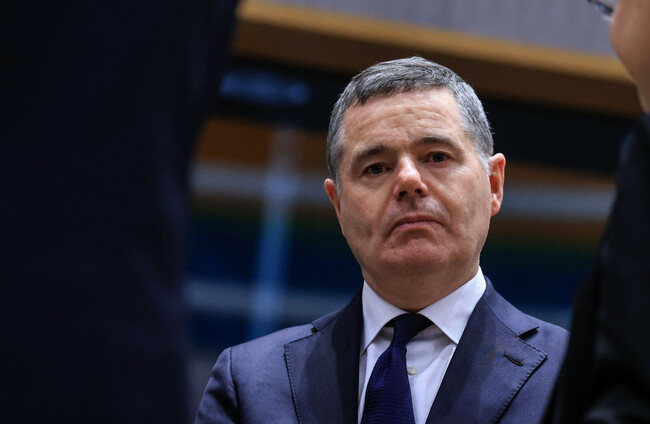
FINANCE MINISTER PASCHAL Donohoe will face some competition in his pursuit of another term as Eurogroup president.
Politicians from both Spain and Lithuania announced today that they’re throwing their hats into the ring.
Donohoe, who has served two terms, expressed his interest earlier this year in continuing for another.
Carlos Cuerpo, Spain’s finance minister, announced his candidacy on X, promising a “renewed impetus” for the Eurogroup.
He said it must play a key role in the European political agenda and “achieve tangible results in terms of growth, competitiveness, welfare state, and integration”.
Socialist Cuerpo is considered Donohoe’s main competitor, but Lithuania’s Rimantas Šadžius is also in the race.
Any minister with responsibility for finance from a euro area member state may be elected President of the Eurogroup. The candidate must be a sitting member of the Eurogroup at the time of the election.
The president’s term is two and a half years and the next president will be elected on 7 July.
They require a simple majority of the Eurogroup ministers. If none of the candidates receives at least 11 of the 20 votes at the end of the first voting round, each candidate will be informed individually of the number of votes that they received, and they can drop out if they wish.
The ministers keep voting until a simple majority is reached.
The Eurogroup is an informal body created in 1997 in which the ministers from the euro area member states discuss matters relating to their countries’ common responsibilities related to the euro.
They coordinate economic policies and try to promote economic growth.
They usually meet once a month, before the Economic and Financial Affairs Council meeting.

To embed this post, copy the code below on your site











have your say