Sign in. It’s quick, free and it’s up to you.
An account is an optional way to support the work we do. Find out more.
Sign in. It’s quick, free and it’s up to you.
An account is an optional way to support the work we do. Find out more.
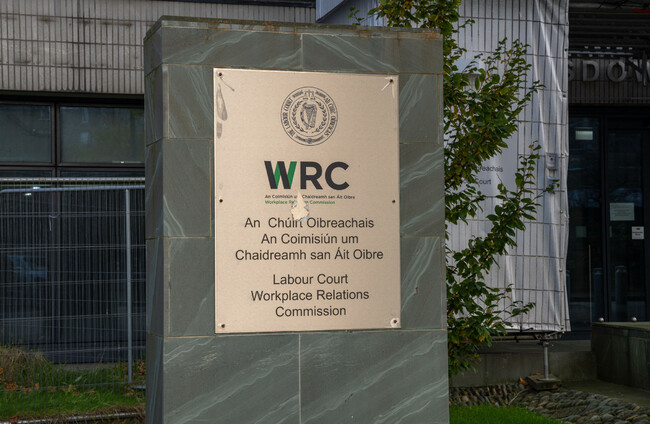
THE LABOUR COURT has quashed an unfair dismissal compensation award of €27,500 made to a female employee after her return to work from maternity leave.
This follows the Labour Court setting aside a Workplace Relations Commission (WRC) ruling that Securitas Security Services (Ireland) Ltd pay €27,500 compensation to people and communications partner, Aisling Walsh.
The case was before the Labour Court after the security firm appealed the December 2024 WRC unfair dismissal ruling to the court.
Setting aside the €27,500 award and unfair dismissal ruling, Deputy Chairwoman of the Labour Court, Katie Connolly said that the court was satisfied that the termination of Ms Walsh’s employment “was unconnected to her pregnancy and absence from work on statutory protective leave”.
Ms Connolly said that it was the court’s view that a genuine redundancy situation arose and, given the unique nature of the role, that Ms Walsh was fairly selected for redundancy.
Ms Connolly said it was the court’s view that the conduct of Securitas Security Services in relation to the implementation of the redundancy was substantially reasonable.
Ms Connolly found that the court finds that Ms Walsh’s dismissal by reason of redundancy was not unfair.
Ms Walsh commenced employment with the company in October 2022 and was engaged as a People and Communications Partner on a client site.
The role was specific to that client site and Ms Walsh earned a gross annual wage of €55,000.
Ms Walsh commenced maternity leave on 16 January 2023 and was due to return to work on 1 November 2023 following an extended leave period.
Ms Walsh was dismissed from her role, by reason of redundancy effective from 24 February 2024.
In her evidence before the Labour Court, Ms Walsh said that her expectation was that the company would provide her with an alternative role to the role on the client site on the same terms and conditions of employment, as she was returning to work from a period of protective leave.
Ms Walsh said that she believed that she was entitled to return to work from protective leave on the same terms and conditions of employment.
She said that alarm bells started to ring after she met with HR Director, Michelle Collins who asked for her resignation.
In evidence, Ms Collins said that following Ms Walsh’s return to work on 1 November 2023, she formally notified her that the PCP role had ceased and that she was at risk of redundancy.
Ms Collins said that the company went to extraordinary lengths to secure an alternative role for Ms Walsh and Ms Walsh declined three roles because they were at a lower salary.
Ms Collins said that ultimately, the was no alternative role available, which was a pity was the company had no issues with Ms Walsh as an employee.
In her findings, Ms Connolly said that the court heard undisputed evidence that the role of PCP was unique to that specific client site.
In her role, Ms Walsh was the designated person embedded on site to liaise with the other contract employees employed by Securitas there and the client subsequently made a business decision to terminate that role, due to budget constraints.

To embed this post, copy the code below on your site

















have your say