Sign in. It’s quick, free and it’s up to you.
An account is an optional way to support the work we do. Find out more.
Sign in. It’s quick, free and it’s up to you.
An account is an optional way to support the work we do. Find out more.
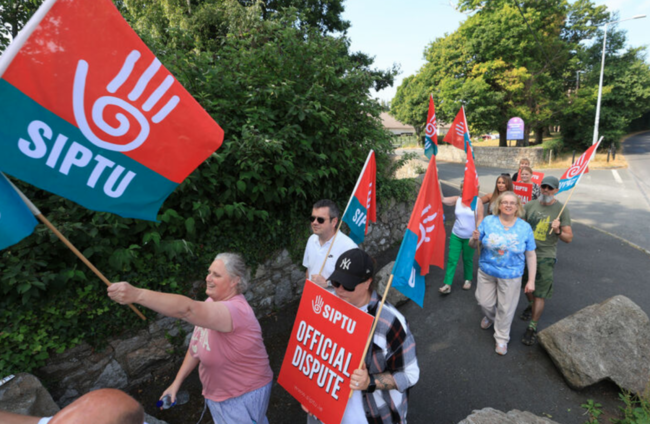
PUBLIC SERVICE WORKERS across the country are set to go on strike next week, with disruption expected across hospitals, schools and government services.
The move is part of wider industrial action which began last week as over 100,000 public sector workers began a work-to-rule amid a dispute over pay. Here’s all you need to know about who is taking part, why workers are striking and if a resolution is on the cards.
Strike action will be widespread across the public and civil service.
The health sector will see 11,000 workers across 30 hospitals strike on the 14th, including nurses and midwives. Consultants, public and community health doctors will also be striking, as announced by the Irish Medical Organisation (IMO) earlier this month.
The planned action will affect hospitals across the country, including Beaumont Hospital, Cork University Hospital, University Hospital Galway, University Hospital Limerick, St James’s Hospital, and University Hospital Waterford.
Critical and emergency care will still go ahead with essential staff, but services such as elective procedures will be cancelled.
Dentists working in the Health Service Executive will also join the stoppage. This is the first time in history the Irish Dental Association (IDA) has served notice of industrial action.
Meanwhile, the civil service and government staff will also take part. This includes administrative staff across government departments but also agency workers and local council workers.
In education, primary schools across the country will close as teachers who are members of the Irish National Teachers’ Organisation (INTO) join the strike. Second-level teachers in the Association of Secondary Teachers Ireland (ASTI) will likewise engage in the action.
Picketing is expected to take place outside the workplaces involved.

To tackle the cost of living, the Public Service Agreement 2024–2026 was put in place to support public service workers from January 2024.
This constituted a 9.25% pay increase spread out over two and a half years.
In exchange, unions would not go on strike or ask for more pay while the deal was active.
However, the agreement expired in June of this year. Public service union Fórsa, which represents a significant proportion of workers, says talks on a replacement agreement have yet to deliver a credible approach to pay.
The union argued that workers’ living standards need to be protected and that the government has not adequately addressed cost-of-living pressures.
Members have delivered a strong mandate for industrial action in this ongoing dispute, with 96.6% of those who voted backing action.
For teachers specifically, the INTO says it has lost confidence in the government’s approach to pay negotiations, arguing that talks have focused too much on reforms rather than workers’ pay.
General Secretary of the INTO John Boyle said teachers’ pay has increased by 20% over five years, while inflation has risen by 27.5%, leaving them 7.5% behind the cost of living.
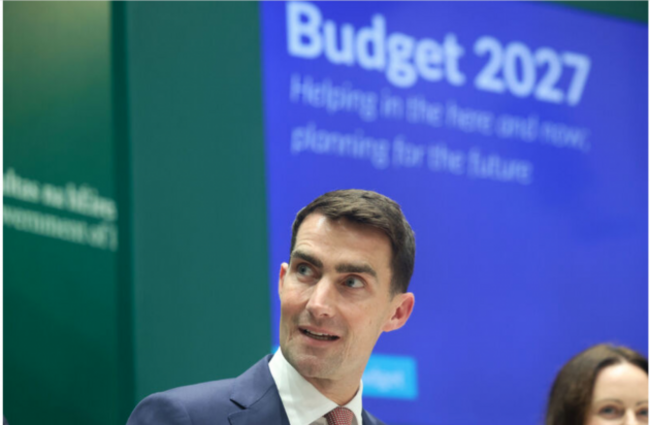
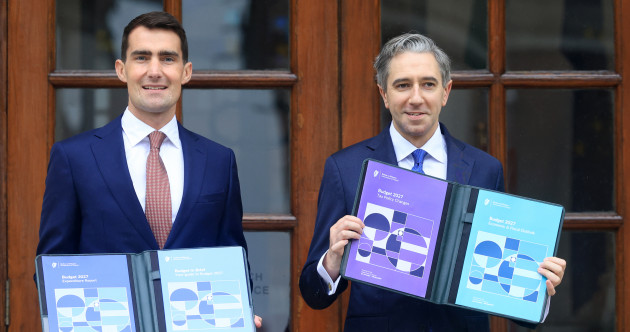
In his budget speech, Minister for Public Expenditure Jack Chambers emphasised that every effort should be made to prevent any further disruption.
In what he described as a “significant provision”, €1.2 billion was allocated for public service pay.
“I would now call on the Irish Congress of Trade Unions and other associations to match this intent by re-engaging as a matter of urgency and standing down the ongoing industrial action,” Chambers said.
However, public sector unions have said that the €1.2 billion allocated is not enough to solve the issue.
Speaking on RTÉ Morning Ireland, Owen Reidy, general secretary of the Irish Congress of Trade Unions, noted that workers are not satisfied with the measures. “People are very serious about this.
“Trade unions in the public and the private sector don’t take strike action lightly.
“It’s been a very, very long time in this State since we had public sector industrial action, strike action on this scale, and I think the Government needs to look at this and they need to take it seriously,” he added.
Reidy described the budget as “anything but a workers’ budget”, and stated that workers were 2.5% worse off than they should be.
The government said it remains committed to engaging in substantive talks with unions.
Speaking this morning, Minister for Foreign Affairs Helen McEntee backed Chambers, noting that she “hoped unions would come to the table”.
McEntee insisted that “we want to increase people’s wages” and that “there is room outside the €1.2 billion”.
As part of this, McEntee said that talks must take place “without preconditions”. She added that she hoped this would happen before any further disruption next week.
However, unions maintained that strike action would go ahead on the 14th.
In a statement to The Journal, the INTO said members were “unlikely to be persuaded” and that the €1.2 billion “does not suggest the Government is prepared to negotiate a deal”.
In addition to the industrial action next week, further strikes are planned for 21 October.
To embed this post, copy the code below on your site














have your say