Sign in. It’s quick, free and it’s up to you.
An account is an optional way to support the work we do. Find out more.
Sign in. It’s quick, free and it’s up to you.
An account is an optional way to support the work we do. Find out more.
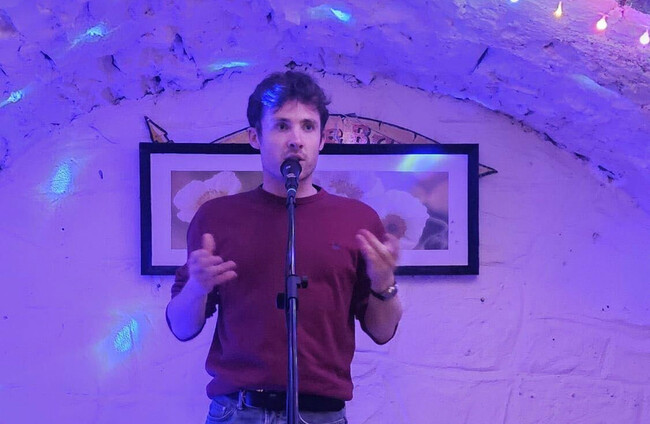

In this series, journalist and spoken word artist Cormac Fitzgerald travels to a different town or suburb each week to write about the gigs and cultural experiences you rarely see covered by Irish media outlets.
This week’s subject: An underground poetry slam in Galway City.
*****
IT’S FRIDAY EVENING in Galway City.
Crowds of stags and hens, tourists and locals mill around the pedestrianised streets, drinking in the bars, eating outside restaurants, or stopping to appreciate the street performers dancing, singing or playing music on every corner.
On Augustine Street, near the centre of the city, people file down the metal stairs and into the underground Club de Burgos.
While technically a Garda Social Club, owned by An Garda Síochána, De Burgos mostly functions as a local bar and perennial event space. Standing in its cavernous chambers (the space was once a wine cellar), which are strung up with fairy lights and full of tables, chairs, stools, disco lamps, you can almost sense the ghosts of all the 18ths, 21sts, 40ths, gigs, functions and social meetings that have taken place here over the decades.
But this evening the 60-70 of us crowded in front of the makeshift stage aren’t here for a party, we’re here to watch, judge, or take part in the Connacht Poetry Slam Championship.
“But, wait, what the hell is a poetry slam?” I hear you cry.
“Some kind of poetic wrestling match?”
Good question! Close, but not quite.
A poetry slam is admittedly quite an Americanised term to describe what is a live spoken word poetry competition.
Poets take to the stage and have to recite or perform an original poetic work from memory in under three minutes or less. No props, no costumes, no reading off a page or a phone, just the poet onstage in front of the crowd.
Between three and five judges score the poet for content (what they thought of the poem itself) and performance (how it was delivered).
In competitions, how a person tells the poem and its immediate impact on the judges and the crowd can be as important as the work itself. Like with good comedy or acting, timing, intonation and clarity are all very important.
The first poetry slams were held in Chicago in the early 1980s, founded by a poet named Marc Smith. A former construction worker, Smith was fed up with what he saw as the gatekeeping and elitism of traditional poetic institutions and wanted to democratise the art form and open it up to everyone.
It was an incredible success, and today you will find poetry slams taking place in cities and countries all across the world. There are big, state-funded competitions and people can win huge prizes and have successful careers after winning titles like the World Poetry Slam Championship, or the Roundhouse Slam in the UK.
Here, the All-Ireland Poetry Slam Championship consists of four regional slams taking place in the four provinces every year. The top three from each province then go through to the All Ireland Final, with the winner of that being crowned the All Ireland Slam Champion.
The championship here is a humbler affair, run by an ever-changing group of rag tag volunteers (myself included), sometimes funded, other times not, but surviving in some way year-on-year. It has been held now by hook or by crook for almost two decades. While it can be competitive, the heart of the competition is more about giving people a chance to perform live and to enjoy spoken word poetry.
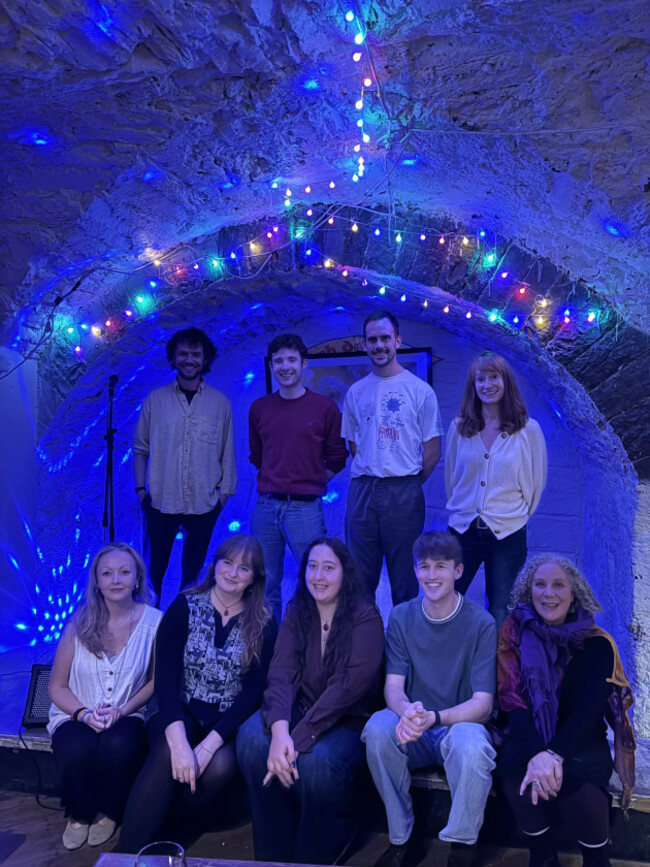
And that is what we are all doing in here in De Burgos on a Friday night in Galway.
I am the MC for the evening, which is being run by the local poetic collective the Oil Slick. There are 15 poets signed up to say their piece, and five judges to rate them.
“Slam poetry” (or as we call it here, spoken word poetry) is often derided as an art form, seen as too performative, odd, or overly naff or emotional (there’s a funny scene in the Hollywood movie 22 Jump Street that typifies this). But on Friday night there is no strict style or delivery, with people from all walks of life delivering poems on a huge range of topics.
There are poems about the circus, about addiction, about the ongoing destruction of Gaza, about suicide, the moon, relationships. There is a poem where a man lists off his least favourite small cars, about the importance of music in life, and others that aren’t about any one thing in particular.
There are short poems, long poems, heartbreaking pieces about loss, death, depression, and a hilarious work that has the whole room in stitches laughing. There is no one theme, topic, style, but a huge mixture of different types of work delivered by a diverse range of poets from various different backgrounds.
In between performances, people go to the bar, talk and laugh amongst themselves and generally have a good time. The energy is high, the mood in the room is great, and tonight in Galway City at least the subculture of people gathering in basements, back rooms, venues, cafés and bars to speak and listen to poetry is alive and well.
Poetry slams and spoken word poetry gigs can be directly traced back to the anti-establishment Beat poets of the 1950s, a group of artists who also sought to kick against the norms and perceived stuffiness of traditional US poetic institutions.
The origins of this live performance style can also be traced back even earlier to the Jazz Poetry of the 1920s, when black American poets once again sought to upset established ideas about what a poet is and who can write and read poetry.
But here in Ireland, for many centuries we had our own oral culture and traditions rooted in the Irish language where poetry was spoken, recited and performed live. Gaelic culture had a whole separate caste of poets, whose job it was to sing their chieftains’ praises and satirise and humiliate their enemies.
The retreat to the page and the quiet, reserved poetry reading is a relatively new phenomenon in Ireland compared to the many hundreds of years of live performance. As the late-Kevin Higgins, a Galway poet who organised many a slam over the years and who died in 2023, wrote back in 2007:
“Poetry slams and open readings may be American imports, but they have the potential to re-energise Irish poetry, by reconnecting it with its own oral tradition. Indeed, they are already doing it.”
While they are competitions, poetry slams are about releasing poetry from stuffy “Victorian drawing rooms” and into the vibrant, live public arena.
That’s what we are all participating in here in Galway City tonight.
But at the end of the day, a slam is a competition and every competition needs a winner.
After Round One, the initial 15 poets are whittled down to six, who get a chance to perform a second poem. After Round Two, three are selected to represent Connacht in the All Ireland Final.
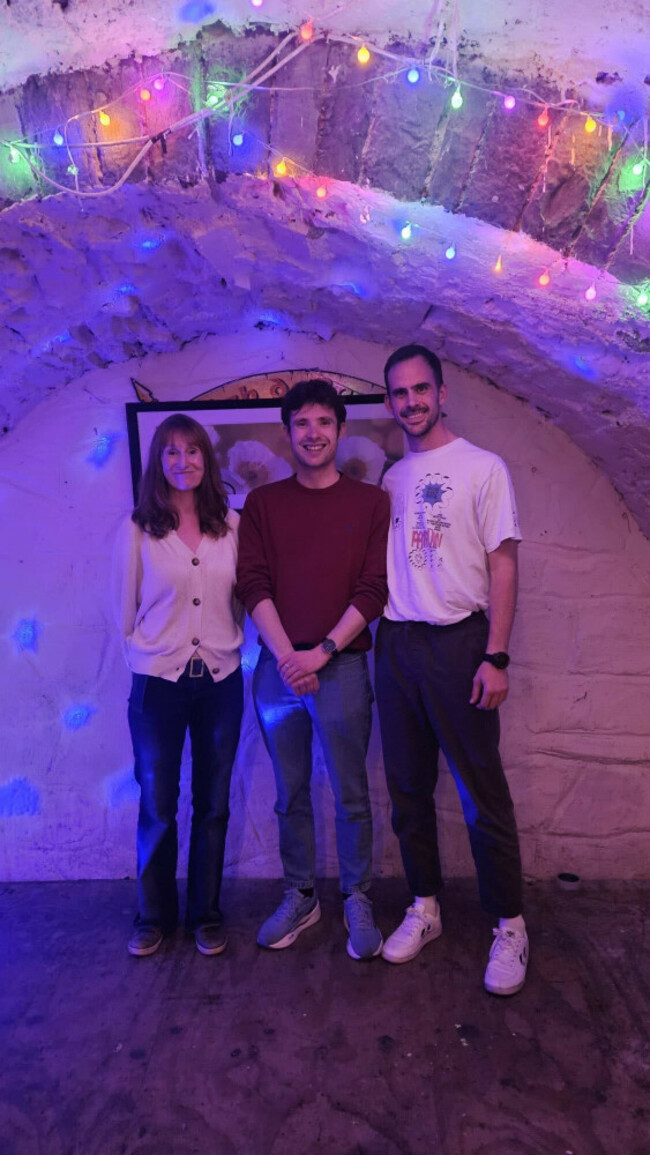
The clear winner on the night is Liam McBrearty, a young, local poet who first has the crowd in fits of laughter with a poem about the complexities of labelling and sexuality, before he follows it up with a touching piece about his father and the importance of music in his life.
Second place is Annie Egan, and Ross McCarrick comes third.
McBrearty is clearly delighted with the win, and as the crowd whoops and cheers he takes to the stage to finish the night with one last poem.
It’s about the ever-increasing number of vape shops popping up in Galway City. You just never know what you’re going to get at a poetry slam.

To embed this post, copy the code below on your site















have your say