Sign in. It’s quick, free and it’s up to you.
An account is an optional way to support the work we do. Find out more.
Sign in. It’s quick, free and it’s up to you.
An account is an optional way to support the work we do. Find out more.
LAST UPDATE | 5 Dec 2025
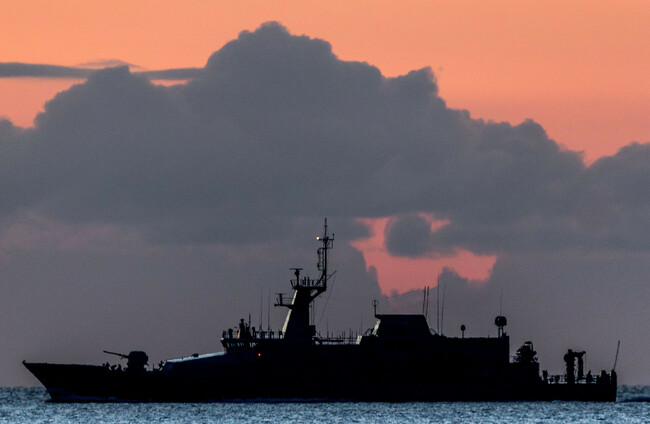
A SHORT TIME after the Taoiseach shook hands with Volodymyr Zelenskyy on the tarmac of Dublin Airport on Monday night the crew of a Navy ship reported back to their headquarters that they had spotted numerous drones above them in the no-fly zone in the Irish Sea.
That was the reality faced by the sailors on board the LÉ William Butler Yeats as it sat under the Ukrainian president’s flight path to Dublin Airport.
Security preparations for the visit were extensive. An Garda Síochána had overall responsibility but called in the Defence Forces to provide aircraft, a naval vessel and other specialists.
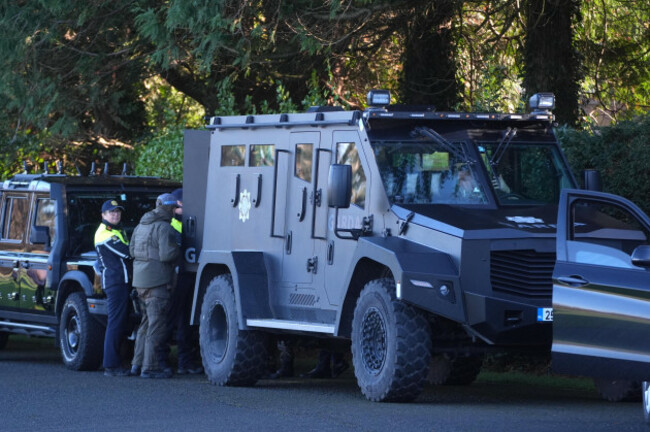
Intelligence officers played a key part developing and assessing threats. During the visit, the Gardaí’s elite Emergency Response Unit acted as heavily armed bodyguards for Zelenskyy.
Handheld counter-drone devices were available and a mix of unarmed uniform and armed plain clothes officers maintained the outer and inner cordons of the locations Zelenskyy visited. The threat against the Ukrainian leader was considered substantial, and any lapse would have been a national shame.
The Defence Forces were on standby, ready to deploy the Army Ranger Wing and other specialists if a worst-case scenario arose.
On Monday night, shortly before Zelenskyy arrived a CASA 295 Maritime Patrol Aircraft took off from its base in Baldonnel, flying a circuitous route over Ireland including all major airfields. While its exact purpose is unconfirmed, informed speculation suggests it monitored potential diversion sites for the Ukrainian president’s aircraft.
The CASA then held a position near Dublin Bay as an airborne surveillance platform, while a Garda helicopter patrolled closer to the city.
As revealed by The Journal yesterday, there are now suspicions that other operators – somewhere close by – most likely had designs on disrupting and embarrassing the Irish State.
In the aftermath of the incident, enquiries are being carried out by the Irish Defence Forces. Yesterday, gardaí said they were not investigating but The Journal has learned the Special Detective Unit has since been called in by the Irish Defence Forces and is investigating if there is a criminal aspect to the drones’ presence.
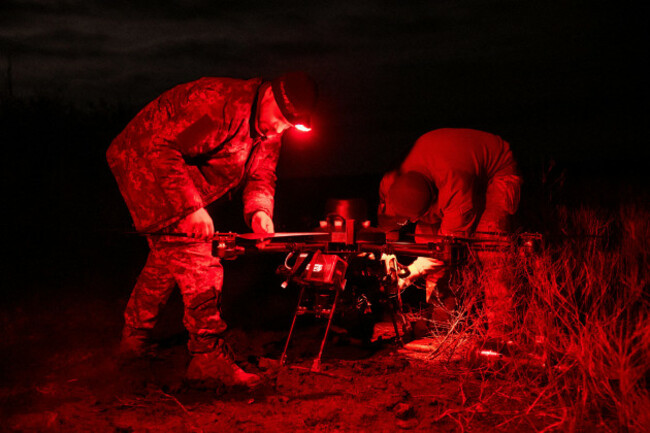
The working hypothesis, for gardaí and the military, sources have said, is that the drones set off from a vessel sailing somewhere to the north east of Howth, Co Dublin.
Critically the drones came to the flight path too late to intercept or interfere with Zelenskyy’s aircraft. They instead flew towards the LÉ William Butler Yeats which was located on the edge of Irish territorial waters.
The drones reportedly traveled at least 17km to the ship, loitered briefly, then returned in the direction they came from. There were debates onboard the Yeats, it is understood, whether to shoot down the drones but no action was taken as it was feared debris could fall into the populated area on shore.
There was one other incident on the sea which may provide a clue to investigators. On a screen monitoring ship traffic inside the Yeats an anomaly became visible for a short time. It was judged it was a surface boat or ship.
The naval service ship went to the location where they believed the vessel was but there was no trace of it when they arrived. One informed source speculated that it may have been a real trace but could have also been a “spoofing” incident in which bad actors place a ship at a location by using false GPS data. This has been happening in Europe, particularly in the Baltics recently.
The incidents in the Irish Sea were reported up the chain of command. In the early hours, Garda Commissioner Justin Kelly was told before senior officials and elected representatives, including the Taoiseach Micheál Martin, were informed.
There were high level briefings with key gardaí, military and other officers. Senior gardaí were said to be shocked in the wake of the incident.
Another piece of the jigsaw for the SDU and Defence Forces now is that French naval personnel fired shots at five drones flying above a nuclear submarine base near Brest on the Atlantic French coast last night. That too is being investigated.
Questions are now being asked again about Ireland’s defence capabilities. For example, the Defence Forces had no way to track the devices as they approached or flew away. The eyes of naval sailors kept watch, aided by only a patchy video feed.
There is no air radar on any of the Navy’s ships. The lack of a primary radar system has been well documented and there are plans to expedite the purchase of counter drone equipment for the EU Presidency next year. But, as previously reported, that will still require Irish Defence Forces technicians to be trained in a short six months.
Ireland is not a complete outlier here though. Other jurisdictions in Scandinavia and in Europe have also struggled to deal with supposed drone incursions – the difference is they have the equipment to respond and track them.
So, there is one glaring takeaway from the presence of drones over the sea off the coast of Dublin on Monday night: Ireland has no capacity to determine what exactly they were, where they were going, who controlled them or where they are now.

To embed this post, copy the code below on your site














have your say