Sign in. It’s quick, free and it’s up to you.
An account is an optional way to support the work we do. Find out more.
Sign in. It’s quick, free and it’s up to you.
An account is an optional way to support the work we do. Find out more.
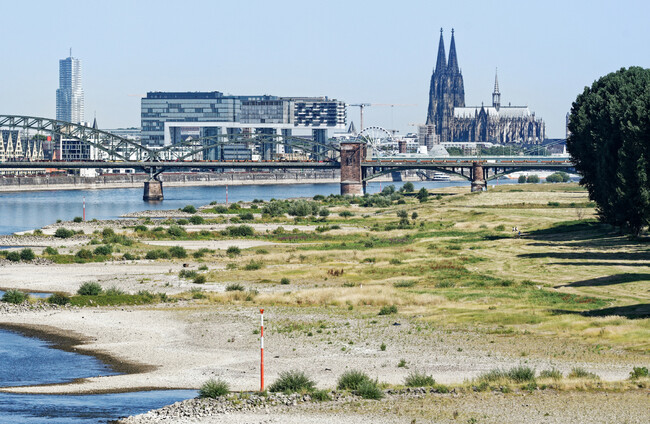
A REPORT BY the the EU’s Copernicus programme has predicted that extremely dry conditions on mainland Europe could continue for another three months.
Heatwaves and low rainfall have led to low crop yields and has had severe impacts on hydropower generation and cooling systems of power plants.
“Warmer and drier than usual conditions are likely to occur in the western Euro-Mediterranean region in the coming months until November 2022,” notably in Spain and Portugal, the report for the month of August noted.
Almost half of the 27 EU countries, including Ireland, feature on the report’s list of countries with increasing drought hazard risk.
Maize, soybeans, and sunflowers have been the crops most impacted by the drought with a decrease in growth by approximately 15% each.
Although some recent rainfall has provided relief to crops, the impact of the rain has been decreased by thunderstorms happening at the same time.
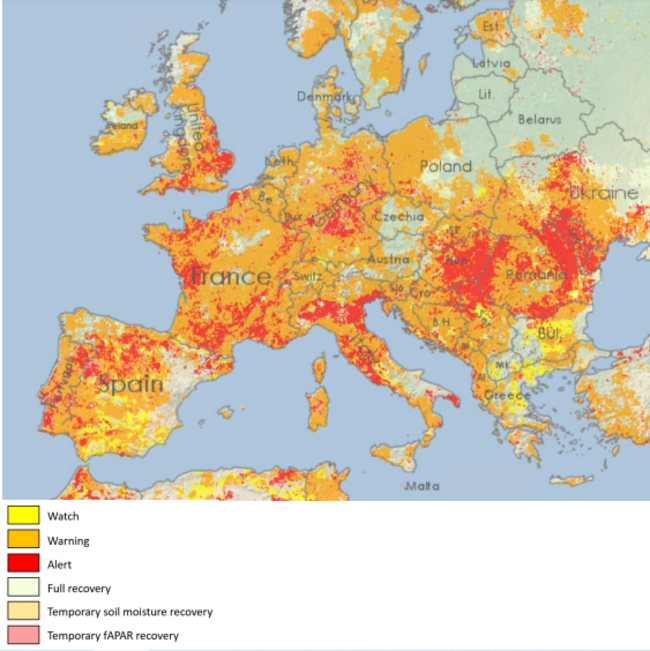
The Iberian Peninsula experienced a prolonged heatwave in the first half of July dragging temperatures above the long-term average for the same month.
Later on, the heatwave shifted to south-eastern France and north-western and central-western Italy.
During this time some areas of Spain and Sardinia experienced above average temperatures for more than two weeks.
In Spain, water stored in reservoirs is at around 58% the 10-year mean for the period, while some southern regions are estimated to be around 30% the 10-year mean levels.
Conditions are also extremely favourable for wildfires, with 1,500 people evacuated from the Aragon region last week as fires destroyed thousands of hectares of forest.
An estimated 261,930 hectares has been destroyed in Spain, equal to 2,619 square kilometres which is approximately the size of Co Limerick.
In the Netherlands severe impacts related to the river Rhine’s low flows are affecting commercial navigation, dike stability and water distribution.
In Portugal, hydroelectric energy stored in water reservoirs is less than half the average of the previous five years and the risk of wildfires is rated either high or extreme across most of the country.

To embed this post, copy the code below on your site















have your say