Sign in. It’s quick, free and it’s up to you.
An account is an optional way to support the work we do. Find out more.
Sign in. It’s quick, free and it’s up to you.
An account is an optional way to support the work we do. Find out more.

DUBLIN CITY COUNCIL has been under sustained pressure from outdoor advertising firm JC Decaux to ensure its advertising displays in the capital are not blocked – and has complied with many of the company’s demands.
Planters, road signs, bins and parked cars were all flagged by the French advertising giant as blocking the sight lines to its advertising displays in a litany of emails to the council over the past three years.
The council agreed to remove two trees in planters near an advertising unit on Cork Street in late 2023 and early 2024, and move a third tree, after JC Decaux repeatedly complained about them.
The company told the council its sales department was “under pressure” from an advertiser, while the council countered that planters were a welcome addition to Cork Street given it was “quite a concrete jungle”.
The emails show JC Decaux also declined some locations offered by the council for new digital advertising displays, pushing instead for a more prominent position on Grafton Street, one of Dublin’s busiest shopping streets.
Extensive correspondence between the company and the council was released to The Journal under Freedom of Information.
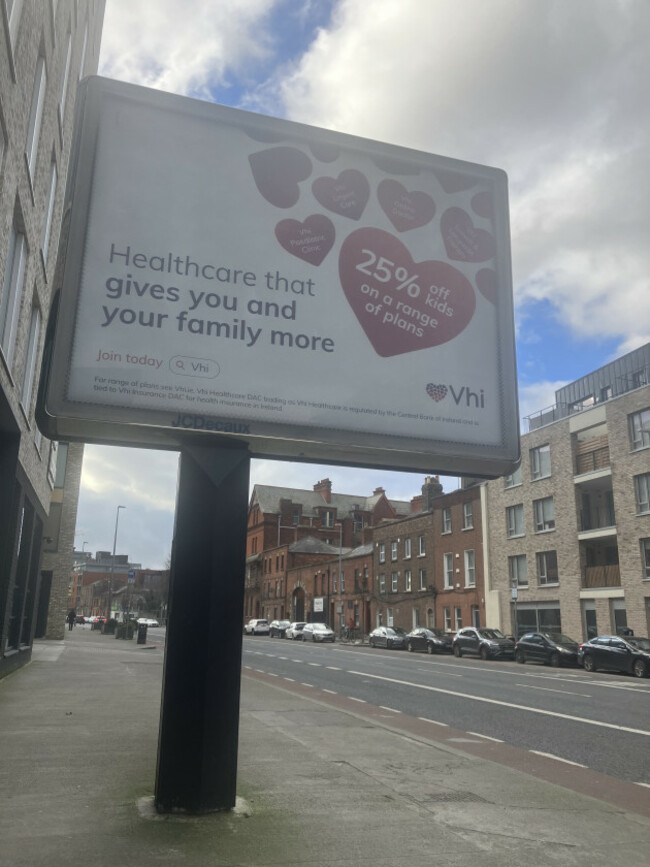
In a statement to The Journal, Dublin City Council said JC Decaux’s advertising panels ”need to be visible in order to cover operational costs and contribute to the funding of the Dublin Bikes scheme”. The panels are the “basis for funding” the capital’s bike sharing network, it added.
JC Decaux struck a ‘bikes for billboards’ deal with the council in 2006 whereby it operates the successful Dublin Bikes scheme on the council’s behalf, in return for public space to erect its billboards and brightly lit digital displays called “digipanels”.
The deal was criticised on its inception for the amount of advertising permitted and for its visual and physical impact on the capital’s already cluttered streets. More recently, the electricity-guzzling LCD digipanels have also come under fire for their environmental impact.
However, Dublin Bikes itself is widely considered one of the capital’s civic success stories, with over 38 million journeys completed since 2009. The scheme offers 1,600 bikes to hire at low cost from fixed stations throughout the city centre and inner suburbs.
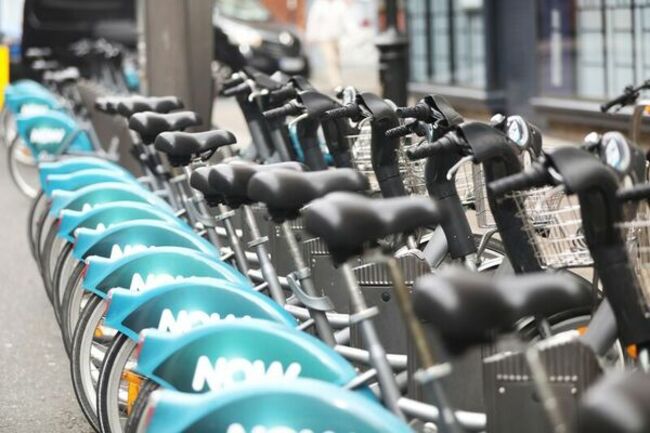
Other changes made to the capital’s streetscape by the council following requests by JC Decaux included the removal of a parking sign on a pole on Shelbourne Road in 2023, and a litter bin on North Wall Quay.
Elsewhere, JC Decaux asked for a railway crossing warning sign on Merrion Road to be lowered so it wouldn’t block the view of one of its billboards, and for a railway bridge warning sign on Macken Street to be moved. It’s not clear what action if any the council took here.
The company complained about scaffolding on a building on Cuffe Street, and asked a council official to attend a meeting with the site foreman “to see if there is any way to improve the visibility of the [advertising] display”.
The company also made frequent inquiries about how long road maintenance works would take when associated safety fences near its displays would be removed.
JC Decaux did not respond to requests for comment.
The council said there are currently 81 advertising panels in the city as part of its contract with JC Decaux, of which 43 are digital.
The current Dublin Bikes contract with JC Decaux will end in September 2027. The council said it plans to run a procurement process in advance of this date.
JC Decaux told the Business Post last year that if its deal with the council and the National Transport Authority is not extended it will remove all the bike infrastructure it installed.
Councillor Janet Horner, chair of Dublin City Council’s mobility and public realm committee, said the expiry of the current contract is an opportunity to change and improve the scheme, such as by possibly adding more stationless bikes or electric bikes, and by expanding the scheme’s geographic area.
Different ways of funding the scheme other than the current advertising deal will be considered, Horner said.
“I don’t think the advertising panels are in the interests of the city or a natural partner of the bike scheme but I accept that it requires further examination to figure out what is the financial model we are going with,” she said.
She added that she would like to see more advertising of the scheme and deals on membership to encourage more Dubliners to join.
With some cities internationally rolling back e-scooter sharing schemes and private e-scooters now legalised here, Horner believes there is less momentum behind the idea of a shared scooter scheme in the capital.

To embed this post, copy the code below on your site













have your say