We need your help now

Support from readers like you keeps The Journal open.

You are visiting us because we have something you value. Independent, unbiased news that tells the truth. Advertising revenue goes some way to support our mission, but this year it has not been enough.

If you've seen value in our reporting, please contribute what you can, so we can continue to produce accurate and meaningful journalism. For everyone who needs it.

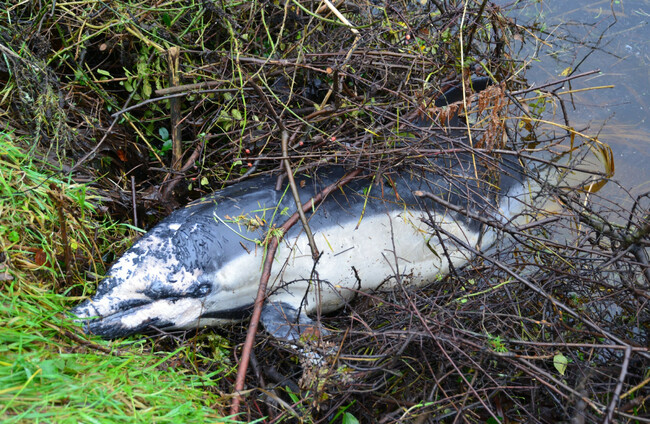
Dead dolphin discovered at the River Barrlow in St Mullins Tony McGahan

‘Extremely rare’ incident sees dead dolphin found on Co Carlow riverbank

The Irish Whale and Dolphin Group said the dolphin would have travelled an ‘incredible’ distance.

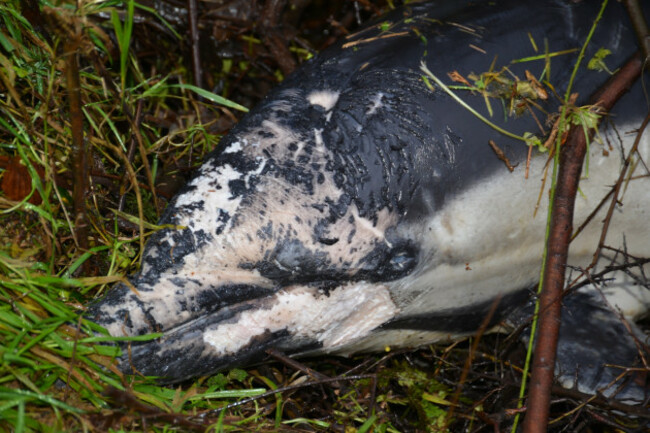
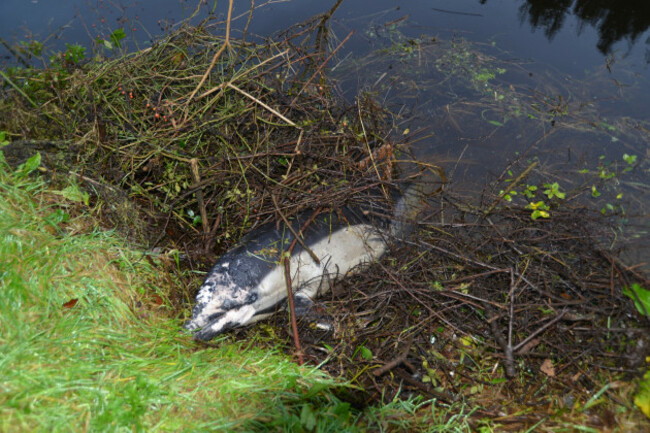
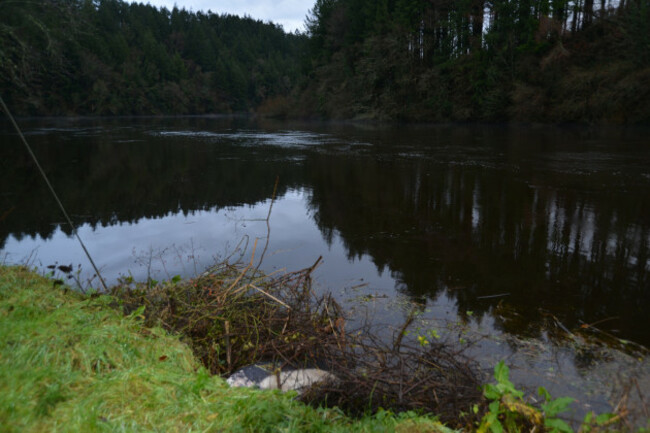
A DEAD DOLPHIN has been discovered on a riverbank in landlocked Carlow.

The discovery was made earlier this week in St Mullins in Co Carlow by Tony McGahan.

He said he came across the common dolphin “washed up in the River Barrow”.

In a post to social media, he remarked that it is a “sobering reminder that our rivers are not isolated systems – they are directly connected to our coastal and marine environments.”

“It also underlines the importance of continued monitoring, reporting, and protection of our waterways,” he added.

“While sad to encounter, it’s an important moment to pause, observe, and reflect on the fragile balance within our natural systems,” said McGahon.

600960490_10238901770587932_6565002138014434193_n Dead dolphin discovered at the River Barrlow in St Mullins, Co Carlow Tony McGahan Tony McGahan

Pádraig Whooley, sightings officer with the Irish Whale and Dolphin Group, told The Journal that while the discovery is “extremely rare, it is not without precedent”.

Whooley said he could only think of one definite report of similar happening within the past 30 years.  

He added: “We have had records of the smaller harbour porpoise, which is almost like a close cousin of the dolphin, up as far as St Mullins but probably not in the past decade.”

He said the dolphin was an “incredible distance from the open ocean, probably about 60 or 70 kilometres”.

And while he said dolphins coming from the open ocean into estuaries and then into river systems does happen at this time of the year, it is very rare for them to get “anywhere near as far as Carlow”.

Whooley said the dolphins come in because they follow fish such as herring and sprat.

“You end up with this cascade effect, where the prey keeps getting pushed further and further up the river, the dolphins keep following them, and before you know it, the dolphins are in a freshwater environment.”

And while dolphins can survive in freshwater for a couple of days, Whooley noted that “they are designed to be a marine animal species and things quickly go wrong for them”.

“The further they get away from open water, the higher that risk becomes.”

601005163_10238901771467954_6857513425759025422_n Dead dolphin discovered at the River Barrlow in St Mullins, Co Carlow Tony McGahan Tony McGahan

He added that if a post-mortem were to be conducted on the dolphin, the cause of death would be “live-stranding”, which is the term for when an animal comes ashore and is unable to return to the sea.

He explained that dolphins are “acoustic animals” who find their way using sound and that this works best in open ocean environments where there are no obstacles.

“Now it’s in a small river or a big stream and its echolocation completely malfunctions, there’s too many obstacles and the water isn’t deep enough for its echolocation to work, so it’s essentially swimming blind.”

Whooley added that recent rainfall would have reduced visibility in the river to “zero”.

Meanwhile, Whooley noted that there is currently the same species of dolphin in the River Bandon and River Lee in Co Cork, as well as the River Suir in Co Waterford.

600987178_10238901772067969_198313137506107382_n Dead dolphin discovered at River Barrlow in St Mullins

He added that his organisation relies on the public to keep it informed.

“The public are our eyes and ears, these citizen scientists keep us informed and people can report sightings on our website,” said Whooley.

“We validate those sightings, put them through some quality control, and that helps us to give context to what is happening – though it is very hard to give context to this rare incident in Carlow.”

Readers like you are keeping these stories free for everyone...
A mix of advertising and supporting contributions helps keep paywalls away from valuable information like this article. Over 5,000 readers like you have already stepped up and support us with a monthly payment or a once-off donation.

Close
3 Comments
This is YOUR comments community. Stay civil, stay constructive, stay on topic. Please familiarise yourself with our comments policy here before taking part.
Leave a Comment
    Submit a report
    Please help us understand how this comment violates our community guidelines.
    Thank you for the feedback
    Your feedback has been sent to our team for review.

    Leave a commentcancel

     
    JournalTv
    News in 60 seconds