We need your help now

Support from readers like you keeps The Journal open.

You are visiting us because we have something you value. Independent, unbiased news that tells the truth. Advertising revenue goes some way to support our mission, but this year it has not been enough.

If you've seen value in our reporting, please contribute what you can, so we can continue to produce accurate and meaningful journalism. For everyone who needs it.

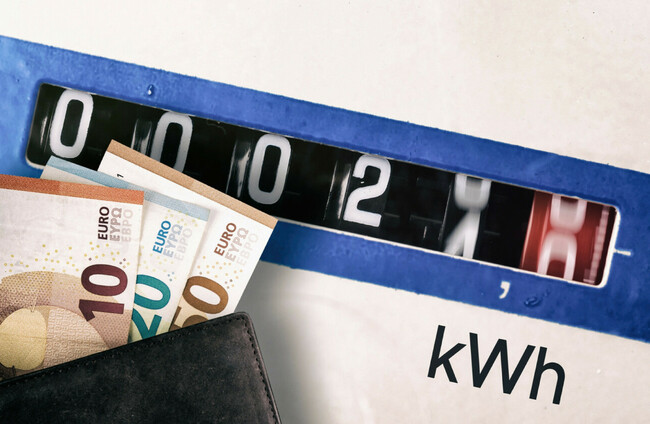
The report identifies Ireland as a significant outlier on costs among western EU states. Alamy Stock Photo

Irish households pay €360 more per year for electricity than western European average

Electricity costs are dramatically outpacing both inflation and what our western EU neighbours are facing.

IRISH ELECTRICITY PRICES are dramatically outpacing both inflation and what customers and businesses elsewhere in the western EU are facing.

New analysis from the Nevin Economic Research Institute (NERI) shows power prices have undergone a “massive divergence” from other consumer costs over the last decade.

It has found Irish households pay around €360 more per year than the western EU average.

The think tank – which is backed by the Irish Congress of Trade Unions – identifies Ireland as a significant “cost growth outlier” within the 15 mainly western EU states that were members of the bloc prior to its expansion in 2004.

The pressure extends to industry too. In the first half of 2025, pre-VAT electricity euro prices for large-scale industrial users (150,000 MWh and above) in Ireland were 80.4% higher than the Euro area average.

While many EU states saw rapid price declines after the 2022 peak caused by Russia’s invasion of Ukraine, Irish prices did not fall to the same degree.

“While global energy shocks affected all of Europe, particularly at the end of 2022, Irish prices have not fallen back to the same degree as our counterparts since then,” research author Paul Goldrick-Kelly said.

The research – titled Ireland’s Electricity Prices Over Time – shows that between January 1996 and September 2025, Irish electricity prices increased fourfold, more than double the increase in inflation for consumer prices during the same period.

Neri argues that a primary driver of these costs is the outsized role natural gas plays in the Irish electricity system.

It said that the market is currently designed to create a “close link” between wholesale electricity costs and natural gas prices, leaving Ireland more vulnerable to global gas market volatility.

The report outlined that one of the factors behind why Ireland faces higher costs is due not only to Ireland being on the edge of the bloc, but also because it has a more decentralised and dispersed population than other European states.

It also notes that the higher charges may reflect a pattern of limited investment in the Irish network infrastructure, pointing to attempts by the energy regulator as far back as in 2005 to see highlight “historic underinvestment” in the sector.

This underinvestment “remains an issue”, the report added.

Goldrick-Kelly told The Journal that it was “worth thinking about how we set prices”, pointing to the rapid growth in prices seen during the Celtic Tiger.

The key findings of the report are:

  • Irish electricity household prices by late 2025 were 4.02 times their January 1996 levels, while no other state in the EU15 group exceeded increases of 3 times their base.
  • While general Irish prices rose approximately 79.9% since 1996, electricity prices increased by over 300% in the same timeframe
  • Ireland moved from having some of the cheapest electricity in the EU15 in 1990 to being one of the most expensive countries for nearly all domestic consumption bands by early 2025 in euro terms.

The report said reducing the role of natural gas on the Irish grid would help to bring down the cost of electricity.

It also said that research should be undertaken to examine whether the government could bring natural gas generation into a strategic reserve to meet demand where needed.

Goldrick-Kelly said such a model could allow natural gas de deployed “at those moments where we need, where there’s excess demand, or if there’s a cold day”.

“In its current formulation, the Irish energy system is set up to fail Irish households,” Goldrick-Kelly said.

“Policy must address our heavy reliance on natural gas and reconsider market design that closely links wholesale electricity costs to gas prices.”

Readers like you are keeping these stories free for everyone...
A mix of advertising and supporting contributions helps keep paywalls away from valuable information like this article. Over 5,000 readers like you have already stepped up and support us with a monthly payment or a once-off donation.

Close
86 Comments
This is YOUR comments community. Stay civil, stay constructive, stay on topic. Please familiarise yourself with our comments policy here before taking part.
Leave a Comment
    Submit a report
    Please help us understand how this comment violates our community guidelines.
    Thank you for the feedback
    Your feedback has been sent to our team for review.

    Leave a commentcancel

     
    JournalTv
    News in 60 seconds