Sign in. It’s quick, free and it’s up to you.
An account is an optional way to support the work we do. Find out more.
Sign in. It’s quick, free and it’s up to you.
An account is an optional way to support the work we do. Find out more.
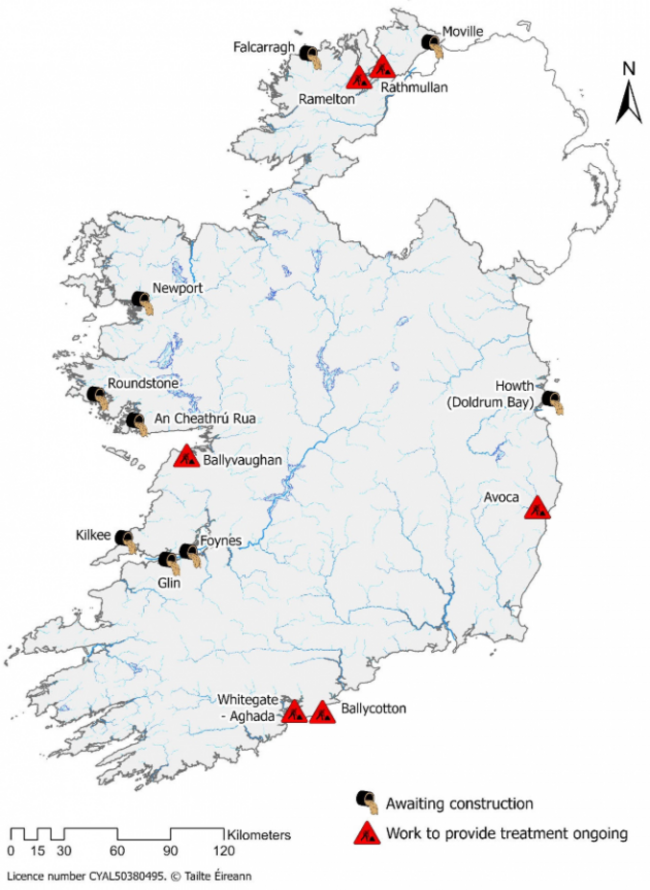
THE ENVIRONMENTAL WATCHDOG has said that raw sewage is still being discharged daily from wastewater treatment plants into water near 15 urban centres across Ireland.
The Environmental Protection Agency (EPA) said that while this figure has halved since early 2024, delays by Uisce Éireann in improving wastewater infrastructure is “prolonging risks” to water quality in Ireland.
A new report by the agency on wastewater treatment in urban areas found that almost 60% of all waste water discharged from treatment plants is not consistently meeting the standards to prevent pollution.
As a result, it is being discharged into rivers, lakes and coastal waters.
Nearly half of these failures are due to poor operational management at existing treatment plants.
It said: “The EPA has identified 78 priority areas for improvements. Uisce Éireann has not yet started the works needed at half of these.”
The report said treatment at fourteen large towns and cities failed to meet basic, European-wide standards set in the Urban Wastewater Treatment Directive, including Malahide in Co Dublin and Lahinch in Co Clare.
It said six of these met the standards in 2023, highlighting the need for Uisce Éireann to take action to prevent previously compliant treatment plants slipping into non-compliance.
The EPA also noted 34 priority areas where wastewater discharges are negatively impacting the quality of rivers, estuaries, lakes and coastal waters.
It said: “Uisce Éireann has not given sufficient priority to designing and then delivering improvements needed at most (27) of these areas and this is prolonging impacts on water quality.”
The EPA also highlighted two sewer networks where upgrades are necessary to prevent sewage overflows near beaches.
It said improperly managed wastewater was also found to have impacted shellfish such as endangered freshwater pearl mussels.
It said: “Uisce Éireann has made little progress advancing the works needed at over half of these locations.”
Launching the report, Pat Byrne, Director of the EPA’s Office of Radiation Protection and Environmental Monitoring said: “Targeting improvements at priority areas identified by the EPA is delivering environmental benefits.”
“However, delays in designing and delivering infrastructural upgrades required at many more areas are prolonging negative impacts on water quality and the wider environment.”
“Uisce Éireann must accelerate the pace of delivery of essential upgrades at priority areas to ensure cleaner rivers, estuaries, lakes and coastal waters and support a healthier environment for all.”
Noel Byrne, EPA Programme Manager, said: “Too many wastewater treatment plants are failing to meet licence standards due to poor management and maintenance practices. This is simply not good enough.”
In response to the report Uisce Éireann said it remains committed to addressing areas that need improvement.
In a statement today, it said: “Uisce Éireann acknowledges the EPA’s concerns regarding operational incidents. We recognise that many of these challenges stem from the legacy condition of our assets, which in many cases lack the resilience required of a modern wastewater network.”
“This is primarily due to decades of under-investment and the ageing nature of much of Ireland’s wastewater infrastructure which comprises over 1,000 treatment plants, 2,200 pumping stations, and 26,000km of network.”
It said over 85% of raw sewage discharges have been eliminated, and 92% of treatment plants are compliant with Urban Wastewater Treatment Directive.
It also highlighted recent works on Arklow and Ringsend treatment plants, and the investment of over €480 million invested in wastewater infrastructure last year.

To embed this post, copy the code below on your site














have your say