Sign in. It’s quick, free and it’s up to you.
An account is an optional way to support the work we do. Find out more.
Sign in. It’s quick, free and it’s up to you.
An account is an optional way to support the work we do. Find out more.
THE EU’S FOREIGN affairs commissioner has issued a strong warning to Georgia that it must withdraw its controversial “foreign influence” law or face a tougher path towards becoming an EU member state.
The law, which has been compared to similar legislation in Russia, forces civil rights’ groups and media organisations that receive 20% or more of their funding from a foreign state to register as “organisations serving the interests of a foreign power”.
The EU foreign affairs commissioner Josep Borrell, whose role it is it oversee prospective member states’ progress, has warned the Georgian government to retract its legislative proposal or face a more difficult path for membership.
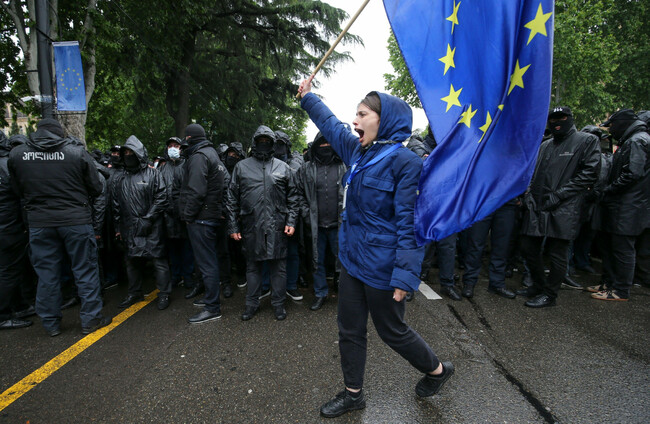
Georgia’s capital, Tbilisi, has besieged by protests who have taken to the streets for the last three nights urging the government not to pass the legislation and calling for a renewed focus to be placed on being an EU member state.
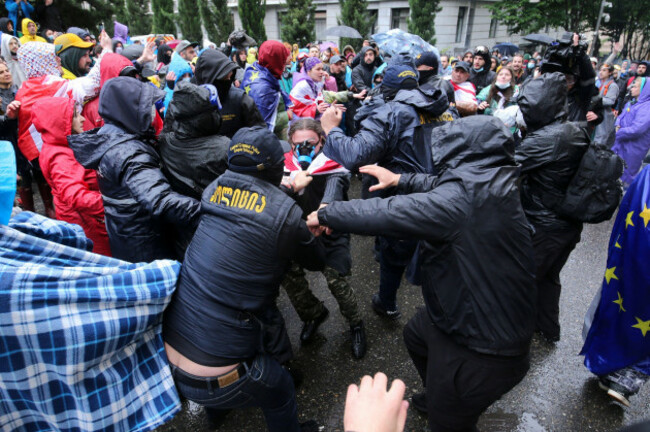
Last night, riot police arrested 13 demonstrators and there were multiple clashes between the groups after Prime Minister Irakli Kobakhidze pushed the bill through the parliament yesterday, despite the rising tensions.
This is the second occasion where Kobakhidze’s government has tried to pass the law, despite previous warnings from the EU and the United States.
Georgia has been on a path towards EU membership since 2022 as was granted ‘candidate status’, meaning the country has fulfilled enough of the criteria but not all yet, in December last year.
Borrell, in a statement today, said the future of Georgia’s membership bid is in their control, and urged them to withdraw the law adopted yesterday.
“The intimidation, threats and physical assaults on civil society representatives, political leaders and journalists, as well as their families is unacceptable,” Borrell said.
The commissioner said the law will “undermine the work of civil society and independent media”, despite freedom of association and expression being “fundamental rights” at the core the country’s application to join the EU.
“The adoption of this law negatively impacts Georgia’s progress on the EU path. The choice on the way forward is in Georgia’s hands,” Borrell added.
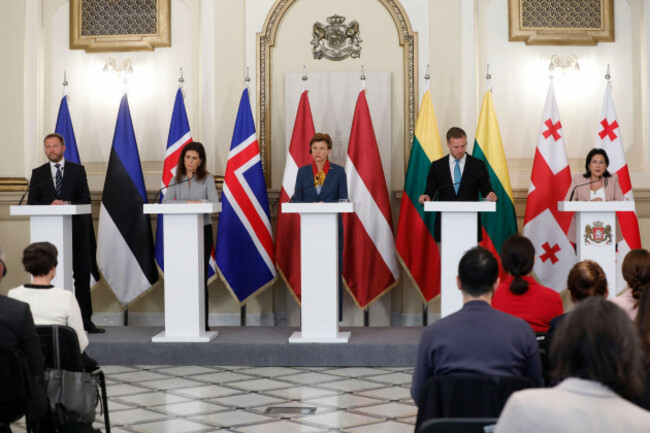
The foreign ministers of Estonia, Iceland, Latvia and Lithuania travelled to Georgia today to express their concerns over the law’s adoption directly to Kobakhidze.
During their press conference alongside Georgian President Salome Zurabishvili, Lithuanian Foreign Minister Gabrielius Landsbergis said that “cosmetic changes” would not make the law compatible with European standards.
Prime Minister Irakli Kobakhidze has signalled his party’s readiness to consider Zurabishvili’s proposed amendments to the law, should she lay them out in her veto document.
But Zurabishvili ruled out the prospect of entering “false, artificial, misleading negotiations” with Kobakhidze and his party.
“No one should think that Georgia’s president can be used for saving the face of this government,” she said.
Contains reporting from © AFP 2024

To embed this post, copy the code below on your site









have your say