Sign in. It’s quick, free and it’s up to you.
An account is an optional way to support the work we do. Find out more.
Sign in. It’s quick, free and it’s up to you.
An account is an optional way to support the work we do. Find out more.
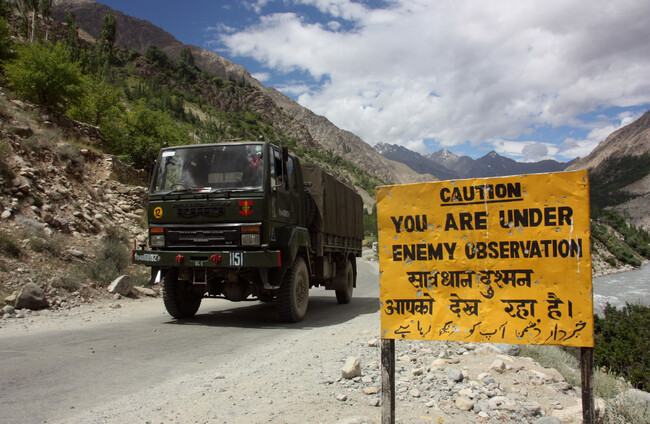
LAST NIGHT, INDIA launched an attack on Pakistan, resulting in the deaths of at least 26 people – all of whom were civilians, according to Pakistan’s military spokesperson.
The attack is in retaliation to a gun attack in the popular tourist site of Pahalgam last month in which 26 people were killed.
India alleges that this attack was carried out by Islamist militants.
India had earlier said two of three suspects in that attack were Pakistani nationals but had not detailed any evidence. Pakistan denied that it had anything to do with the killings.
But what’s the background to the fighting? Here’s what you need to know.
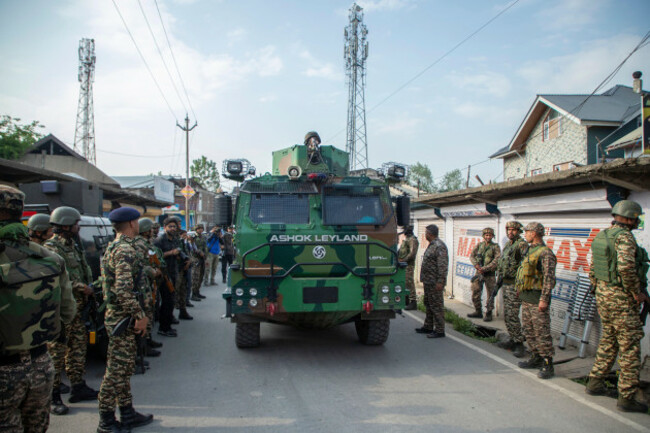
The conflict between India and Pakistan originates from disputes over the territory of Kashmir. In 1947, Pakistan, which had previously been a part of colonial India, was established as a state by act of the British parliament.
Both countries are separated by religion – Pakistan (officially the Islamic Republic of Pakistan) has Islam as its state religion, while India, although secular, is predominately Hindu.
Kashmir is predominantly a Muslim region.
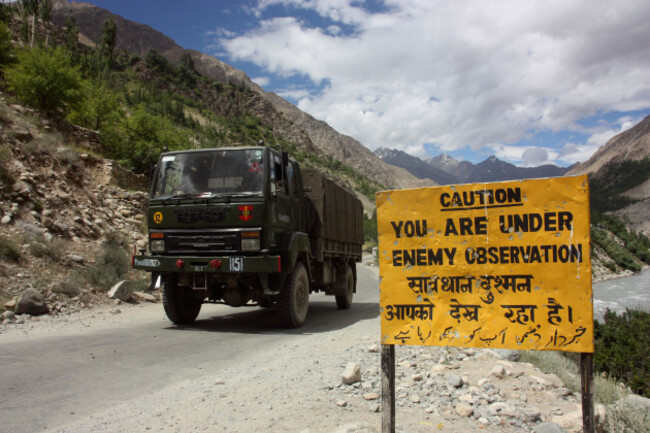
The two states underwent separation but disputed over the region of Kashmir, which is in the footfalls of the Himalayas. Both claim it in full, but each controls a section of the territory. The Line of Control, which divides the territory, is a heavy militarised border. Another section is controlled by China.
In this time, small “princely states” with some degree of autonomy were being folded in to either India or Pakistan. It was expected that Kashmir would merge with Pakistan, given its overwhelming Muslim population, but the local ruler decided to merge with India.
India has been attempting to take full control of the region, but armed rebels in Kashmir have resisted. India has accused Pakistan of backing militants, which Pakistan has denied.
There is separately a call for Kashmir to become its own independent state, separate from the three countries that control segments of the territory.
In 2019, the Indian government revoked the territory’s special status and increased its military presence, governing the Indian-controlled part of the territory from Delhi when it had previously had a small amount of autonomy and had been able to make its own domestic policies.
India changed laws to allow outsiders to buy land within the region – leading to accusations that India was attempting to change the Muslim demographic living within the region. Some 15 million people live in Kashmir, the largest amount of people within the Indian-administered area.
Since the establishment of Pakistan, relations with India have been tense due to Kashmir. A full scale war broke out in 1965.
In 1999, the Kargil War broke out between the two countries after Pakistani soldiers infiltrated the area of Kargil, which is on the Indian side of the Line of Control. It lasted less than two months and saw India reclaim Kargil.
More recently, militant attacks in 2016 and 2019 have seen India retaliate. Both countries are armed with nuclear weapons.
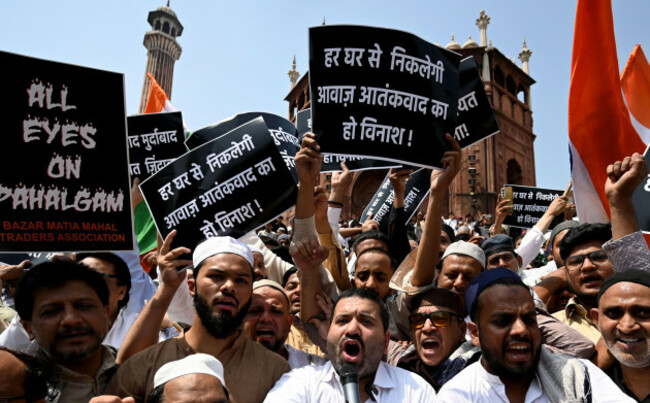
On 22 April, gunmen opened fire on tourists in a popular travel destination of Pahalgam in Indian-controlled Kashmir.
At least 25 Indian citizens and one Nepali national were killed in the massacre. It was reported by eyewitnesses that the men among the group were singled out and shot at, and some survivors told local media that the gunmen accused some of the victims of supporting Indian Prime Minister Modi.
Reports stated that some of the male tourists were ordered to recite Islamic verses to determine who would be killed. The sectarian nature of the massacre angered India further. The country accused Pakistan of supporting the militants who carried out the attack, which Pakistan denied.
India said that two of the three suspects in the attack were Pakistani nationals, although they did not detail any evidence to support this.
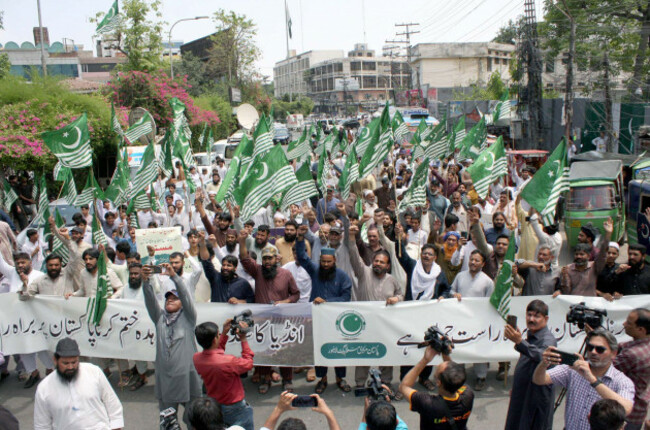
In the aftermath, India suspended the Indus Water Treaty. The treaty is a water-distribution treaty held between the two countries. It was signed in 1960. Despite the many clashes and conflicts between the two countries, the treaty has never once been suspended until now.
The Indus Waters Treaty is essential for Pakistan’s agriculture. It has said that if India interferes with the water flow, it will be treated as an “act of war”.
Pakistan then said it was suspending trade with India, closing its airspace, and expelling Indian diplomats.
Last night’s attack is a direct retaliation to the Pahalgam massacre, despite Pakistan’s insistence that it was not connected to the militants who carried out the attack.
A relatively new militant outfit called Kashmir Resistance, also known as The Resistance Front (TRF), initially claimed responsibility on social media for the Pahalgam attack but it has reportedly since walked back that claim, according to multiple local media reports.
TRF is classified as a terrorist organisation in India.
As of now, 26 people have been reported dead as a result of the Indian attacks last night.
India’s Defence Minister Rajnath Singh said today that last night’s missile strikes against Pakistan were a “carefully planned” operation that exercised New Delhi’s “right to respond”.
“The targets we had chosen were destroyed with great precision and sensitivity, ensuring that no civilian population or area was affected,” Singh told reporters in New Delhi.
“We only targeted terror camps, exercising our right to respond to the attack on our soil.”
Pakistan’s Defence Minister Khawaja Muhammad Asif earlier accused Indian Prime Minister Narendra Modi of launching the strikes to “shore up” his domestic popularity, but said that Islamabad had struck back.
“The retaliation has already started,” Asif told news agency AFP. “We won’t take long to settle the score.”
Whether India will continue with their attacks, or wage war on Pakistan through their waterways – through which India has the means to cause drought and flash floods – remains to be seen.
Asif’s assertion that Pakistan would retaliate has heightened the tension between the two countries, with the fate of Kashmir uncertain.
The UN, EU, UK, Russia, and the US have all called on both countries to exercise restraint.
A Turkish foreign ministry statement said,”The attack carried out last night by India runs the risk of an all-out war.”
“We are deeply worried by last night’s clashes between these two nuclear powers,” German Chancellor Friedrich Merz said in a joint news conference with French President Emmanuel Macron.
“Now more than ever … reason and clear-headedness are required.”
Additional reporting by AFP

To embed this post, copy the code below on your site
















have your say