Sign in. It’s quick, free and it’s up to you.
An account is an optional way to support the work we do. Find out more.
Sign in. It’s quick, free and it’s up to you.
An account is an optional way to support the work we do. Find out more.
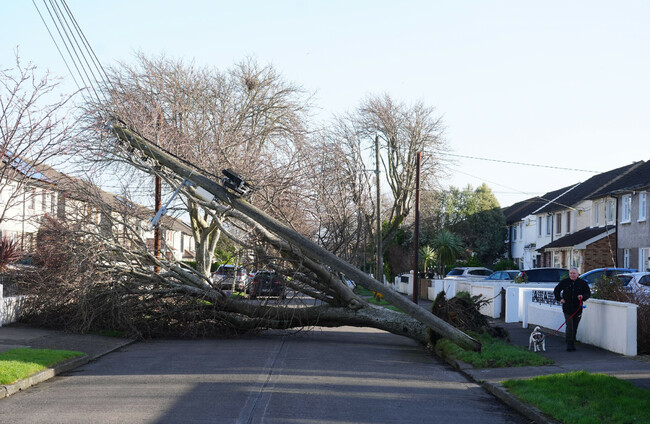
EXTREME WIND HAS been named as one of the biggest climate threats that Ireland faces, with future storms capable of wreaking havoc on the country’s power lines and communication networks.
Coastal erosion, flooding and heatwaves also pose risks for Ireland as the global climate crisis worsens.
That’s according to a stark National Climate Change Assessment by the Environmental Protection Agency (EPA), which has examined impacts of climate change that Ireland needs to prepare for.
The report describes extreme wind as a “priority risk”, noting that Ireland’s exposure to these risks was made clear earlier this year during Storm Éowyn, which knocked out power to large parts of the country for many days.
“We know that Ireland is being impacted by climate change already,” said EPA Director General Laura Burke.
“Recent events, such as Storms Darragh and Éowyn, demonstrated how damage to critical infrastructure such as energy, water supply, transport and communications networks in turn gives rise to impacts on human health, biodiversity and the financial system,” she said.
“Addressing these risks in an integrated and consistent way is key to achieving our national climate resilience objective.”
Burke said that climate risks “cascade across sectors” and that there needs to be “additional urgent action to ensure Ireland is sustainably resilient to the risks that we currently face, and will increasingly experience, in the coming decades”.
The report details how Ireland’s coastline is experiencing the impacts of coastal erosion and coastal flooding, which are expected to further increase with climate change.
Buildings and transport infrastructure in coastal areas around Dublin, the southeast and the southwest of the country are considered to be particularly exposed.
More broadly, changes in precipitation patterns are expected to cause an increase in the frequency and severity of river, surface water, and groundwater flooding events.
Because of the prevalence of hard surfaces that exacerbate flood risk, buildings, structures and transport infrastructure are highly exposed. The consequences of these risks are expected to reach “critical” by mid-century and potentially “catastrophic” by the end of the century without action to reduce the risks.
Flooding also poses physical and mental health risks to the population.
Extreme heat is expected to become a priority risk by the end of the century due to projected increases in the frequency and severity of extreme heat events, combined with growth in the population and most vulnerable groups (such as those over the age of 65).
The EPA is advising the government to gather data about climate hazards and to address the forthcoming risks, as well as financially quantifying the estimated direct and indirect costs of climate risks.

To embed this post, copy the code below on your site














have your say