We need your help now

Support from readers like you keeps The Journal open.

You are visiting us because we have something you value. Independent, unbiased news that tells the truth. Advertising revenue goes some way to support our mission, but this year it has not been enough.

If you've seen value in our reporting, please contribute what you can, so we can continue to produce accurate and meaningful journalism. For everyone who needs it.

AI-generated videos being passed off as real footage of the Winter Olympics

Social media is full of Winter Olympics footage, but not all of it is real

Fake Winter Olympics videos have racked up hundreds of thousands of views across social media platforms.

FC banner

FOOTAGE OF THE highs and lows from the Winter Olympics has been filling many people’s social media feeds since the games kicked off in Italy in early February, but some of it is not real. 

As AI-generated imagery becomes ever more sophisticated, some people are attempting to pass off entirely fabricated videos as footage of real events. 

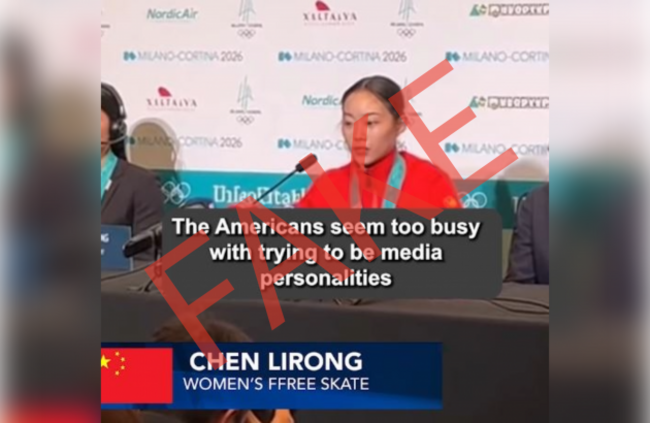
One video doing the rounds at the moment appears to show a Chinese skater commenting on the social media activity of her American competitors during a press conference. 

In the video, a woman named Chen Lirong, who is described as a Chinese skater who took part in the women’s free skate, says that members of the American team are “too busy with trying to be social media personalities rather than practising their skating”.

She says this is why the Chinese skaters perform better than the Americans. 

“That’s why we come out on top. We just work harder,” the subtitles on the video say. 

The problem is, there is no Chinese skater named Chen Lirong. There was one Chinese skater in the free skate of the women’s discipline at the Winter Olympics this year. Her name is Ruiyang Zhang and she finished 19th. 

The video is entirely AI-generated. 

Untitled A screenshot of an AI-generated video posted on Istagram

Aside from the fact that the athlete does not exist, there are some things in the video that give it away as being inauthentic. 

The branding on the backboard for the Milan Cortina Winter Olympics does not match the actual branding of the games. 

The Olympic rings on the backboard are also scrambled while the writing next to them is gibberish. The word free in the caption is misspelled and the woman sitting beside ‘Lirong’ has her eyes closed for the entirety of the clip. 

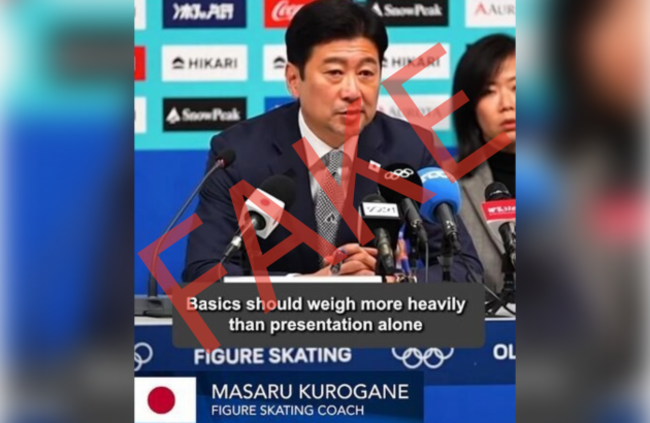
Untitled (3) Another AI-generated press conference video featuring a person who does not exist.

The video, which has been viewed more than 187,000 times, was posted on an Instagram account called beaverdive1. 

The description of the account reads: “Could be real… but maybe not.” 

There is also a link to a self-styled satirical news website whose content appears to be all AI-generated. 

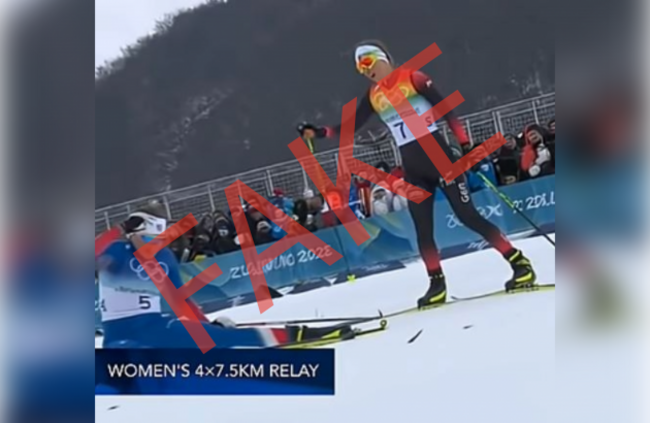
Untitled (5) A still from an AI-generated video showing skiier falling. Note the gibberish on the hoarding.

But for anyone who comes across the video of the non-existent Chinese skater, and misses the rendering errors, there is no indication that the video is fake.

The caption reads:

“Everyone’s talking about the ‘polite’ shade that just landed at this Olympics Figure Skating Presser,” reads the caption on the video.

“She starts with compliments, ends with a mic-drop reality check about training vs. TikTok time. You think you know where this is going?”

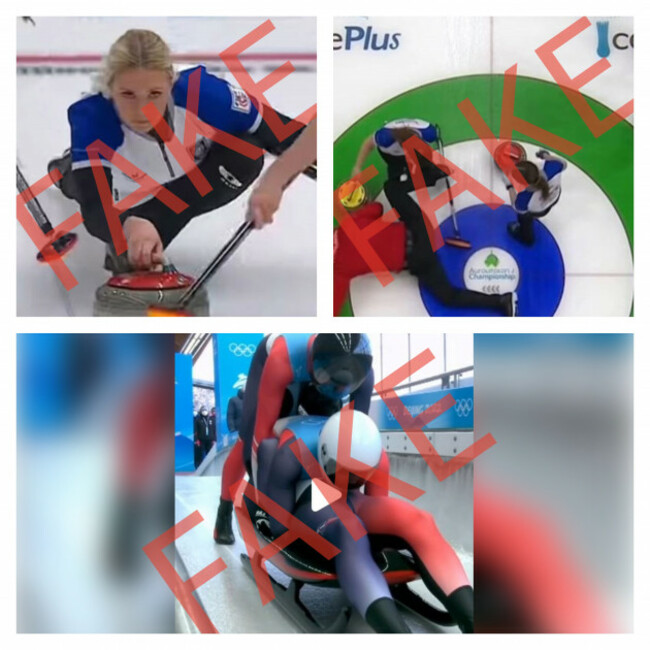
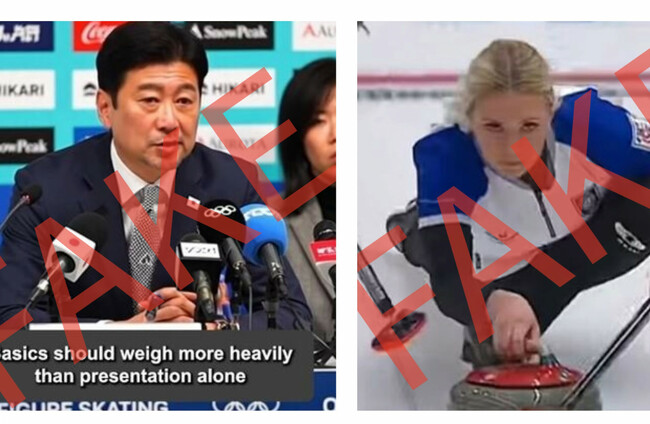
MixCollage-24-Feb-2026-12-31-PM-9875 (Above) Two stills from an AI-generated video of a curling incident and (below) a still from an AI video of a three-person luge event

The same user, beaverdive, has posted the video on a number of social media sites under the same account name, including on TikTok (18,000 views), Facebook (74,000 views)and YouTube (2,700 views). 

Other videos the user has attempted to pass off as real Olympics’ footage include a press conference with a Japanese figure skating coach who does not exist, a curler falling on the ice during play and an entirely made-up three-person luge event. 

Together they have been viewed hundreds of thousands of times across various platforms. 

The Journal’s FactCheck is a signatory to the International Fact-Checking Network’s Code of Principles. You can read it here. For information on how FactCheck works, what the verdicts mean, and how you can take part, check out our Reader’s Guide here. You can read about the team of editors and reporters who work on the factchecks here.

Readers like you are keeping these stories free for everyone...
It is vital that we surface facts from noise. Articles like this one brings you clarity, transparency and balance so you can make well-informed decisions. We set up FactCheck in 2016 to proactively expose false or misleading information, but to continue to deliver on this mission we need your support. Over 5,000 readers like you support us. If you can, please consider setting up a monthly payment or making a once-off donation to keep news free to everyone.

Close
JournalTv
News in 60 seconds