We need your help now

Support from readers like you keeps The Journal open.

You are visiting us because we have something you value. Independent, unbiased news that tells the truth. Advertising revenue goes some way to support our mission, but this year it has not been enough.

If you've seen value in our reporting, please contribute what you can, so we can continue to produce accurate and meaningful journalism. For everyone who needs it.

Shutterstock

Fire safety in the home: Essential tips to keeping your property safe when renting it out

The winter months come with a risk of fire for many reasons.

THE RISK OF fire is never a nice thing to think about, but it’s only by being prepared for it that we can take all the necessary steps to make our homes and properties as safe as possible. 

Fires make up 11% of all home insurance claims in Ireland, highlighting how significant a risk it is — whether you’re living in your home or renting it out as a landlord. 

In this week’s edition of the Allianz Home Magazine, we are looking at some of the main causes of household fires and what steps you can take as a landlord to keep your property and your tenant(s) safe. 

The risk of fire increases in the wintertime, as people are more likely to be spending evenings indoors, cooking more often  and are much more likely to have heating appliances plugged in, fires lit, or candles burning. 

As a landlord, there are many steps you can take to mitigate the risk of fire. Furnishing your home with inflammable items is a great start. Curtains are a major cause of fire spreading, since they hang low and blow in the wind. Investing in flame retardant curtains is a good idea. Depending on the number and nature of windows in your property, you could also opt to only decorate using blinds instead, which are less likely to catch fire. 

There are also ways to make your floor more fire-resistant. If you have a hardwood floor, be sure to apply fire-retardant varnish to it before a new tenancy is taken up, and advise that your tenant does the same (though really, this should only need to be done every few years). 

For the sake of your tenant, one of the best things you can do is to print a diagram of the building or property’s emergency and fire exits so that it’s entirely clear to your tenant what to do in the event of a fire. Similarly, you could provide a fire safety guide upon signing the lease.

Some policies you can put in the lease contract are just common sense. For example, your fire risk will be greatly reduced if the lease includes rules that prohibit smoking indoors or prohibit the use of a fireplace if there happens to be one on the property. 

Provide your tenant with crystal clear instructions as to how the cooking appliances should be used, as well as a reminder that appliances should be unplugged when they aren’t being used and instalments such as ovens should be double-checked once cooking is done. 

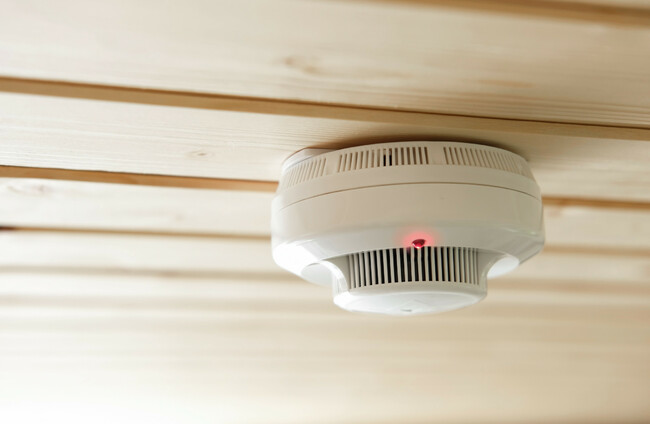
You should have a smoke alarm on each floor of your property, as well as additional alarms in the kitchen and in each bedroom. These alarms should be tested every month, have their batteries changed every six months, and as the landlord you should update the device completely every ten years.

If possible, it’s also best practice to provide other safety measures, such as a fire extinguisher in the kitchen, as well as a fire blanket that could be used to smother a fire that could break out on the hob, for example. 

Having a licensed electrician inspect the electrical outlets in your property every few years is also a smart idea, as these can be a major cause of fire. Similarly, by ensuring that the heating in your property is up to scratch, you reduce the likelihood that your tenant will need to employ the use of portable heaters, which can also be a major fire hazard.

And if you’re a renter, it’s just as important that you know the facts. Be sure to ask your landlord about the above precautions and get the clarification you need to have peace of mind.


Remember, you can get 10%* off landlord insurance at allianz.ie/landlord

Allianz p.l.c. is regulated by the Central Bank of Ireland. Standard acceptance criteria, terms, conditions and a minimum premium applies.

Close