We need your help now

Support from readers like you keeps The Journal open.

You are visiting us because we have something you value. Independent, unbiased news that tells the truth. Advertising revenue goes some way to support our mission, but this year it has not been enough.

If you've seen value in our reporting, please contribute what you can, so we can continue to produce accurate and meaningful journalism. For everyone who needs it.

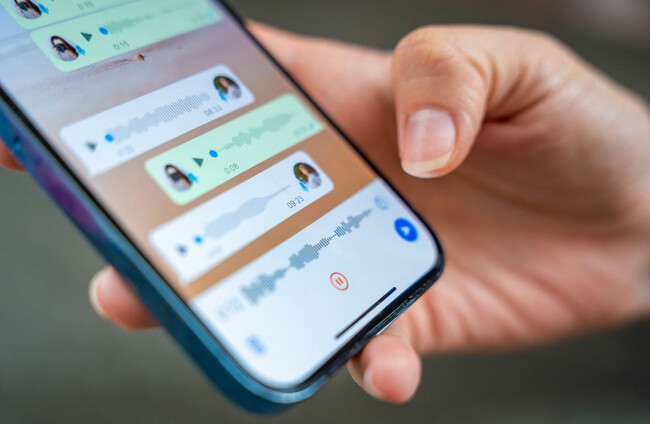
An anonymous voice note about the protest spread virally on WhatsApp last night Alamy Stock Photo

'They’re going to shut everything': Why anonymous voice notes spread during big, uncertain events

Amid fuel prices rising, “people exploit those concerns by spreading false information intentionally,” an expert warned.

AN ANONYMOUS VOICE note first shared last night claimed that there would be a massive escalation in the fuel protests sweeping the country – and proved why such content should be taken with a pinch of salt.

But experts say that big events like the protests are especially fertile ground for such misinformation to spread. 

The anonymous voice note spread virally on WhatsApp and other social media sites yesterday evening, claiming the organisers of the fuel protests had decided to dramatically escalate their actions in response to Micheál Martin’s comments.

At a press conference outside government buildings yesterday morning, Martin said that the road blockages were “wrong” and “not a legitimate form of protest”.

“I’m in one of the groups there that is organising this, and they’ve just announced on it that they’re going to shut the whole country down, they’re going to shut everything,” the voice note says.

“In the next couple of hours, they’re going to shut every single port that delivers fuel to petrol stations. And they’re asking all the people that, at 8 o’clock tonight, to drive into your local forecourt station, switch off the engine, and leave it there.”

The voice note goes on to name the actions that had supposedly already been taken, including a long list of major roads that it says had been closed off as well as “all fuel stations coming out of Limerick, Waterford, Wexford, it’s all shut down,” the voice note says.

While there was massive disruption yesterday, including traffic coming to a standstill on some major roads, there was no notable uptick in protest activity that evening. Instead, some roads, including the M50, saw traffic ease.

Yesterday morning, protesters had blocked fuel terminals in Galway and Limerick, as well as an oil refinery in Cork. However, this was too early to be in response to any statements by the government. 

“Rumours like anonymous voice notes are very common during uncertain events,” Dr Eileen Culloty, associate professor at the DCU School of Communications, told The Journal.

“Right now, many people are understandably anxious about the scale of the Irish fuel protests and the wider implications of the wars in the Middle East.

“While some people exploit those concerns by spreading false information intentionally, others crave the sense of control and insider knowledge they get from rumours.”

“There’s no foolproof method to know if something is a rumour or not,” Culloty added.

“Ask yourself if the story you are hearing really is plausible, and, if so, what sources would be reporting it.”

WhatAapp messages were a particularly prominent way rumours spread during the early days of the Covid-19 pandemic, including voice notes that said the army was preparing to deploy in the streets to enforce a “status red lockdown” — a rumour that proved false, though felt plausible for many at the time.

“All of us are prone to believing or engaging with rumours in the right circumstances,” Culloty warned.

“They have an urgency to them that appears to explain why the story isn’t being reported by official sources or by news media.”

Readers like you are keeping these stories free for everyone...
It is vital that we surface facts from noise. Articles like this one brings you clarity, transparency and balance so you can make well-informed decisions. We set up FactCheck in 2016 to proactively expose false or misleading information, but to continue to deliver on this mission we need your support. Over 5,000 readers like you support us. If you can, please consider setting up a monthly payment or making a once-off donation to keep news free to everyone.

Close
JournalTv
News in 60 seconds