We need your help now

Support from readers like you keeps The Journal open.

You are visiting us because we have something you value. Independent, unbiased news that tells the truth. Advertising revenue goes some way to support our mission, but this year it has not been enough.

If you've seen value in our reporting, please contribute what you can, so we can continue to produce accurate and meaningful journalism. For everyone who needs it.

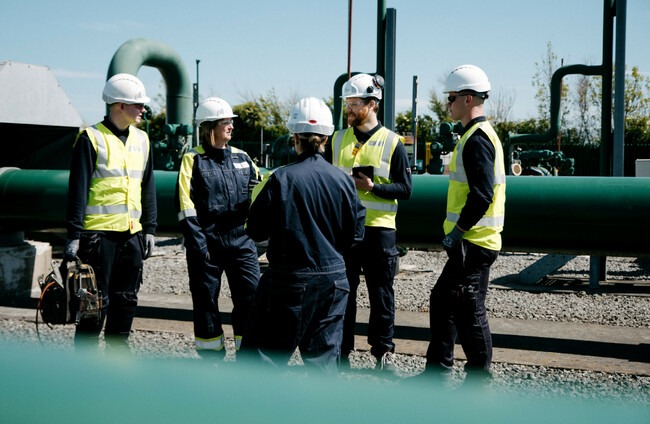
How Ireland’s gas network brings energy to you

How Ireland’s network of pipes heats our homes, charges our phones and more.

WHEN YOU STOP and think about where your energy is coming from, what comes to mind?

When we’re charging our phones, watching our televisions and cooking our meals, we don’t necessarily stop to think about the infrastructure that makes it all possible.

In Ireland, no less than 41% of our electricity comes from gas — and this figure can climb as high as 83% during low output times from sources such as wind. 

Gas Networks Ireland / YouTube

As Ireland’s approach to energy production evolves, gas remains a cornerstone of what keeps us all going. In fact, so comprehensive is Ireland’s network of gas pipelines that it spans 14,758km, which is longer than the distance between Ireland and Australia.

This network of pipes delivers over 30% of Ireland’s primary energy needs, acting as a reliable backup and stabiliser for the renewable electricity grid. Ireland’s gas network is valued at €3billion, marking it as one of the most critical infrastructural assets in Ireland. 

But how does it all work, and where does the gas come from? Today, we’re going to explain how gas makes its way to you, your home and your business. 

Gas Networks Ireland’s high-pressure transmission network moves large volumes of gas across long distances, and brings the gas into Ireland from the Interconnector from Moffat in Scotland. Gas also enters the Irish network domestically, such as that produced in the Corrib gas field, or through renewable gas injection points, such as that produced in Co Kildare.

The distribution network, which then brings the power to hundreds of thousands of homes, businesses and smaller industrial users across the country, connects to the transmission network via pressure reduction stations.

Reducing the pressure under which the gas is transported ensures safe and usable pressure levels for residential and commercial use.

Gas Networks Ireland is also at the forefront of modernising Ireland’s energy system; these changes are made in support of Ireland’s goal of net-zero emissions by 2050.   

This is being achieved through the phased introduction of renewable gas, such as biomethane and green hydrogen, into the pipeline network. Biomethane is a carbon-neutral gas that comes from organic waste, and is a source of energy that offers specific advantages to Ireland. Ireland has Europe’s highest per capita potential, with a target of 5.7 TWh by 2030.

Gas Networks Ireland’s innovation team are also participating in projects with external research partners to understand the full potential of green hydrogen and ensure that the gas network is capable of transporting up to 100% green hydrogen in the future.

While all of this energy is being funnelled towards schools, businesses, homes, bars, restaurants and anywhere else you can imagine, the pipeline network continues to be developed to keep up with Ireland’s energy ambitions.

Projects like the €32 million Central Grid Injection facility in Mitchelstown enable biomethane to be injected directly into the grid, meaning more efficient energy for our country’s largest energy users. The network is also being repurposed to facilitate green hydrogen, with a four-phase strategy leading to 100% renewable gas.

To learn more about how Gas Networks Ireland is helping move Ireland towards a green energy future, visit https://www.gasnetworks.ie/pathway-net-zero/.

Close