Sign in. It’s quick, free and it’s up to you.
An account is an optional way to support the work we do. Find out more.
Sign in. It’s quick, free and it’s up to you.
An account is an optional way to support the work we do. Find out more.

THE RISE IN support for Germany’s AFD party has prompted concern among some longtime Irish residents in Berlin, arising from fears of a hardening attitude to migration in the country.
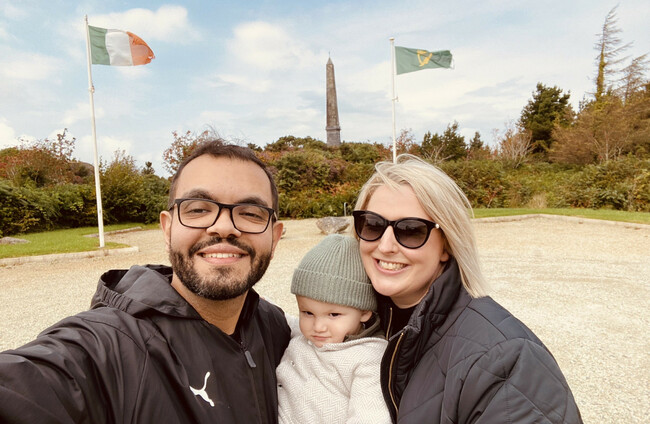
One Wexford woman who has lived in Germany for the past 15 years told The Journal that the political “shift to the right” there over the past 18 months has “shattered” her views about the country.
Meadhdbh Greene said the political climate has intensified worry for her and her family, with the 39-year-old health and marketing professional explaining that it has resulted in increased discrimination of her Egyptian national husband in recent months.
“So this turn to the right has been really concerning for us,” she said. The couple are now discussing whether they can stay long term.
The events of the last year had “really shattered the illusion of German liberalism” she had previously held, Green added.
It’s sparked concern among Germans and other members of the nation’s large migrant population. Included in this is dismay at how the AFD is using the memory and emotions wrapped up in Germany’s past in the Second World War.
Poll after poll has the AFD – Alternative für Deutschland – at around 20 percent of total support, twice that of the last election in 2021.
It places the party at about ten percent behind the conservative frontrunners Christian Democratic Union (CDU) but leaves it in a strong position, and ahead of all the current government parties.
The CDU aren’t in government but its leader Friedrich Merz is tipped by many observers as the chancellor-in-waiting to replace Olaf Scholz of the Social Democrats.
While it is expected that the CDU will strike a deal to rule with the Social Democrats and another smaller party, it could leave Alice Weidel’s AFD to become the largest party in opposition and perhaps to solidify its gains, despite the party having only been founded in 2013.
Recent overtures by the CDU towards the AFD has shaken German politics, shattering the norms that have been in place for decades attempting to prohibit cooperation with the far-right.
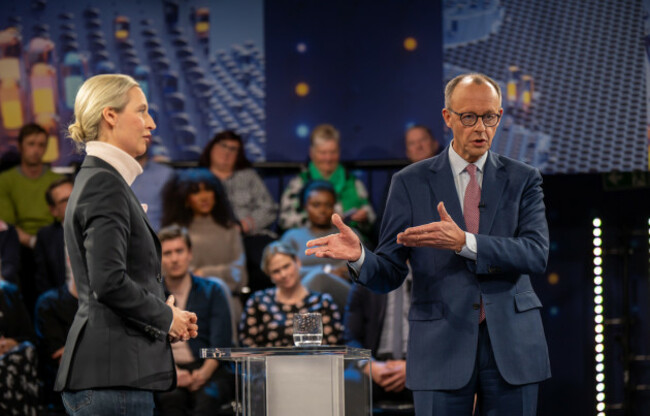
The party has a staunch opposition to migration at the heart of its platform, and has increasingly spoken of ‘remigration’ – meaning to deport people from a migrant background to their native country.
Germany is a country where, as of 2022, a quarter of the 80-million-plus population had immigrated from elsewhere, before the influx of Ukrainian refugees fleeing Russia’s invasion.
AFD has also drawn criticism after a German court’s ruling last year that it was suspected of extremism.
Concern heightened in recent weeks after a non-binding motion to restrict migration passed in parliament. German parties had long sworn off working with AFD at the national level — a collective stance known as the firewall against the far-right – but this changed when the CDU voted with the AFD to pass the motion.
Serious attacks in recent weeks have also been blamed on asylum seekers, hardening the mood – most recently a car ramming in Munich that killed two and wounded dozens, and saw an Afghan man arrested.
Major street protests have been mounted in response to the AFD’s expected gains, including demos that saw 200,000 people rally across the country.
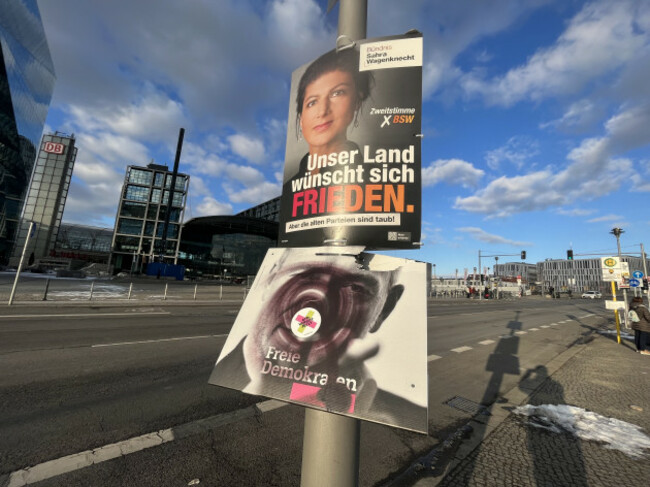
Even though the AFD are not in government, Greene said she fears that many parts of the state are already trying to crack down on immigration to try and appease the party’s growing support. She pointed to adverts her husband Mohammad has received on social media, offering the payment of money in return for leaving Germany.
Greene described a “wall of suspicion” that now follows her family and other non-white and mixed couples, with her husband being denied service at one airport shop until she came to show staff his passport.
In another example, she recalled the strain at their ongoing efforts to avail of maternity benefits. “They thought we were ‘border crossers’, because Mohammad’s employer’s address is in Norway, so they tried to frustrate us even claiming that.”
This is all taking place under a notionally liberal government overseen by a coalition of the Social Democrats, Greens and the Free Democratic Party, Greene added.
It’s all a marked change compared to the country’s response to the migration crisis sparked by the Syrian civil war of a decade ago.
Then, there was a “welcoming culture”, with disused buildings brought back into use to house refugees fleeing war, said Greene.
However, following the Covid-19 pandemic and amid an ongoing recession, that attitude has weakened.
One moment that drew attention in recent weeks was that of an AFD figure telling a rally that people should not feel ashamed about their grandparents and great-grandparents – remarks taken as referencing the actions of ancestors who took part in Nazi Germany.
X and Tesla owner Elon Musk, who has campaigned for the AFD, echoed these comments in a recent address when he told Germans to move beyond “past guilt”.
It’s a “crazy” stance according to Paul Schmoeckel. Standing across from Berlin’s Central Station in the core of the city centre, the German remarked that his own father was a soldier in Nazi Germany’s army, known as the Wehrmacht. Several of his uncles, also serving members, died on the Eastern Front.
Asked about the AFD and Musk’s comments, Schmoeckel began to say he was “ashamed”, before stopping himself and instead stating: “I’m afraid. I’m afraid of all of this, where it is going. It feels like we’re going to have another World War if it keeps going this way.”
Schmoeckel was among those who told The Journal that the country has seen an economic downturn deepen, with analysts recording a recession for the past two years.
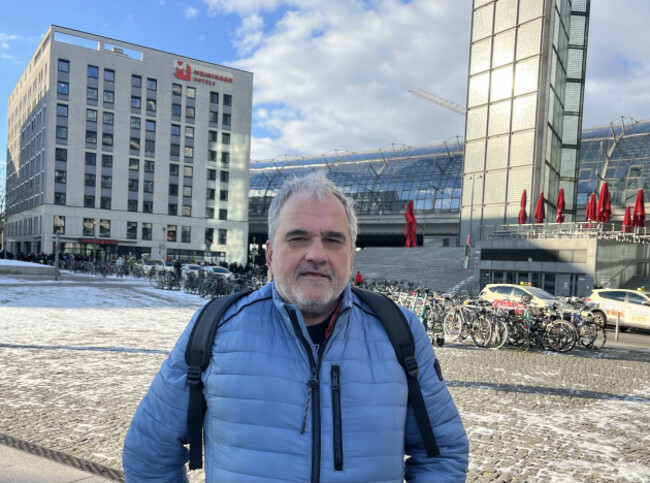
This unhappiness about the economy is felt by many Germans, said Schmoeckel, who feel that a previous “high standard” of living was getting worse.
“People want easy answers, they want to find someone to blame it on,” he said, referring to the focus on migration from the AFD.
Donal Peoples, a teacher who 20 years ago moved from Letterkenny to Berlin, spoke of the “many benefits” to life in the city, from generous social welfare to childcare policies, but said the rise of the AFD had become “impossible to tune out” even if you were “not political”.
The Donegal man said he was also concerned by “worrying tendencies” of the CDU leader and likely next chancellor Merz to work with the AFD.

Peoples is determined to stay in Germany, saying that the recent concerns have made him want to take up citizenship and get a chance to vote in future elections. “If I’m staying here, I want to have a say in the future.”
There was a glum and anxious attitude towards the election from the vast majority of people who spoke to The Journal, with one English academic counting the cost of choosing to emigrate to Germany in recent years.
“I left the UK for a reason – Brexit – and I really picked a great country to move to. It was an excellent choice all round,” she remarked.
“Having said that, I think the rhetoric and anti-migrant attitudes have been present for a long time, and are just now coming out more into the open.”
Need more clarity and context on how migration is being discussed in Ireland? Check out our FactCheck Knowledge Bank for essential reads and guides to finding good information online.

To embed this post, copy the code below on your site












have your say