We need your help now

Support from readers like you keeps The Journal open.

You are visiting us because we have something you value. Independent, unbiased news that tells the truth. Advertising revenue goes some way to support our mission, but this year it has not been enough.

If you've seen value in our reporting, please contribute what you can, so we can continue to produce accurate and meaningful journalism. For everyone who needs it.

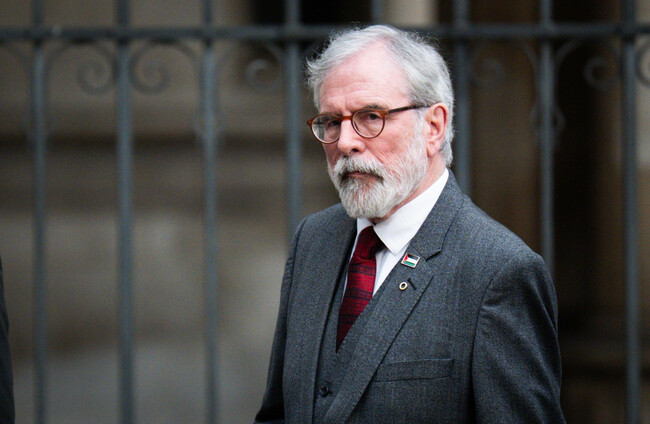
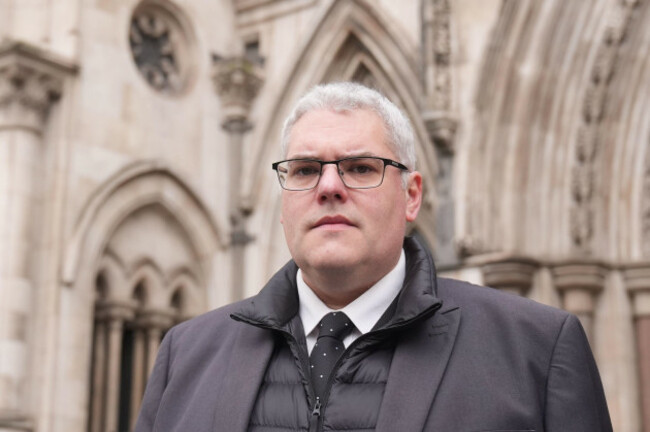
Gerry Adams on his way into the High Court in London yesterday Alamy Stock Photo

​Man injured in London Docklands bombing says he believes Gerry Adams played ‘major part’ in IRA

DUP leader Gavin Robinson attended court today and said it would be ‘seismic’ if the court concluded Adams was an IRA member.

A MAN INJURED in the London Docklands bombing has said he believes Gerry Adams played a “major part” in the IRA.

Jonathan Ganesh, giving evidence at the High Court in London in a civil case brought against the former Sinn Fein president, told how his mental health had suffered as he “relived the nightmare” of the bombing.

The witness also denied a suggestion that he had taken the case against Adams only because of the introduction of the previous government’s Legacy Act.

DUP leader Gavin Robinson attended court today with his party MP Gregory Campbell – Robinson said it would be “seismic” if the court concluded Adams was an IRA member.

Ganesh was injured in the 1996 London Docklands bombing, which killed his friends Inam Bashir and John Jeffries and injured more than 100 others.

Along with John Clark, a victim of the 1973 Old Bailey bombing in London, and Barry Laycock, a victim of the 1996 Arndale shopping centre bombing in Manchester, the three men allege that Adams was a leading member of the IRA on those dates, including of its Army Council.

They are seeking £1 (€1.15) in damages.

Adams denies that he had any role in the IRA and is opposing the claim.

Speaking to reporters outside court, Robinson remarked: “We think that this is an important case,” he told reporters.

dup-leader-gavin-robinson-outside-the-royal-courts-of-justice-in-central-london-where-a-civil-claim-is-being-brought-against-former-sinn-fein-president-gerry-adams-for-just-1-in-damages-by-three-men DUP leader Gavin Robinson outside the Royal Courts of Justice, in central London Alamy Stock Photo Alamy Stock Photo

“If our system establishes that he was, and that liability rests with him, then that will be seismic.

“It is true that he was the leader of a republican movement that was responsible for breaking hearts and homes and scarring our nation, and today, in this case, is an opportunity for justice for victims and that’s why we’re here.”

During the evidence before the High Court today, Anne Studd KC, representing the three men, asked Ganesh what was his catalyst for bringing the proceedings.

Ganesh said he was “very concerned regarding Adams’ behaviour” in bringing legal action against the UK Government.

He said: “I felt that is not right for all of the innocent victims who have suffered.”

James Robottom, representing Adams, asked Ganesh if he was bringing the claim to seek justice.

He said: “Some kind of justice, that is correct.”

The barrister asked if he was also bringing the case on behalf of other IRA victims.

Ganesh said: “That would be a fair statement.”

Robottom said: “You want to be able to say Gerry Adams is the man responsible for the bombing that injured you?”

Ganesh said: “I don’t suggest for one minute that Mr Adams drove the lorry or planted the bomb but I do believe he played a major part in the IRA and I thought he had some involvement with the attack.”

The barrister said: “You believed in the aftermath of the bombing that your injuries were attributable, caused by Gerry Adams?”

The witness said: “I believe he had some involvement in it but I don’t believe he actually planted the bomb.”

The barrister questioned the witness about why he did not bring the case against Adams years earlier.

Ganesh said after the 1996 bombing he was angry, but never opposed the peace process in Northern Ireland, even though it led to the early release from prison of James McArdle, who had been convicted of the Docklands attack.

He said he thought the Good Friday Agreement in 1998 would have prevented him from bringing a compensation claim against Adams earlier.

He said: “In my heart I was hoping the peace process would work.”

Ganesh said it was only when Adams announced his intention to sue the Government, that he explored the possibility of bringing a case against him.

Ganesh said he had previously been awarded £1,000 by the criminal injuries compensation scheme due to shrapnel injuries.

He told the court he was later diagnosed with post-traumatic stress disorder and had received extensive treatment.

The barrister asked if he had considered making another claim for compensation, based on his mental health issues.

Ganesh told the court: “My primary concern was to get myself well… that was my primary goal, not to seek compensation.

“When you are in a very dark place, you keep reliving that nightmare all the time, you relive it like a record that keeps playing all the time.

“The last thing I was thinking about was receiving substantial compensation. I just wanted to get my health better.”

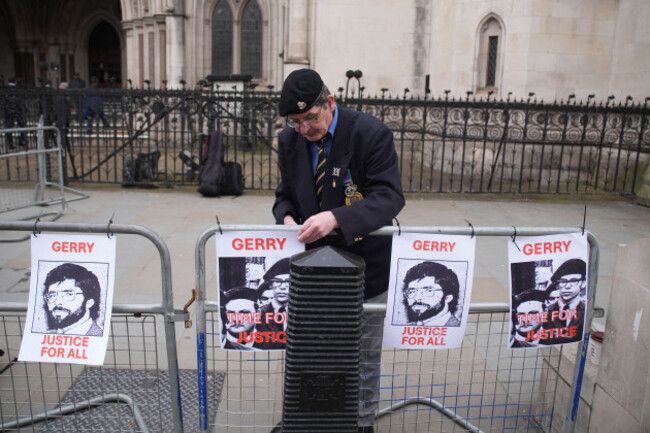
protesters-outside-the-royal-courts-of-justice-in-central-london-where-a-civil-claim-is-being-brought-against-former-sinn-fein-president-gerry-adams-for-just-1-in-damages-by-three-men-who-were-injur Protesters outside the Royal Courts of Justice, in central London Alamy Stock Photo Alamy Stock Photo

Robottom asked Ganesh about his efforts, through work with the Docklands Victims Association (DVA), to get compensation for victims of the 1996 attack from Libya.

Ganesh said he had not mentioned the DVA in his statement to the court as he did not believe it was relevant to the current case against Adams.

Robottom asked Ganesh if the “real reason” he had brought the civil case because of the introduction of the previous government’s Legacy Act.

He asked: “This claim could have been brought by you at any stage in the last 25 to 28 years, do you accept that?”

Ganesh responded: “I think if you had seen me 25 years ago I think even you would concur with me I was (in) no condition even (to) hold down a job or even feed myself properly.”

The barrister said: “Over 25 years Mr Adams wasn’t the chief person or anywhere near the chief person you were seeking vindication for what you have been through from.

“He wasn’t that important. Libya was important, seeking justice through the DVA was important. The only reason this claim was brought in 2022 was because the Legacy Act was coming in and you were seeking justice against the first person you could find.”

Ganesh said: “That is not true at all.”

Before lunch, the trial heard from Laycock.

Robottom asked him why he was bringing the case decades after the Arndale bombing.

Laycock said he had decided that if Adams was bringing a legal case against the UK Government, he wanted to bring a case against the former Sinn Féin leader.

The witness said he wanted the “truth to be established” during the hearing.

He added: “I think he (Mr Adams) had an involvement with the IRA.”

Adams was in the courtroom in London as the evidence was delivered.

The trial before Mr Justice Swift is expected to end next week.

Close
JournalTv
News in 60 seconds