Sign in. It’s quick, free and it’s up to you.
An account is an optional way to support the work we do. Find out more.
Sign in. It’s quick, free and it’s up to you.
An account is an optional way to support the work we do. Find out more.
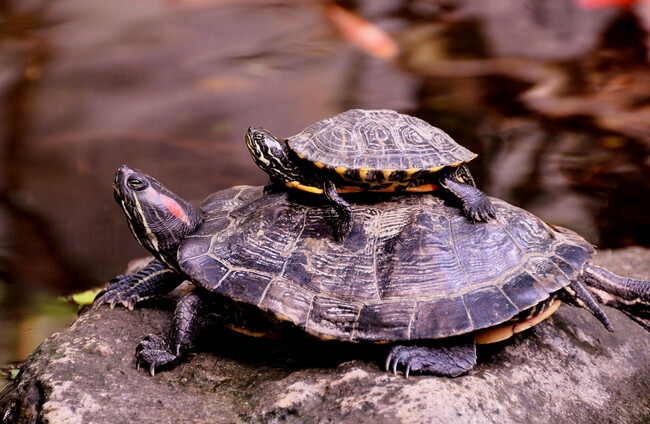
PROJECTS AIMED AT controlling invasive freshwater turtles will be developed by a number of local authorities, the government announced today.
The government granted €10,000 to Cork City, Cork County, Dublin City, Dún Laoghaire, Fingal, Kildare, South Dublin and Wicklow councils.
Each council was granted €1,275 to develop turtle control protocols. It’s just a small part of €2.9m in funding to local authorities for biodiversity projects announced today.
The species in question is a small US-based species of turtle called the ‘pond slider’.
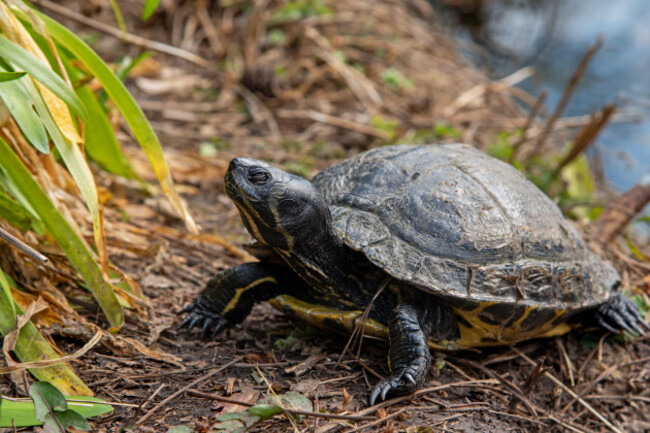
Pond sliders were first reported in Ireland in 2003. More recently, they were identified in March 2021 at The Lough, a suburb of Cork City, and the species has been reported eight times since then.
In Dublin, the turtles have been spotted in both the National Botanic Gardens and the Phoenix Park.
There have been many other sightings since 2020, notably in north Dublin, Kildare and Laois.
According to an “invasive species alert” from the government, the main pathway is through pet owners releasing them into the wild.
Often the full adult size and life-span of the semiaquatic species is unknown to pet owners initially.
Pond sliders are generally sold as hatchlings, but they can grow to 30cm and live for up to 50 years. When the pets can no longer be cared for they are often released into the wild.
It should be noted that they cannot reproduce in Ireland’s climate.
All three subspecies of pond slider (yellow-bellied slider, red-eared slider and Cumberland slider) are classified as “invasive species” across the EU.
According to the national Biodiversity Data Centre, the pond slider can compete with native species for food and resources.
Due to their lengthy lifespan, this poses significant risk to native species, such as frogs, newts, toads and otters.
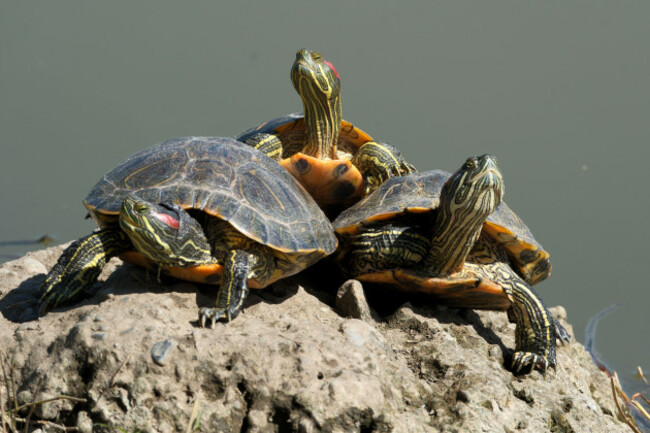
As the species matures it become more omnivorous, they predominately eat plants but also have the ability to predate on young birds and fish, which could impact on Ireland’s native biodiversity.
Pond sliders can also impact on some bird species by using nests as basking sites – sites used to bask in the sun to maintain their body temperature.
The turtles also pose a risk of disease and parasite transmission to native species and humans.
Any pond sliders sightings can be reported via the National Biodiversity Data Centre website.

To embed this post, copy the code below on your site













have your say