We need your help now

Support from readers like you keeps The Journal open.

You are visiting us because we have something you value. Independent, unbiased news that tells the truth. Advertising revenue goes some way to support our mission, but this year it has not been enough.

If you've seen value in our reporting, please contribute what you can, so we can continue to produce accurate and meaningful journalism. For everyone who needs it.

A Pathway to Net Zero: How Gas Networks Ireland is championing Irish innovation with green hydrogen

Gas Networks Ireland is helping customers achieve decarbonisation and leading the charge towards Net Zero.

IRELAND’S GAS NETWORK is at the heart of the Irish government’s ambitious climate and energy targets to successfully transition to a carbon-neutral economy by 2050. 

Green hydrogen will be key to enabling this and Gas Networks Ireland is working on partner projects to ensure that the existing gas network can be operated safely and reliably, while using green hydrogen to meet customer requirements. 

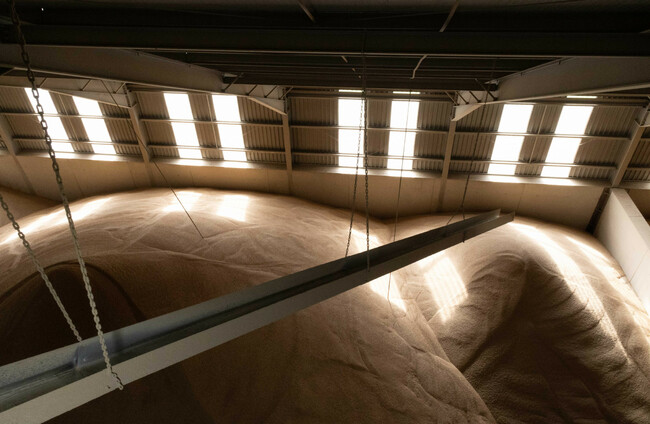
Daltons Chancellors Mills facility in Athy is an example of a business that is successfully trialling a blended approach, with help from Gas Networks Ireland. First established in 1870, the agricultural merchant now operates in Kilkenny and Kildare, and currently has a large heat demand which is delivered via natural gas in both plants — particularly for the purposes of drying grain for the brewing and distilling industries.

The mill processes 50,000 tonnes of malting barley per harvest, making it an essential supplier to many customers who make beer or food products. The project arose out of the business’ desire to prepare barley in an environmentally sustainable way. 

Through the Gas Networks Ireland Innovation Fund, Daltons Chancellors Mills was assisted in the installation of a hydrogen blending unit onsite, in order to mix hydrogen into a natural gas service pipeline downstream of the main distribution network. This involved the modelling and design of the hydrogen injection strategy to achieve the mixing of hydrogen and natural gas, followed by establishing material compatibility, installing the blending unit onsite, and performing reliability studies. 

In addition to the successful onsite design, build and operation of the hydrogen injection unit, the results at Daltons Chancellors Mills were very encouraging. It was found that increasing blends of hydrogen had no impact on the quality of the grains post process and that burners operated safely throughout, with minimal changes in the operating process. As such, the story of the mill sets the stage for other businesses to consider options for a more sustainable approach.

Gas Networks Ireland / YouTube

An additional industrial research project undertaken by Gas Networks Ireland titled HyEnd concluded that, in most cases, their business customers’ gas installations could adapt to blends of hydrogen – for example, green hydrogen blended with natural gas and biomethane – and that the industrial units using gas required no significant modification to take a 20% hydrogen blend from the gas network. 

The report shows that a 20% hydrogen blend is a compatible mid-term plan to introduce 100% renewable gas in the gas network as a long-term plan by 2050. 

The research, conducted alongside technical experts from UCD, demonstrated that by employing a blended approach, major conservation outcomes can be achieved, including:

  • 12% reduction in carbon dioxide (CO₂)
  • 37% reduction in carbon monoxide (CO)
  • 40% reduction in nitrogen oxides (NOx) 

Gas Networks Ireland has committed to a transformative journey towards a repurposed, resized, and fully decarbonised gas network by 2045. That means innovating in a number of key ways and utilising renewable gases such as biomethane and green hydrogen. Once biomethane meets the Government’s current annual target of 5.7 TWh by 2030, it will then account for roughly 10% of projected networked gas.

GREEN HYDROGEN

The plan to decarbonise Ireland’s gas network is laid out in four phases, the first of which is establishing a foundation which can transport higher volumes of biomethane and green hydrogen by 2027. It’s a transformative plan that involves helping businesses lean into their current compatibility with blended hydrogen.

Green hydrogen, which is produced by using renewable electricity to split water into hydrogen and oxygen, is essential to Ireland’s energy future and is a core pillar of Gas Network Ireland’s plan. Green hydrogen is produced without releasing any CO2, and harnesses Ireland’s natural benefits when it comes to on-shore and off-shore wind resources. Additionally, green hydrogen is well suited for storage, which is another mark in its favour as part of the answer to Ireland’s energy strategy over the coming decades.

As it stands, Gas Networks Ireland transports over 30% of Ireland’s total primary energy and generates over 40% of Ireland’s electricity — this network is worth over €3bn to the Irish economy. As such, it’s impossible to overstate its importance when it comes to delivering on Ireland’s long-term energy targets and overall economic health. 

The future role of green hydrogen will be pivotal in Ireland’s energy system, particularly in hard-to-abate sectors like transport, industrial heating, and power generation. Green hydrogen will support renewable energy deployment, providing resilience and flexibility to the electricity system, and support decarbonisation of high-heat industries and businesses.  

Gas Networks Ireland is helping customers achieve decarbonisation and leading the charge towards Net Zero by helping to identify and fund these projects. 

To learn more about how Gas Networks Ireland are helping move Ireland towards a green energy future, visit https://www.gasnetworks.ie/pathway-net-zero/.

Close