Sign in. It’s quick, free and it’s up to you.
An account is an optional way to support the work we do. Find out more.
Sign in. It’s quick, free and it’s up to you.
An account is an optional way to support the work we do. Find out more.
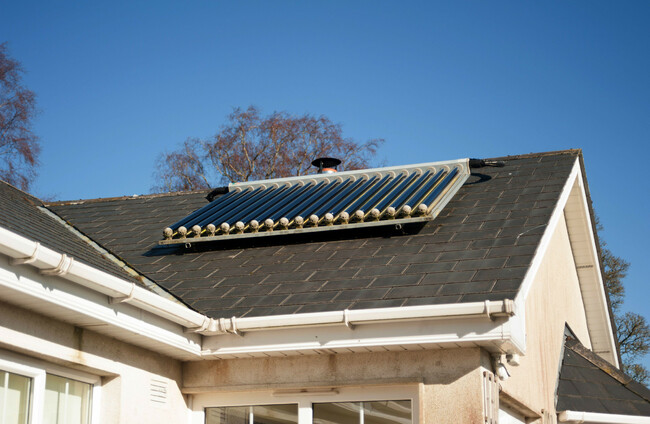
COST IS ONE of the main barriers for people trying to make their home more energy-efficient.
That’s according to a new report from the National Economic and Social Council that looked at how a just transition could be achieved for all.
The Council said it recognises that the global factors have contributed to the high energy costs, but “nonetheless, action is required”.
Not all low-income households or community groups have equitable access to energy efficiency solutions and microgeneration technologies like solar panels, despite the availability of grants.
Grants may not fully cover costs for some, and others may be excluded from targeted supports.
Furthermore, the report said the government must take a “holistic” approach if it is to end energy poverty.
Historically, energy prices in Ireland have been higher than the European average, in part due to geographical location, the small size of the Irish market, and low population density.
Households with higher energy needs, which include families with children, people with disabilities and older people, are more susceptible to energy poverty.
Women, in particular lone parents and older women, are also especially affected due to structural inequalities in income distribution, socio-economic status and the gender care gap.
Enhanced monitoring and data analytics are needed to track how vulnerable groups are affected, and specific energy poverty policies should be integrated with energy transition goals.
Changes that many people are already implementing, such as retrofitting, need to be scaled up, the Council said.
This would involve reducing costs and simplifying processes.
One person told the Council:
I’d have a lot of renovation to do in my house, which would be hugely expensive. Cost would be a massive factor.
Home energy ‘assets’ like heat pumps and batteries can provide flexibility, but benefits may not be equitable due to lifestyle or income differences, it said.
One of the main barriers to a just transition is the high up-front cost. Many people won’t make the investment because they either can’t afford it or they’re not convinced of the long-term savings.
The report says this could lead to new challenges for those left behind during the transition phase. For example, the value of their property could drop over time as homes around them become more energy efficient.
Transitioning to more clean energy can also leave people more vulnerable in some cases, as was seen during Storm Éowyn.
Electricity was cut off and some people in energy-efficient homes were without a secondary heat source.
Those with solar panels, EVs, and batteries couldn’t use them for backup power because they couldn’t disconnect from the grid without a changeover switch, and regulations were unclear.

To embed this post, copy the code below on your site







have your say