Sign in. It’s quick, free and it’s up to you.
An account is an optional way to support the work we do. Find out more.
Sign in. It’s quick, free and it’s up to you.
An account is an optional way to support the work we do. Find out more.
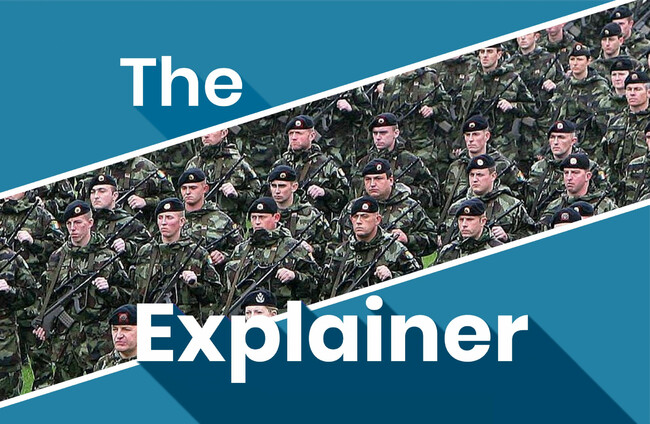
IRELAND HAS PORTRAYED itself as a neutral country ever since the foundation of the State – but that is far from set in stone.
The Constitution makes no reference to it. The so-called ‘triple-lock system’ that prevents the government from independently deploying troops abroad isn’t rooted in any binding legislation and could, in theory, be scrapped at any time.
In light of Russia’s invasion of Ukraine, there is now renewed debate about how truly neutral Ireland is, or to what extent it should remain so. The government intends to hold a public forum to explore this further.
Views are becoming more divergent. On one side, the idea of Ireland as a neutral country seems outdated in the face of modern security threats, while others believe the value in remaining non-aligned can’t be overstated and that aligning with more militaristic countries or alliances would be a mistake.
We’re joined this week on the podcast by Diarmaid Ferriter, professor of Modern Irish History at UCD, to look at Irish neutrality and its opaque history.
He explains how the seeds of the policy can be traced back far beyond the Free State, right back to Wolfe Tone. We also examine the previous attempts to move away from our ‘militarily non-aligned status’, how the government could approach the current debate, and also asks if the value of remaining a truly neutral state has been lost in the debate.
https://soundcloud.com/the-explainer-podcast/whats-the-story-with-irelands-neutrality/s-DlkNnyCzjaW?si=c7bab820b86a4cffbcfe4b6492ac6d92&utm_source=clipboard&utm_medium=text&utm_campaign=social_sharing
This episode was created by presenters by Laura Byrne, and producer Nicky Ryan and executive producer Sinéad O’Carroll.

To embed this post, copy the code below on your site















have your say